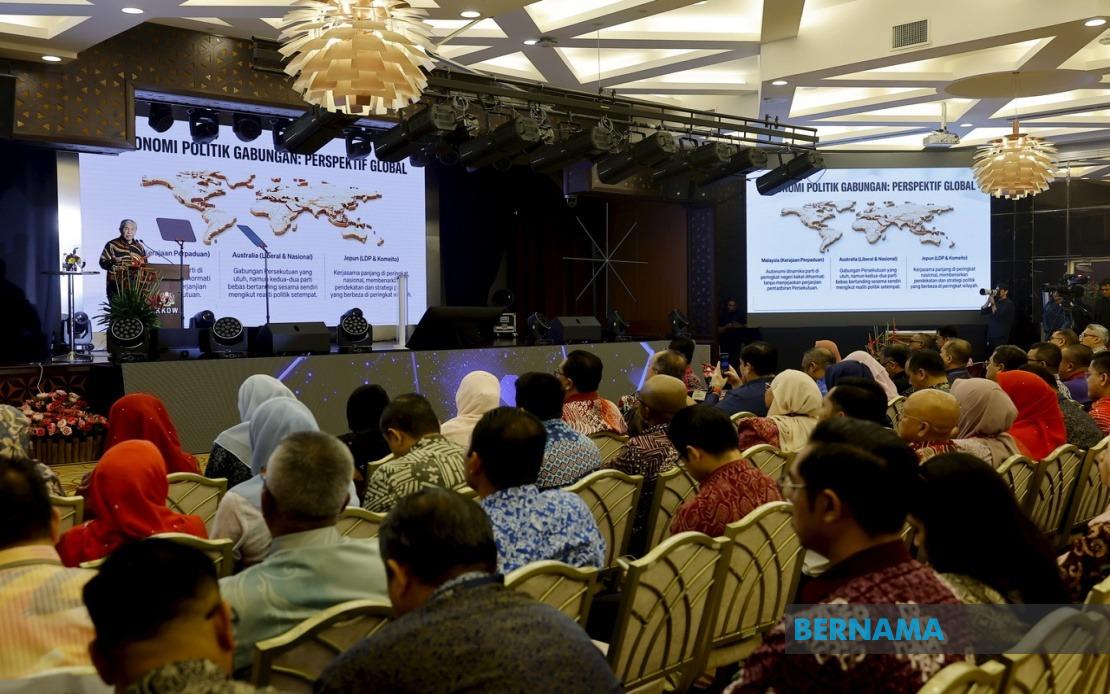
The Community Development Department has unveiled an ambitious expansion programme to substantially increase access to specialised early childhood education across Malaysia, with Deputy Prime Minister Datuk Seri Dr Ahmad Zahid Hamidi announcing plans to place at least one Tabika Tunas Istimewa facility in every district within the next three years. The initiative represents a significant scaling-up of support for children with special needs, building on existing infrastructure while keeping costs manageable for families.
Currently operating 19 dedicated classes nationally, KEMAS intends to add as many as 132 additional classroom spaces through a combination of establishing entirely new centres and upgrading existing facilities. This expansion would bring the total to 151 operational classes, a roughly sevenfold increase in capacity. The timing aligns with the government's broader rural development agenda, positioning special needs education as a key component of community welfare infrastructure rather than a peripheral service.
Affording quality education for children with special needs remains a persistent challenge across Southeast Asia, where many families in rural areas face limited options and prohibitive costs. By maintaining the monthly fee at RM100, KEMAS aims to keep the programme accessible to lower and middle-income households that might otherwise lack affordable alternatives. This pricing strategy reflects a policy commitment to equity, acknowledging that special needs services often generate higher operational costs per student than mainstream schooling.
Ahmad Zahid, who holds the Rural and Regional Development portfolio alongside his deputy prime ministerial role, framed the expansion within a broader philosophy of measuring governmental effectiveness through tangible improvements in citizens' daily lives. His emphasis on direct community benefit suggests a deliberate pivot toward impact-driven policymaking, where initiatives are evaluated not merely by their technical specifications but by their real-world outcomes for families and children. This approach carries particular relevance in Malaysia's rural constituencies, where service delivery gaps have historically been pronounced.
The programme expansion also intersects with Malaysia's education inclusion agenda. Special needs kindergartens serve as early intervention points where children can access therapeutic support, developmental assessments, and adapted curricula before entering the formal primary schooling system. Strategic distribution across districts ensures that parents, particularly in underserved regions, need not travel excessive distances or relocate to access specialised provision. District-level placement represents a deliberate effort to decentralise quality services beyond urban centres.
Beyond education, Ahmad Zahid's statements reveal a broader strategic repositioning within the Rural and Regional Development Ministry. The department has tasked each Regional Development Authority with achieving return on assets targets of four to six per cent, signalling an expectation that government-held assets generate economic returns and benefit communities directly. This market-oriented approach to rural development suggests the ministry is attempting to balance social objectives with financial sustainability, a tension common in developing economies where government capacity is stretched.
Concurrently, the Rural Economic Council Executive Committee has moved to strengthen the Sustainable Village Programme by establishing a dedicated task force. This unit will focus on enhancing cooperative governance, developing branding strategies, improving market access pathways, and fostering strategic networks among rural enterprises. The architectural shift toward cooperative-based models reflects lessons from regional experience, where farmer cooperatives and village enterprises have demonstrated capacity to aggregate production, reduce transaction costs, and improve bargaining power against larger supply chain actors.
The multi-pronged approach to rural development—combining social services like special needs kindergartens with economic infrastructure support for cooperatives—suggests recognition that sustainable community development requires simultaneous attention to human capital, economic opportunity, and social safety nets. Children with special needs who receive early intervention and appropriate education are more likely to transition successfully into secondary education and later employment, generating long-term benefits for families and reducing dependency on state support.
For Malaysian policymakers and development practitioners, the KEMAS expansion offers instructive lessons about service standardisation and equity. By establishing uniform district-level provision, the department creates a platform for service delivery that balances central standards with local adaptation. Parents and communities gain predictability—knowing that comparable facilities will exist within reasonable proximity—while administrators maintain oversight and quality assurance. This model contrasts with purely localised provision, which risks creating significant disparities based on district wealth or administrative capacity.
The announcement also carries implications for regional education policy in Southeast Asia. Countries like Indonesia, the Philippines, and Thailand face similar challenges in extending special needs services to rural populations. Malaysia's commitment to district-level accessibility and affordable pricing could inform policy discussions across the region, particularly regarding cost-effective models for inclusive early childhood development. Knowledge sharing through ASEAN education forums might amplify the impact of Malaysia's experience.
Implementation success will depend substantially on resource allocation, personnel training, and sustained political commitment beyond the current administration. Establishing 132 new classroom spaces requires not merely physical infrastructure but a pipeline of trained educators, therapists, and support staff equipped to work with children with diverse special needs. The ministry's capacity to recruit, train, and retain qualified personnel at rural locations will prove decisive for whether the expansion achieves its equity objectives or merely creates unfunded facilities.
Looking forward, the 2027 timeline provides a concrete benchmark against which progress can be measured. If successfully executed, the programme would represent a substantial policy achievement in inclusive education, demonstrating that rapid scaling of specialised services is feasible even in developing country contexts. However, policy announcements frequently exceed implementation capacity, and careful monitoring of progress against stated targets will be essential to assess whether this initiative delivers genuine improvements in access and outcomes for Malaysia's children with special needs.

