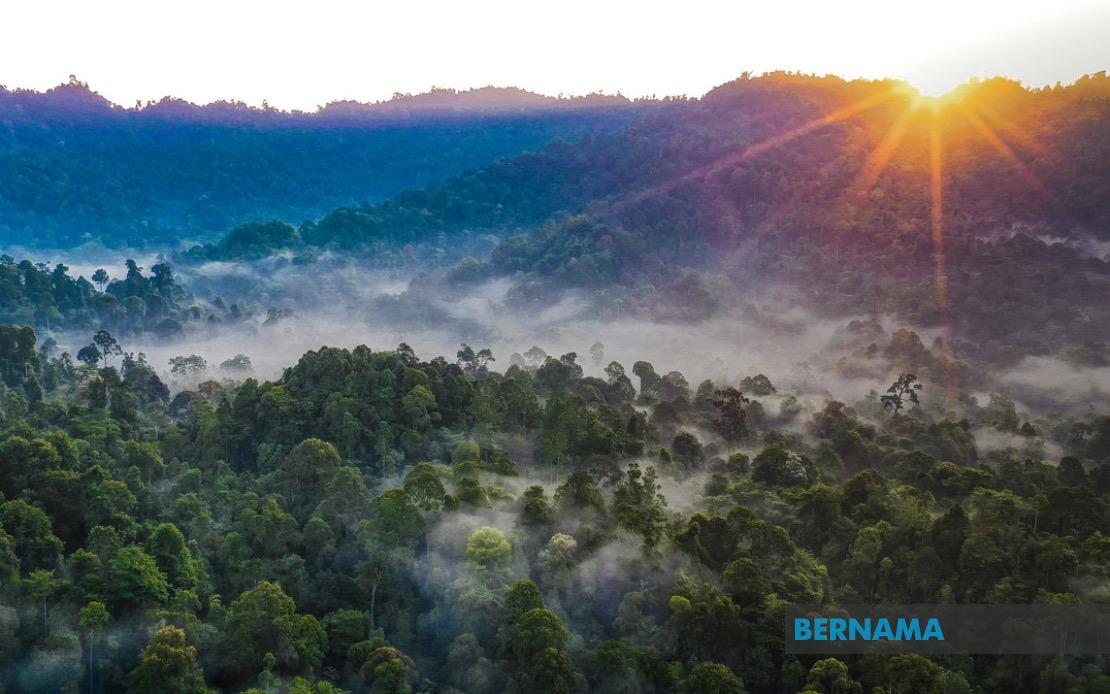
The Kelantan state government has committed to replacing every forest reserve area that loses its protected status through degazetting, whether for mining operations, industrial development, or resource extraction purposes. This undertaking comes as concerns mount over the ecological implications of permitting commercial activities within previously protected forest lands, particularly in the context of accelerating resource development across Malaysia's northern states.
Deputy Menteri Besar Datuk Dr Mohamed Fadzli Hassan articulated this policy position following the latest State Government Executive Committee meeting at Kota Darulnaim Complex in Kota Bharu. The commitment extends specifically to the contentious Temangan Forest Reserve in Machang district, which has become a focal point for debates about balancing environmental conservation with economic development in Kelantan.
The Temangan situation illustrates the complexities facing the state government as it manages competing pressures. A mining company received approval in 2009 to extract granite from the reserve, but the actual implementation has been delayed for over a decade. Only recently did authorities proceed with formally degazetting the reserve, a necessary administrative step to permit the previously approved mining activities to proceed operationally. This lengthy interval between approval and implementation raises questions about the decision-making timeline and whether environmental assessments were sufficiently rigorous given the extended period.
The granite mining sector holds considerable economic significance for Kelantan and other Malaysian states, providing employment and generating state revenue through licensing fees and royalties. However, mining operations invariably involve landscape disruption, habitat destruction, and alterations to local hydrology. The removal of forest cover, even when planned for replacement, creates immediate ecological gaps that affect biodiversity, watershed function, and carbon sequestration capacity during the interim period before restoration efforts mature.
Datuk Dr Mohamed Fadzli Hassan has engaged directly with the Kelantan State Forestry Department to verify the status and mechanisms for forest reserve replacement. The department has apparently confirmed its commitment to ensuring that any cancelled forest reserve must undergo substitution with comparable forest area elsewhere in the state. However, the practical mechanics of this replacement process remain somewhat opaque from public communications, including whether replacement forests will be contiguous with existing reserves, equivalent in biodiversity value, or simply equivalent in hectarage.
The replacement forest concept itself merits scrutiny within the broader Southeast Asian conservation context. Simply designating new areas as forest reserves without ensuring adequate protection mechanisms, sustainable management practices, and community engagement can create a nominal conservation framework that lacks substantive environmental benefit. Malaysia's experience with forest management across various states demonstrates that gazette status alone does not guarantee effective conservation if monitoring, enforcement, and adequate funding for management are insufficient.
For Malaysian stakeholders and regional observers, this Kelantan situation exemplifies the persistent tension between resource extraction imperatives and environmental stewardship. States like Kelantan, operating within Malaysia's federal structure and facing fiscal pressures, often view forestland as a developable asset that can generate immediate revenue. The commitment to replacement forests represents an attempt to thread this needle, though implementation challenges frequently emerge when the time comes to identify, designate, and properly manage substitute conservation areas.
The granite mining approval dating to 2009 also highlights how regulatory frameworks can create long-term obligations that subsequent administrations must honour. Any change in state government could theoretically alter priorities, yet existing approvals create legal and contractual commitments that constrain policy flexibility. This dynamic underscores why environmental impact assessments and public consultation processes at the approval stage carry such weight in shaping decades-long ecological consequences.
Replacement forest strategies must account for ecosystem services beyond simple tree coverage. The original Temangan reserve provided wildlife corridors, water filtration, soil stabilization, and microclimate regulation specific to its location and composition. A replacement reserve in a different location may serve these functions inadequately if separated from existing forest networks or situated in already-fragmented landscapes. Cumulative degazetting across multiple reserves can erode landscape connectivity that wildlife populations require for viable populations and genetic exchange.
For investors and mining companies operating in Malaysia, the Kelantan government's explicit commitment to forest replacement offers some policy clarity, though enforcement mechanisms and timelines remain critical variables. Companies undertaking extractive operations increasingly face pressure from international stakeholders, certification bodies, and domestic civil society to demonstrate genuine environmental stewardship beyond baseline compliance.
The broader Malaysian context includes growing awareness of climate change impacts and the role of forest conservation in carbon sequestration and climate adaptation. This awareness may gradually shift state-level calculations about forest utilization, particularly as tropical forest loss becomes internationally monitored through satellite technology and integrated into corporate sustainability assessment frameworks.
Moving forward, the Kelantan government's replacement forest commitment will be tested by its implementation rigour. Transparency regarding which areas qualify for replacement status, the timeline for establishing replacement reserves, and monitoring systems to verify their ecological viability will determine whether this policy genuinely maintains the state's forest conservation goals or merely creates a bureaucratic substitution that lacks meaningful environmental content. The upcoming years will reveal whether this assurance translates into measurable conservation outcomes or remains primarily aspirational political messaging.

