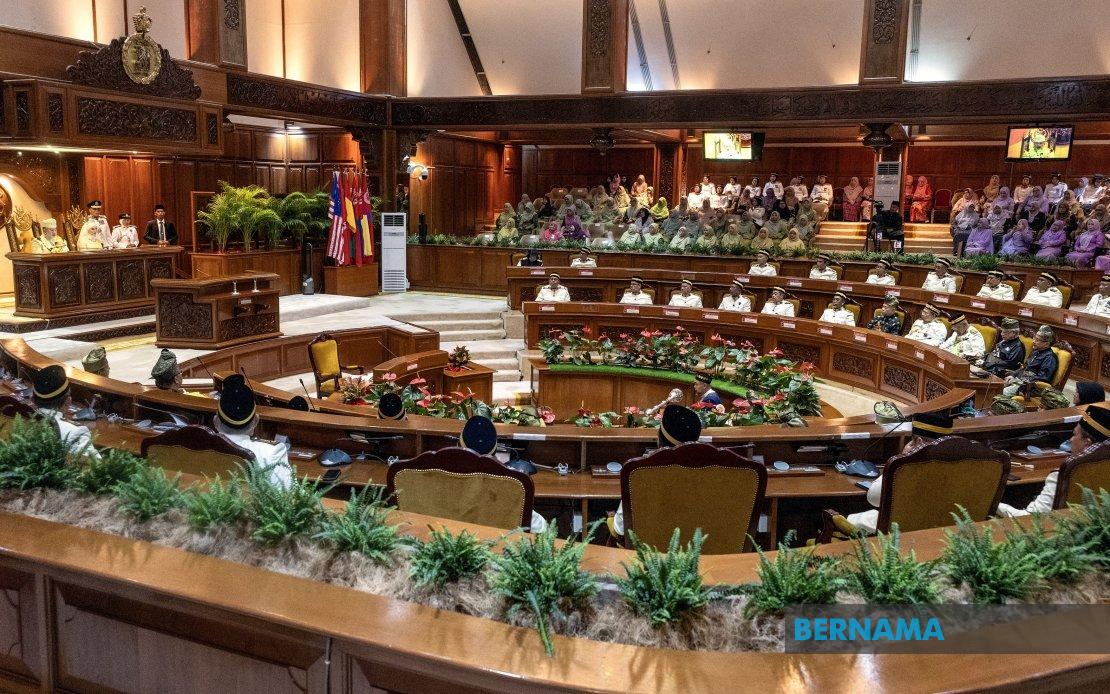
The Kelantan government is set to introduce comprehensive revised Syariah legislation after last year's landmark Federal Court decision exposed constitutional weaknesses in its existing religious criminal code. The Syariah Offences (Kelantan) Bill 2026 will be tabled at next Tuesday's State Legislative Assembly sitting, marking the culmination of an 18-month legislative overhaul designed to align state Syariah law with constitutional boundaries governing the division of powers between federal and state governments.
The new bill emerges directly from the Federal Court's February 9, 2024 ruling, which invalidated 16 of 18 provisions in the Kelantan Syariah Criminal Code (I) Enactment 2019. That landmark 8-1 majority decision arose from a constitutional challenge brought by Kelantan lawyer Nik Elin Zurina Nik Abdul Rashid and another, addressing fundamental questions about which legislative body holds authority over specific categories of religious offences. The court determined that Kelantan's state legislature had overstepped constitutional boundaries by enacting criminal laws on matters already reserved for Parliament under the federal sphere of jurisdiction.
Kelantan Deputy Menteri Besar Datuk Dr Mohamed Fadzli Hassan explained that the drafting process began in mid-2024 following the court's judgment. The state assembled a specialized Committee for the Amendment of the Kelantan Syariah Criminal Code (I) Enactment 2019, incorporating legal expertise from multiple disciplines. Members included civil and Syariah law practitioners, constitutional law scholars, and Syariah judicial officers, reflecting recognition that reconciling state and federal powers requires sophisticated legal understanding across different jurisdictional frameworks.
The proposed legislation takes a notably measured approach to reconstruction, adopting what Hassan described as the constitutional principle of "pith and substance." This technical doctrine allows legislation to retain its intended purpose while remaining within proper jurisdictional limits. The bill emphasizes religious obligations while incorporating what officials characterize as several new and reformative provisions, suggesting the state intends to modernize its approach to Syariah criminal matters rather than merely restore invalidated provisions.
Structurally, the Syariah Offences (Kelantan) Bill 2026 comprises nine parts divided across 62 clauses with one schedule. This framework reflects substantial reworking of the previous enactment's architecture. The breadth of the new bill indicates that Kelantan views this not simply as repair work but as an opportunity to reconceptualize how state Syariah law operates within constitutional constraints. Hassan noted that draft provisions were submitted to the Kelantan Council of Ulama under the Kelantan Islamic Religious and Malay Customs Council (MAIK) for theological and religious review, ensuring alignment with Islamic scholarship and religious practice.
The February 2024 Federal Court decision sparked intense nationwide debate regarding legislative boundaries in religious matters. The case illuminated ambiguities in how Malaysia's constitutional framework allocates authority between Kuala Lumpur and state capitals when Syariah law intersects with criminal jurisdiction. For Malaysia's Muslim-majority states, the ruling created immediate practical challenges: existing religious legislation required urgent revision to comply with the court's interpretation of constitutional limits.
Kelantan's deliberate timeline for revision contrasts with potential crisis responses. By commissioning specialized legal committees and submitting drafts to religious authorities, the state demonstrated commitment to producing legislation that would withstand constitutional scrutiny while maintaining substantive religious character. This methodical approach may serve as a template for other states facing similar pressures to align their Syariah codes with Federal Court jurisprudence.
Deputy Menturi Besar Hassan expressed confidence that state assemblymen would support the bill, suggesting broad political consensus exists around constitutional compliance. The government's framing emphasizes that revision strengthens rather than diminishes Syariah law's practical application by ensuring its legal foundation remains secure against future constitutional challenges. Hassan indicated that the drafting process carefully studied the Federal Court's grounds of judgment to internalize the court's reasoning about jurisdictional boundaries.
The upcoming presentation to the Kelantan State Legislative Assembly represents a significant moment for Malaysian religious jurisprudence. How the state legislature receives and debates the bill may influence how other states approach their own Syariah codes. If Kelantan successfully navigates this legislative process, the outcome could establish practical precedents for reformulating religious criminal law within federal-state constitutional parameters elsewhere in Malaysia.
For Malaysian Muslims and the broader public, this revision signals judicial intervention is reshaping religious legal frameworks. The Federal Court's willingness to strike down substantial portions of state Syariah law demonstrated that constitutional courts can scrutinize religious legislation using secular legal principles. Kelantan's response demonstrates how states can reconstruct religious law in ways that accommodate both religious substance and constitutional form, though questions remain whether this balance adequately serves Muslim communities' expectations regarding Syariah law's scope and authority.

