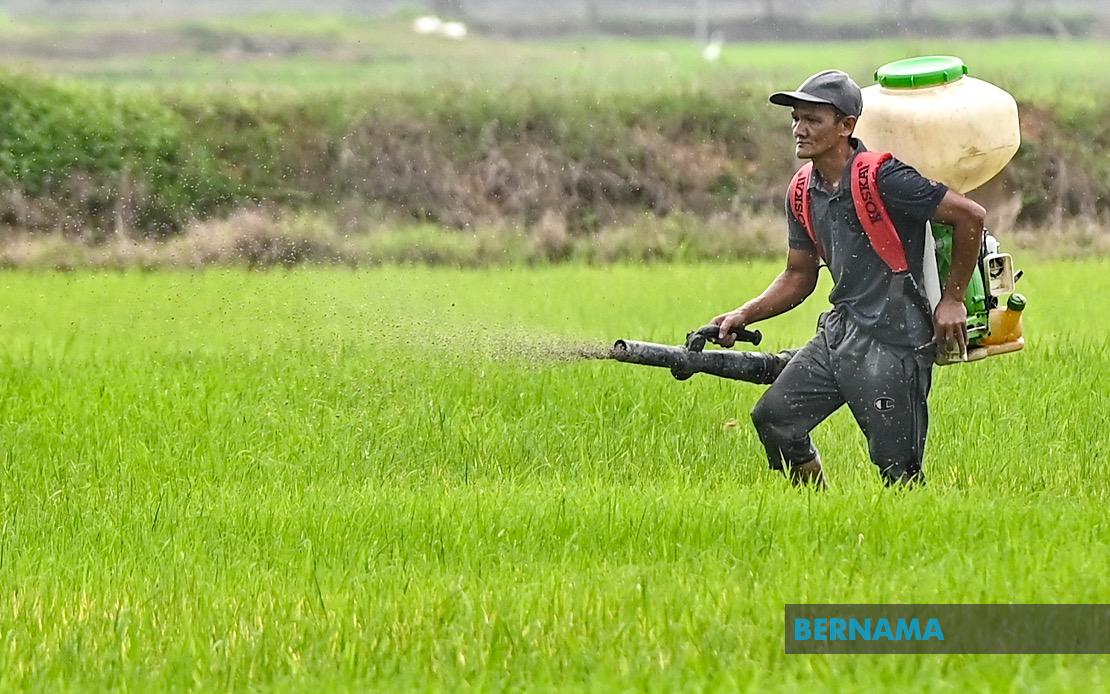
Kelantan's government is stepping up its commitment to agricultural development by channelling RM3.64 million into a comprehensive suite of farming initiatives designed to enhance food production and create rural livelihoods across the northern state. The investment was disclosed during a state assembly sitting at the Kota Darulnaim Complex in Kota Bharu, signalling renewed political focus on the agricultural sector as part of broader food security objectives.
The 10-project portfolio, overseen by the State Agriculture Department, targets multiple dimensions of farming activity that reflect Kelantan's diverse agricultural base. Datuk Tuan Mohd Saripudin Tuan Ismail, chairman of the State Legislative Assembly's Agriculture, Agro-Food Industry and Commodity Committee, outlined how the funding would mobilise unutilised farmland, intensify padi rice cultivation, expand commodity crop areas, and boost vegetable and fruit production. This layered approach acknowledges that agricultural development in Kelantan requires coordinated action across different crop types and farm scales rather than a single-sector strategy.
Commercial agriculture receives particular attention through the Kelantan State Agriculture Development Corporation, PKPNK, which has launched several high-value ventures at Rong Chenok Agro Valley. These enterprises centre on chilli fertigation systems, honeydew melon cultivation, and hydroponic vegetable production—techniques that promise higher yields per unit of land and more efficient resource use. Such projects are especially relevant for Malaysian agriculture, where land scarcity and rising input costs make intensive, technology-driven farming increasingly vital for competitiveness and sustainability.
The livestock sector emerges as a significant beneficiary of state support, with government programmes reaching more than 380 registered breeders across multiple species including cattle, goats, sheep, deer, buffalo, and quail. Beyond breeding animals, the state has invested in support equipment and infrastructure that allow smallholder farmers to operate at viable commercial scales. This diversification within livestock farming is strategic, allowing producers to match their production to market demand and spread income risks across different animal enterprises.
Fisheries and aquaculture represent one of Kelantan's most productive agricultural frontiers, with the sector demonstrating substantial economic returns. Last year, the state's aquaculture output reached 7,901.74 tonnes valued at RM76.2 million, with authorities targeting 8,000 tonnes for the current year. State investment in the fisheries sector during the previous fiscal year totalled RM382,094, distributed among 122 registered breeders. This injection of capital has enabled expansion of both scale and capability within the sector, reinforcing Kelantan's position as a contributor to national seafood supplies.
A notable component of fisheries support involves hatchery infrastructure and aquatic resource replenishment. The state has overseen construction of more than 130 artificial fish hatcheries and released 1.26 million fish and prawn fry into public waters, supporting both commercial and subsistence fishing communities. The PKPNK corporation itself operates significant hatchery capacity, producing up to one million catfish fry and 500,000 tilapia fry annually. Additionally, a white prawn facility at Pantai Geting in Tumpat generates approximately 400,000 kilogrammes of output per year, establishing specialised aquaculture clusters with downstream processing potential.
Entrepreneur development represents the final pillar of Kelantan's agricultural strategy, extending beyond primary production into agribusiness and value-addition. As of June of the previous year, 1,560 entrepreneurs had accessed support through 74 marketing infrastructure facilities and 99 retail outlets established with state backing. These structures address a chronic challenge in Malaysian agriculture: the gap between production and profitable market access, particularly for smallholder and medium-scale operators who lack individual resources to establish retail distribution networks.
The Kota Bharu Rural Transformation Centre exemplifies this infrastructure investment. Operating as a centralised agro-food marketing and distribution hub since 2012, the facility has provided commercial space to roughly 800 entrepreneurs and generated cumulative sales of RM4.16 billion over a 13-year period. This track record demonstrates the viability of collective marketing infrastructure in supporting agricultural entrepreneurship and raising farmer incomes through improved market linkages. The centre's sustained operation and growth suggest that such facilities address genuine market demand and can be replicated or scaled in other locations.
For Malaysia's regional agricultural policy, Kelantan's investment approach offers insights relevant to food security planning. The state recognises that boosting agricultural output requires simultaneous action on land utilisation, technology adoption, rural entrepreneurship, and market access rather than focusing narrowly on production alone. This holistic framing aligns with Southeast Asian agricultural challenges, where growing urban populations, climate variability, and competition for labour and resources demand more sophisticated and integrated farming systems.
The emphasis on high-value activities such as hydroponic vegetables, chilli production, and prawn farming reflects market realities that reward specialisation and quality over volume production. These ventures can deliver stronger returns per hectare and per worker than conventional farming, addressing the persistent challenge of rural income insufficiency that drives migration to cities. Kelantan's willingness to support such ventures through state-owned enterprises like PKPNK indicates policy recognition that private investment alone may not materialise in less-urbanised regions without anchoring institutions and initial capital deployment.
Looking forward, the success of these initiatives will depend on sustained funding commitments, technical extension services to farmers, market demand stability, and effective governance of state enterprises. The targeting of 8,000 tonnes in aquaculture production and the expansion of other commodity output represent measurable objectives that can guide performance evaluation. Whether Kelantan can translate this year's RM3.64 million investment into sustained productivity growth and improved farmer livelihoods will be a significant test of the state's agricultural development model and potentially an instructive case for other Malaysian states pursuing rural economic diversification.

