Kelantan's state government is intensifying its campaign against illegal mining and land encroachment, revealing that authorities have formally opened 63 investigation papers related to these activities so far this year. The crackdown reflects growing concern over unauthorised land use and resource extraction in the northeastern state, with enforcement efforts now focusing on identifying and prosecuting those behind the illegal operations.
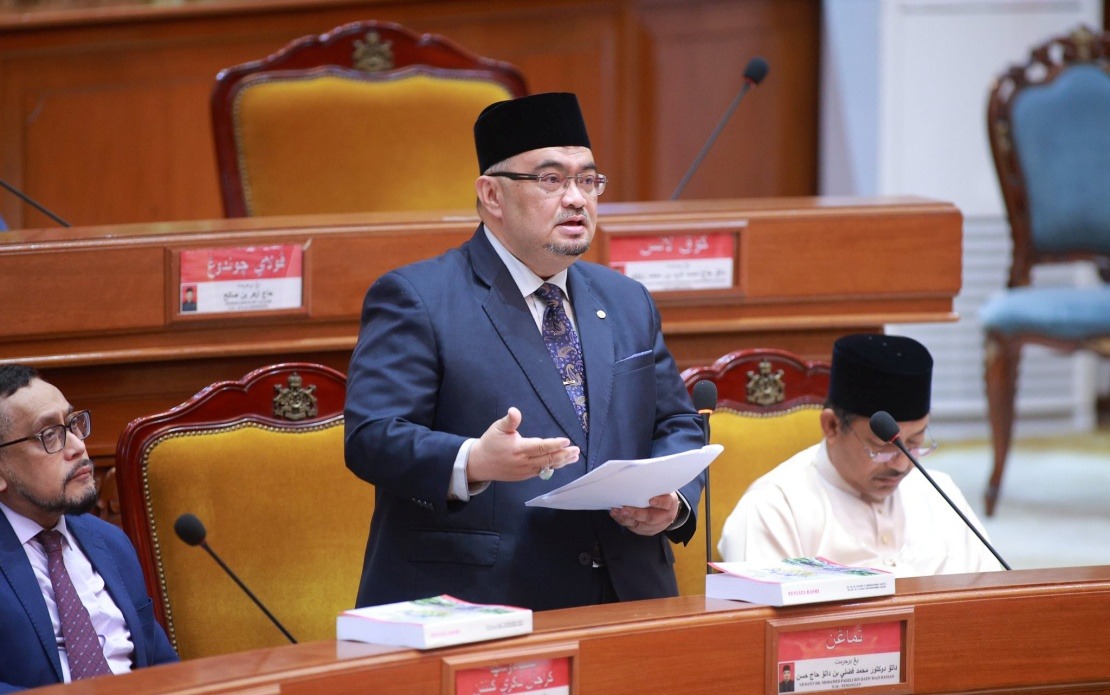
Deputy Menteri Besar Datuk Dr Mohamed Fadzli Hassan disclosed the figures while responding to state assembly members during the recent sitting at Kompleks Kota Darulnaim. The investigation papers stem from an aggressive field campaign that has seen authorities conduct 77 separate enforcement operations targeting hotspots in Gua Musang, Kuala Krai, Jeli and Tanah Merah districts. This geographical concentration suggests that illegal mining activity in Kelantan remains largely confined to specific regions, potentially making targeted enforcement more manageable than in states where such problems are more widely dispersed.
A significant aspect of the enforcement drive has been the seizure of heavy equipment used in mining operations. Authorities have impounded 65 excavators with a combined estimated value of RM15.8 million, a substantial haul that underscores both the scale of illegal operations and the state government's determination to disrupt their logistics. By removing the machinery essential to these enterprises, enforcement agencies aim to impose immediate costs on perpetrators and make continued illegal activity economically unfeasible. This equipment-focused strategy addresses a critical vulnerability in illegal mining networks, which depend heavily on access to costly machinery.
The investigation papers have been forwarded to the Prosecution Unit of the Kelantan Land and Mines Office for further processing and legal action. This institutional pathway ensures that cases progress through proper channels toward prosecution, though the eventual court outcomes remain to be seen. The transfer of cases to the prosecution unit suggests that state authorities are moving beyond mere enforcement and toward holding individuals legally accountable. However, the transition from investigation to conviction often involves protracted legal proceedings, and case backlogs in Malaysian courts could potentially slow justice.
State assembly member Datuk Shaari Mat Hussain, representing Paloh under the PAS banner, raised the initial question about encroachment and illegal mining, indicating that these issues command attention from both government and opposition representatives. The bipartisan concern reflects the tangible harm such activities inflict on communities, whether through environmental degradation, loss of legitimate land use, or resource depletion. Illegal mining operations not only deprive the state of legitimate tax revenue but also pose hazards to surrounding areas through habitat destruction and water contamination.
When questioned further by Datuk Mohd Syahbuddin Hashim from Galas, Dr Mohamed Fadzli acknowledged that investigations must extend beyond individual operators to target the networks supporting illegal activity. He indicated that authorities will pursue leads involving middlemen, masterminds, organisers and protectors—a tacit admission that such operations typically involve multiple actors beyond those physically conducting the mining. These deeper supply chains often prove difficult to dismantle because they involve individuals with political or commercial connections who remain insulated from direct operational risk.
The state government's response indicates its commitment to pursuing cases against landowners and those with direct knowledge of illegal activity occurring on their properties. Dr Mohamed Fadzli suggested that since authorities can identify legitimate land ownership, investigations can proceed on that basis. This approach leverages property registration records to establish liability and trace connections between land and those extracting resources from it. However, the effectiveness of such investigations depends critically on cooperation from local communities willing to provide information about who operates illegal sites.
State authorities have also initiated a review of existing penalties for land encroachment and illegal mining, with particular focus on making punishments for repeat offences more severe. This legislative rethink suggests that current penalties may be insufficient to deter persistent violators or that repeat offenders continue operating despite having been previously caught. Strengthening the penalty regime could serve as a more powerful deterrent than simple confiscation of equipment, though Malaysian courts must ultimately impose these penalties through individual sentencing decisions.
The Kelantan enforcement campaign carries implications extending beyond the state itself. Illegal mining and land encroachment represent persistent problems across Southeast Asia, and the region's experience demonstrates how such activities concentrate in areas with weak institutional capacity or governance challenges. Kelantan's visible enforcement effort, if sustained and successful, could provide valuable lessons for other Malaysian states and regional counterparts grappling with similar problems. The quantifiable results—specific numbers of cases, operations and seized assets—offer concrete metrics against which to measure progress.
For Malaysian policymakers more broadly, the Kelantan case illustrates the resource-intensive nature of combating organised illegal mining. The 77 operations required to generate 63 investigation papers suggests an efficiency ratio that some might consider modest, raising questions about whether current enforcement capacity suffices to deter would-be violators. Scaling these efforts across multiple states simultaneously would require either significantly expanded budgets or more sophisticated intelligence-gathering to concentrate resources on the most consequential targets. The environmental and economic costs of inadequate enforcement likely dwarf the investment required for more aggressive preventive action.
Looking ahead, the transition from investigation to prosecution will test whether the legal system can handle the caseload while delivering timely outcomes. Swift and visible convictions would strengthen deterrence effects, whereas lengthy delays might encourage perpetrators to view enforcement as a minor occupational risk. The state government's willingness to discuss penalty reviews suggests recognition that current frameworks may inadequately address the problem's severity. Whether these enforcement momentum and policy discussions translate into sustained reductions in illegal mining and encroachment will depend on consistent political will, adequate resource allocation, and coordination between multiple enforcement agencies over an extended period.

