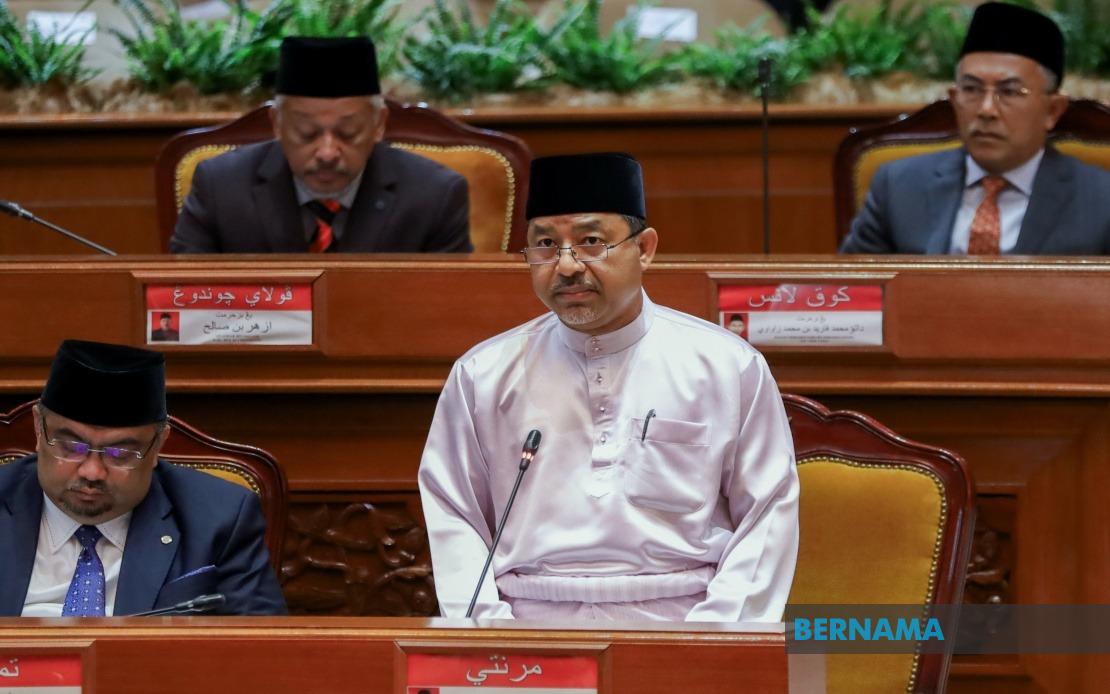
Kelantan has reaffirmed its position as the custodian of the largest concentration of Malay reserve land in Peninsular Malaysia, with the state menteri besar disclosing comprehensive figures that underscore the composition and distribution of landholdings across the state. The revelation comes at a time when property rights and ethnic land protections remain contentious issues in Malaysian politics, making the precise documentation of such reserves increasingly significant for policy discussions and intercommunal relations across the region.
Datek Mohd Nassuruddin Daud presented the statistics during the state legislative assembly session at Kota Darulnaim Complex, responding to a parliamentary query from fellow PAS assemblyman Datuk Abdul Rahman Yunus of Pasir Tumboh. The figures, updated through June this year, reveal that Kelantan's 526,083 hectares of Malay reserve land encompasses 816,020 individual property titles, creating a substantial ownership base among the Malay community. This acreage constitutes 91.5 per cent of the state's entire land base, reflecting the deep historical entrenchment of Malay land ownership throughout the state's administrative districts.
The remaining 48,344 hectares, or 8.4 per cent of Kelantan's total landholding, comprises non-Malay reserve properties involving 43,255 titles. Combined, these categories account for 574,427 hectares under recorded ownership across 859,275 titles statewide. The proportion underscores how effectively constitutional provisions protecting Malay land interests have maintained demographic patterns established during the colonial and early independence periods, creating a landscape markedly different from more urbanised states where Malay reserve concentrations are lower.
The geographical distribution of Malay reserve land varies considerably across Kelantan's eleven districts, reflecting differing settlement patterns and historical land allocations. Gua Musang dominates in absolute terms, holding 122,735 hectares of Malay reserve land—nearly a quarter of the state total. This makes sense given the district's vast territorial expanse covering largely rural and forested areas in the interior. Pasir Mas follows with 56,656 hectares, while Tanah Merah and Kuala Krai maintain 56,246 and 53,473 hectares respectively. These four districts alone account for over half the state's Malay reserve inventory, highlighting concentration in the northern and central regions.
When measured by percentage rather than absolute area, the rankings shift significantly, revealing districts where Malay land ownership approaches near-universality. Tanah Merah leads with 99.9 per cent of its land classified as Malay reserve, effectively rendering non-Malay ownership virtually non-existent in practical terms. Tumpat, Pasir Puteh, Bachok, Pasir Mas, Kota Bharu, and Jeli all register exceptionally high percentages, though the menteri besar did not specify exact figures for these districts. This concentration in certain areas reflects both historical settlement patterns and the continued effectiveness of Section 13A of the Kelantan Malay Reservations Enactment in preserving the character of these communities.
The legislative framework governing these reserves provides state authorities with substantial discretionary powers that extend beyond simple prohibition of sales. Section 13A explicitly permits non-Malay acquisition within designated reserve areas but simultaneously grants the state government regulatory authority over transactions. This dual mechanism creates flexibility while maintaining protective intent—officials can approve transactions deemed beneficial or reject those perceived as threatening communal interests. The provision essentially positions the state as steward of collective Malay welfare, a role that has generated ongoing academic and political debate about balancing property rights with communal protection.
Mohd Nassuruddin's assertion that Kelantan has experienced no net reduction in Malay reserve land suggests either careful administration or lack of conversion pressure compared to more developed states. In contrast, Selangor and Kuala Lumpur have witnessed substantial erosion of reserve land through conversion, leasehold conversion, and urban development approvals. Kelantan's maintenance of its reserve base partly reflects its more rural character and lower commercial development intensity, but also indicates consistent government policy prioritising preservation. However, this static preservation also raises questions about economic opportunity and development equity, as extensive reserves in less developed districts may constrain revenue generation and infrastructure investment.
The implications for Kelantan's economic future warrant consideration. While land protection serves important cultural and social functions, extensive reserves can limit commercial real estate development, foreign investment, and revenue generation from land sales and development charges. Other states have experimented with mechanisms permitting productive use while maintaining protective intent, such as joint ventures and government-mediated transactions. Kelantan's current approach prioritises preservation over commercialisation, reflecting the state's political orientation and historical priorities.
The significance of these figures extends beyond Kelantan's boundaries. The state's experience demonstrates how constitutional provisions and state enactments can durably protect specific communities' property interests across decades. This becomes relevant for broader discussions about indigenous land rights, minority protection, and property governance in Southeast Asia. As Malaysia navigates urbanisation and economic development while seeking to maintain constitutional compacts around land, Kelantan's model—with its emphasis on preservation through regulatory control rather than pure prohibition—offers a documented case study of one approach's outcomes.
For Malaysian investors and property stakeholders, understanding Kelantan's reserve structure remains essential for acquisition decisions, as non-Malay landholding represents a distinct minority interest. The concentration of available non-reserve land in specific districts creates geographic variation in property availability and investment opportunities. Prospective purchasers must navigate Section 13A requirements, obtaining state approval for transactions within reserve areas—a process that introduces regulatory uncertainty alongside the fundamental scarcity of eligible properties.
The menteri besar's emphasis on Kelantan's preservation record comes amid broader national conversations about land policy, property rights, and communal interests. As development pressures mount across Malaysia and land becomes increasingly scarce in urbanising regions, the tension between protective frameworks and economic dynamism will intensify. Kelantan's demonstrated capacity to maintain large reserve concentrations while functioning as a living economy provides both a model and a cautionary example of how conservation priorities can shape development trajectories across generations.

