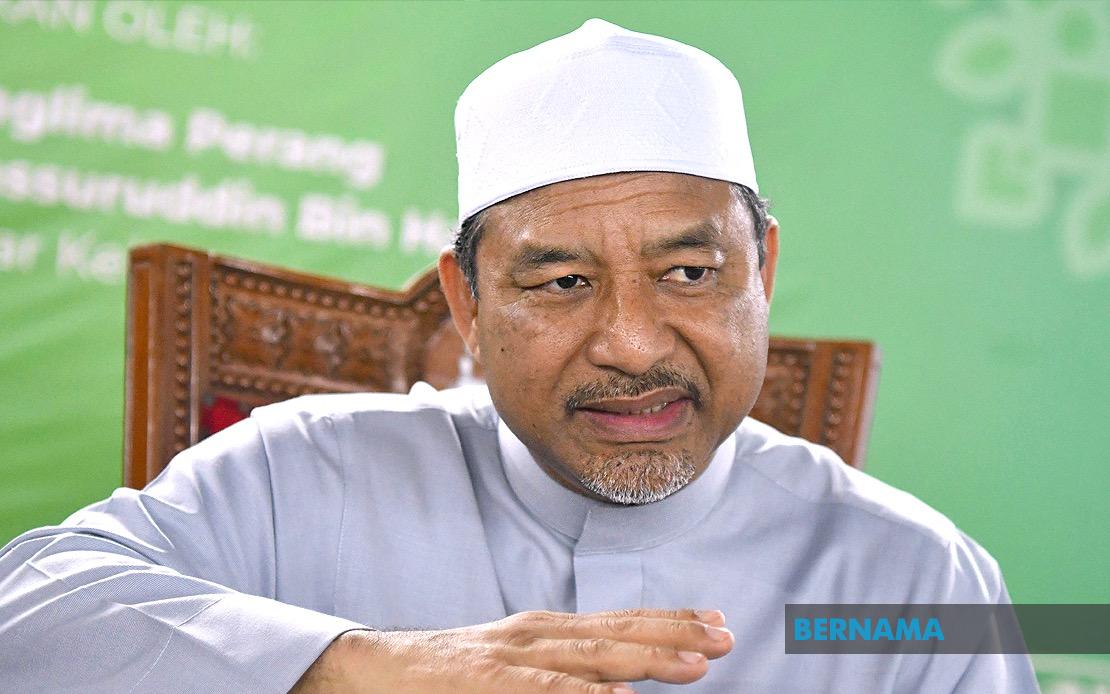
The Kelantan state government has reiterated its commitment to safeguarding the region's distinctive arts and cultural heritage, provided such traditions conform to Islamic principles. Speaking at the closing ceremony of the Kelantan Arts Festival (FKRK) 2026 in Pasir Puteh on July 4, Menteri Besar Datuk Mohd Nassuruddin Daud outlined an approach that seeks to strengthen rather than suppress local creative traditions, framing cultural preservation as integral to Kelantan's identity and economic development through tourism.
The Menteri Besar's remarks reflect an ongoing effort by the state administration to navigate the complex terrain between maintaining cultural continuity and upholding religious standards. Rather than adopting a blanket rejection of traditional practices, the Kelantan government has opted for a selective refinement process. Mohd Nassuruddin emphasized that the state has never categorically dismissed arts or cultural expressions simply because they are ancient or rooted in pre-Islamic custom. Instead, officials work to evaluate such traditions critically, identifying elements that may conflict with Islamic teachings and removing or modifying them whilst preserving the cultural essence.
This nuanced stance carries particular significance for a state historically known for its strong Islamic identity and religious conservatism. Kelantan's approach suggests an attempt to resolve what many Muslim-majority regions face: the tension between modernisation, religious observance, and the desire to maintain cultural distinctiveness. By allowing refined versions of previously restricted performances, the state signals flexibility without abandoning core values. Mohd Nassuruddin noted that certain traditional performances had previously been prohibited due to problematic elements, but the government remains open to reinstating them once those contentious aspects are removed and the practices no longer contravene Islamic standards.
The framework guiding Kelantan's cultural policy rests on what officials describe as a Islamic foundation for knowledge, arts, language and culture. This perspective positions Islamic values not as external constraints limiting creativity, but as the philosophical bedrock from which Kelantan's cultural expressions naturally emerge. The Menteri Besar articulated this position by stating that Kelantan's cultural development has long been nurtured by Islamic principles, suggesting an organic rather than imposed relationship between religious faith and artistic tradition.
Kelantan's tangible cultural assets—from elaborate performing arts to traditional games, handicrafts, and regional cuisine—represent what the state government views as irreplaceable treasures embodying Malay community wisdom and philosophy. These elements, according to official discourse, warrant preservation for succeeding generations not merely as historical curiosities but as living expressions of communal identity. The emphasis on safeguarding such heritage reflects broader Southeast Asian concerns about cultural erosion amid globalisation and rapid technological change.
A particularly noteworthy dimension of Kelantan's strategy involves reviving traditional games including gasing uri, congkak, dam aji and tating. Officials have identified the potential of these games to counterbalance technology's pervasive influence on younger Malaysians' lifestyles and leisure habits. By promoting traditional recreational activities alongside modern entertainment, the state attempts to foster a more balanced developmental environment for youth. This focus resonates with broader concerns across Malaysia about screen time, digital dependency, and the erosion of intergenerational knowledge transfer.
The FKRK 2026, which concluded after a four-day run, transcends its immediate function as an entertainment or tourism spectacle. State authorities view the festival as a multifaceted platform facilitating several interconnected objectives: bringing together practitioners of heritage and contemporary arts, enabling knowledge exchange among cultural workers, stimulating local economic activity, and showcasing Kelantan's distinctive character to domestic and international visitors. This comprehensive approach positions cultural events as instruments of regional development rather than peripheral activities.
The festival's organization by the Ministry of Tourism, Arts and Culture alongside the National Culture and Arts Department (JKKN) Kelantan underscores federal-state coordination in cultural affairs. This institutional arrangement reflects Malaysia's federal structure, where tourism and cultural matters involve both national frameworks and state-level implementation. For Kelantan, the event provides an opportunity to assert its cultural distinctiveness within the Malaysian federation whilst demonstrating that religious commitment and cultural vibrancy can coexist.
The implications of Kelantan's cultural preservation model extend beyond the state's boundaries. As Malaysia grapples with questions of national identity, religious expression, and cultural pluralism, Kelantan's experience offers insights into how Muslim-majority regions can approach heritage conservation. The state's willingness to refine rather than reject traditions suggests a pragmatic middle path between wholesale modernisation and rigid conservatism. This approach may influence how other Muslim-majority states in Southeast Asia address similar tensions between contemporary values and historical continuity.
Moreover, the economic dimension of Kelantan's cultural strategy warrants attention. By positioning heritage preservation as a tourism driver, the state seeks to create economic incentives for cultural maintenance. This perspective transforms cultural conservation from a purely nostalgic or religious exercise into an economic development strategy, potentially creating employment for artisans, performers, guides, and hospitality workers. For a state seeking to diversify its economy beyond traditional sectors, cultural tourism represents a relatively sustainable pathway.
The challenge facing Kelantan and similar regions lies in executing this balanced approach consistently. Questions remain about how officials determine which traditional elements require modification, who makes such determinations, and whether communities themselves have meaningful voice in these decisions. The success of the Kelantan model depends partly on whether the refinement process emerges through collaborative engagement with cultural practitioners or through top-down directives, a distinction that significantly affects community buy-in and authenticity.
Looking forward, Kelantan's commitment to preserving cultural heritage within an Islamic framework positions the state as a potential model for managing cultural pluralism in Muslim-majority societies. As globalisation continues reshaping traditional practices and younger generations encounter diverse cultural influences, the state's intentional approach to heritage conservation offers a deliberate alternative to passive erosion. Whether this strategy succeeds in maintaining vibrant cultural traditions whilst satisfying religious requirements will provide valuable lessons for Malaysia and the wider Southeast Asian region navigating similar cultural and religious dynamics.

