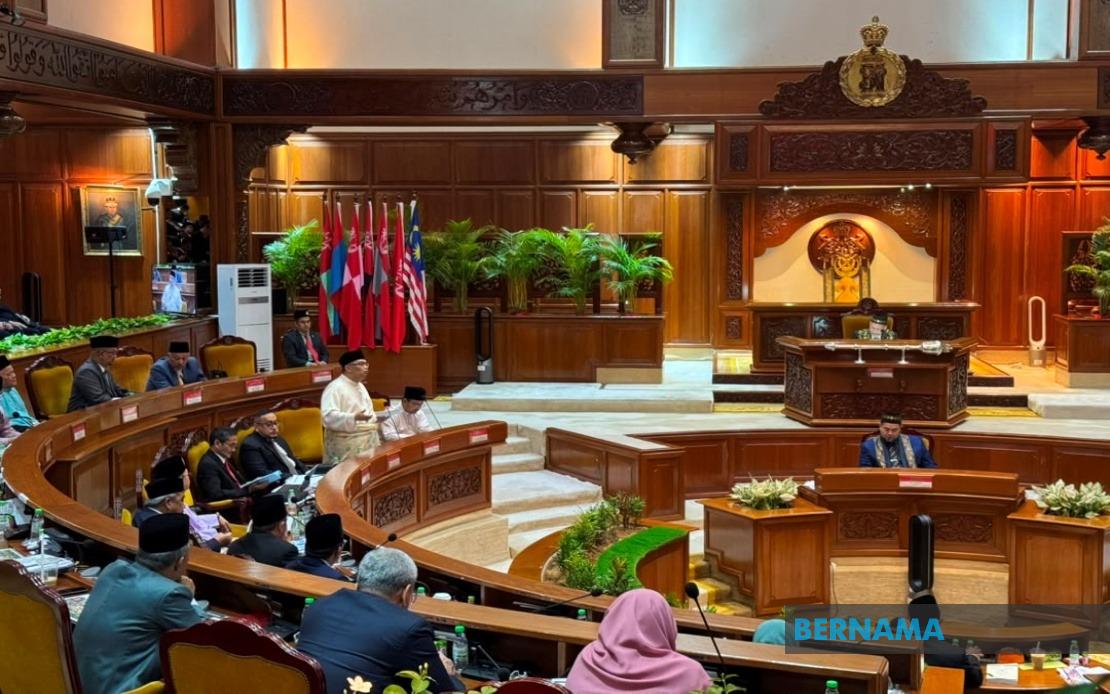
The Kelantan state legislative assembly has unanimously approved the Syariah Criminal Offences (Kelantan) Bill 2026, marking a significant legislative milestone for the northeastern state's Islamic law framework. Tabled by Deputy Menteri Besar Datuk Dr Mohamed Fadzli Hassan and supported through debate by six state assemblymen representing constituencies including Pasir Tumboh, Melor, Galas, Jelawat, Kota Lama and Chempaka, the new bill represents a deliberate effort to create a more coherent and constitutionally sound approach to Syariah criminal offences at the state level.
The legislation comprises nine distinct parts containing 62 clauses and a schedule, introducing several substantive reforms across the spectrum of Islamic criminal law. Among the key provisions are detailed obligations relating to the performance of mandatory prayers, enhanced protections for the safeguarding of private parts and bodily organs, measures concerning the protection of intellectual capacity, the introduction of restorative punishment mechanisms, the prioritisation of whipping as a designated punishment modality, and a simplified compound settlement procedure. These structural improvements signal an attempt to create a more systematic and transparent legal framework that addresses prior criticisms about clarity and implementation.
Menteri Besar Datuk Mohd Nassuruddin Daud emphasised during the assembly sitting that the bill had undergone meticulous development through multiple refinement stages before presentation to lawmakers. He stressed that the drafting process involved careful planning and extensive enhancement, reflecting the gravity with which the state government approached the legislation. Nassuruddin further noted that the foundational principles underpinning the new bill were not novel introductions but rather represented a continuation and revitalisation of the underlying spirit already embedded in Kelantan's existing Syariah Criminal Code (I) Enactment 2019, ensuring legislative continuity while addressing identified shortcomings.
The passage of this bill carries particular significance in light of a major Federal Court ruling delivered on February 9, 2024, which fundamentally disrupted Kelantan's prior Syariah criminal legislation. In that landmark decision, the Federal Court voted 8-1 to nullify 16 of the 18 provisions contained in the Kelantan Syariah Criminal Code (I) Enactment 2019. The court determined that the state legislative assembly had exceeded its constitutional authority by attempting to legislate on offences that fell within the exclusive domain of federal jurisdiction, triggering significant debate throughout Malaysia's legal and political circles regarding the proper delineation of powers between state and federal governments.
The Federal Court's decision stemmed from a constitutional petition filed by a lawyer practising in Kelantan, whose challenge exposed fundamental questions about the boundaries of state legislative competence in Islamic criminal matters. This legal uncertainty had created considerable ambiguity about which provisions could be enforced, placing state authorities and Islamic courts in a precarious position regarding the validity of prosecutions and punishments. The widespread implications of the ruling extended beyond Kelantan itself, raising broader questions about how other states with their own Syariah criminal legislation might be similarly affected and prompting legal scholars and policymakers across the country to reassess the constitutional framework governing religious law at the state level.
The 2026 bill appears designed to navigate the constitutional constraints identified by the Federal Court while preserving Kelantan's authority to legislate within its legitimate sphere. By restructuring provisions and potentially narrowing the scope of offences to align more clearly with matters within state jurisdiction, the legislation attempts to achieve greater constitutional defensibility. The renewed emphasis on systematic arrangement and clarity in the bill's language suggests a deliberate effort to prevent future legal challenges based on vagueness or constitutional overreach.
For Malaysian readers, the passage of this legislation represents an important development in how states attempt to balance religious governance with constitutional federalism. Kelantan, as a state with a significant Islamic focus and PAS political leadership, has long sought to strengthen its Islamic law framework. However, the Federal Court's intervention demonstrated that enthusiasm for religious law expansion must operate within established constitutional parameters. The new bill exemplifies how states can pursue their policy objectives while working within those judicial boundaries.
The immediate practical implications are substantial for Kelantan's Islamic courts and enforcement agencies. With a clearer legislative foundation, religious prosecutors can proceed with greater confidence in bringing cases, and courts can apply punishments without fear of subsequent nullification. The restorative justice elements and compound mechanisms introduced in the bill also suggest a more nuanced approach to enforcement, potentially allowing flexibility in how offences are handled while maintaining the state's Islamic governance objectives.
For the broader Southeast Asian region, this development reflects ongoing tensions between religious law ambitions and constitutional safeguards that exist across Muslim-majority jurisdictions. Malaysia's federal structure means that such tensions play out through state-federal dynamics, but comparable challenges exist in other countries managing the relationship between religious legal systems and secular constitutional frameworks. Kelantan's experience and the Federal Court's interpretation may influence how other states approach Islamic legislation going forward.
The unanimous passage of the bill indicates strong political consensus within the Kelantan assembly, suggesting that legislators across different factions within the coalition supporting the state government view the legislation as necessary and appropriately calibrated. This unanimity may also reflect recognition that the previous legal framework's constitutional vulnerabilities required addressing, and that the revised approach offers a more stable foundation for Islamic governance.
Looking ahead, the true test of the 2026 bill's success will lie in its implementation and its reception by Malaysia's judiciary. Should legal challenges emerge, the Federal Court's interpretation of whether the bill's provisions remain within state jurisdiction will ultimately determine the legislation's durability. The legal community will be watching closely to see whether the restructured framework successfully operates within constitutional limits or whether further refinement becomes necessary. For Kelantan's government, the bill represents a carefully considered attempt to advance Islamic governance while respecting constitutional boundaries—a balance that will continue shaping Malaysia's federal-religious law relationship for years to come.

