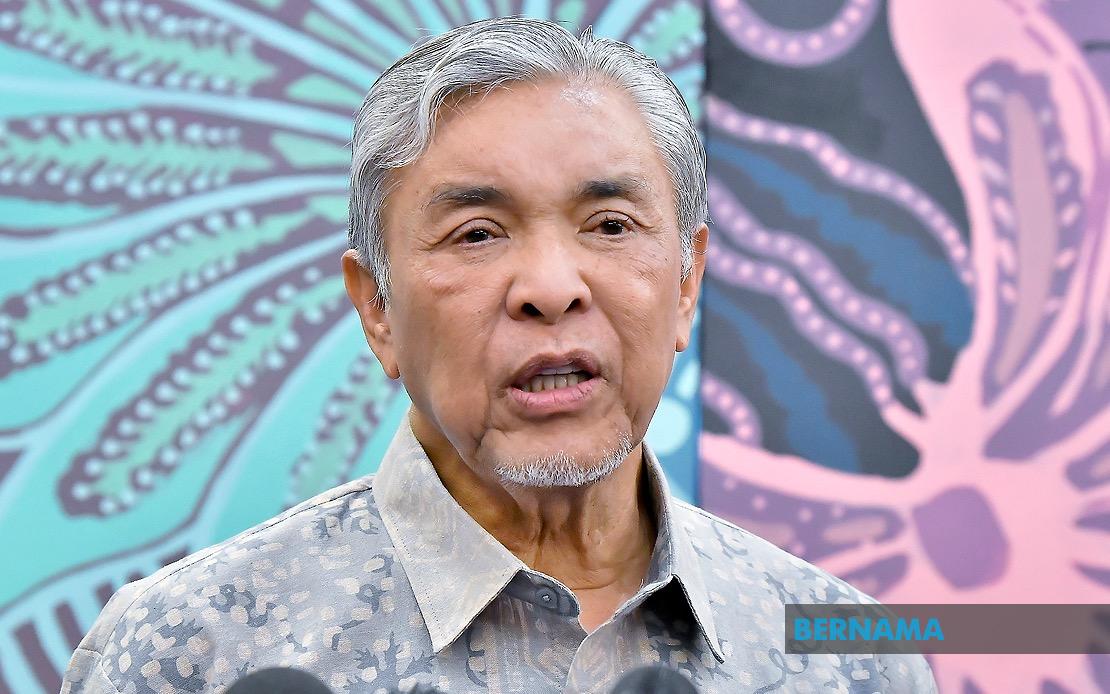
Deputy Prime Minister Datuk Seri Dr Ahmad Zahid Hamidi has moved to address widespread public concern about the proposed expansion of the South East Johor Development Authority, emphasising that the initiative centres on better coordination of regional development rather than any land acquisition agenda. Speaking at an event in Kota Tinggi, Ahmad Zahid, who also oversees the Rural and Regional Development Ministry, sought to dispel misconceptions that KEJORA intends to gain ownership rights over land in the districts targeted for expansion.
The clarification comes as KEJORA pursues an enlarged development footprint across south-eastern Johor, a region experiencing significant economic momentum. The authority's expansion proposal has generated discussion among stakeholders concerned about administrative changes and jurisdictional shifts. Ahmad Zahid's statement represents an attempt to reframe the expansion within a purely developmental context, positioning it as a means to accelerate growth rather than concentrate ownership or control.
A key pillar supporting the expansion proposal is KEJORA's operational track record. The authority has achieved a 98.3 per cent success rate across its implemented projects, figures that Ahmad Zahid highlighted as the primary justification for broadening its remit. This performance metric underscores the organisation's capacity to execute complex development initiatives effectively, which proponents argue would benefit areas beyond its current jurisdiction. The strong historical results suggest that expanded authority could replicate past successes across additional districts, particularly in areas experiencing rapid economic transformation.
Central to the expansion strategy is Pengerang, a district experiencing accelerated development driven by major industrial and tourism projects. This area has become a focal point for economic activity in the region, necessitating enhanced coordination of infrastructure, services, and development planning. By extending KEJORA's purview to include such rapidly expanding zones, the authority would theoretically be better positioned to manage the complex development challenges arising from increased investment and population growth.
Support for the expansion initiative appears substantial based on preliminary evidence. KEJORA commissioned a public feedback study that yielded a 96 per cent approval rate among surveyed respondents, suggesting broad community acceptance of the proposal. This data point provides political cover for the initiative and suggests that expansion enjoys significant grassroots backing, though the methodology and sample size of this study remain undisclosed.
Despite the apparent public support and strong operational credentials, implementation of the expansion requires formal approval from the highest constitutional authorities. Ahmad Zahid emphasised that the proposal remains contingent on the consent of His Majesty Sultan Ibrahim and the Regent of Johor, Tunku Mahkota Ismail. This procedural requirement reflects Malaysia's constitutional framework, where sultans retain substantial authority over land and administrative matters within their respective states. The need for royal endorsement introduces a layer of political formality that legitimises the process while potentially slowing implementation.
Funding commitments underscore the government's seriousness about regional development expansion. The Rural and Regional Development Ministry has allocated approximately RM138 million to KEJORA for implementation of development initiatives across the targeted areas. This financial commitment will support 107 programmes already underway, with an additional 350 smaller projects planned for execution under the allocation. The magnitude of this investment demonstrates a substantial government commitment to accelerating economic development in south-eastern Johor.
Also present at the event was Minister in the Prime Minister's Department (Law and Institutional Reform) Datuk Seri Azalina Othman Said, who represents Pengerang as Member of Parliament. Azalina has championed a complementary proposal to elevate Pengerang to full district status, arguing that the area's rapid growth justifies administrative reorganisation. This proposal aligns with broader regional development ambitions and would provide Pengerang with enhanced local governance capacity. Ahmad Zahid publicly endorsed this elevation proposal, signalling inter-ministerial alignment on regional development strategy.
Azalina's push for district status reflects recognition that Pengerang's economic trajectory has outpaced existing administrative structures. The area's development has been propelled by significant industrial investments and emerging tourism potential, creating demand for more sophisticated local governance. Upgrading Pengerang to district status would facilitate more responsive administration and potentially improve service delivery to a rapidly expanding population.
Compounding these administrative initiatives is a proposal to construct a new hospital in Pengerang to serve the district's growing population. Both Ahmad Zahid and Azalina highlighted this healthcare infrastructure project as essential to supporting continued economic expansion and improving quality of life for residents. The hospital proposal represents a social dimension to the broader development agenda, addressing fundamental service needs that typically lag behind commercial and industrial growth.
For Malaysian readers and regional observers, these developments signal accelerated economic and administrative restructuring in south-eastern Johor. The KEJORA expansion, though framed as coordination-focused, represents a significant shift in how the state approaches regional governance and development planning. By centralising development authority and expanding institutional reach, the government aims to overcome coordination failures that often plague multi-district economic zones. The approach reflects lessons learned from other integrated development authorities globally, where unified planning and execution have delivered superior outcomes compared to fragmented local administration.
The convergence of multiple initiatives—KEJORA expansion, Pengerang's elevation to district status, and new healthcare infrastructure—suggests a comprehensive vision for transforming south-eastern Johor into a more cohesive economic and administrative unit. This bundled approach to regional development may serve as a template for other Malaysian zones experiencing rapid economic expansion. Whether the initiatives deliver anticipated benefits will depend heavily on effective inter-agency coordination, prudent financial management, and sustained political commitment beyond the current electoral cycle.

