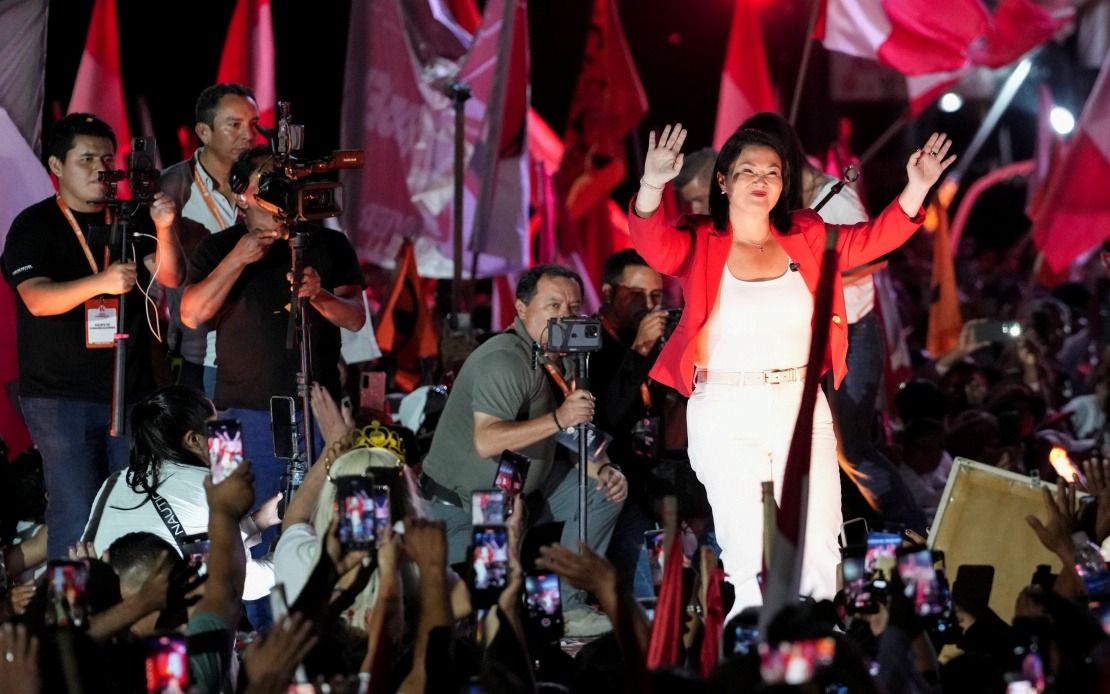
Peru's presidential election has produced a narrow victory for right-wing candidate Keiko Fujimori, who secured 50.135 per cent of the valid votes according to the complete official count released on Monday by the National Office of Electoral Processes (ONPE). The wafer-thin margin underscores the deep political divisions within the South American nation and signals potential instability ahead for the incoming administration.
Fujimori accumulated 9,223,396 votes compared to her principal rival Roberto Sanchez's 9,173,755 votes, giving her a working majority of just 49,641 ballots across the entire electorate. This microscopic advantage—representing less than one percentage point—delivered Fujimori what will be her first presidential victory after three unsuccessful campaigns, signalling the electorate's protracted deliberation over her candidacy despite her prominent family background.
The ONPE confirmed that all 92,766 tally sheets from the June 7 election had been fully processed and verified by the time Monday's announcement was made, providing an authoritative baseline for electoral calculations. Roberto Burneo, president of the National Jury of Elections, indicated that official proclamation of the results was scheduled for Friday, allowing a brief window for any final legal challenges or procedural formalities before the winner's mandate becomes constitutionally binding.
Fujimori's political lineage significantly shaped her candidacy and the electorate's response. She is the daughter of Alberto Fujimori, who held the presidency for a decade between 1990 and 2000, overseeing a period marked by both economic stabilization efforts and controversial security operations. Her family name carries both considerable weight and considerable baggage within Peruvian political discourse, potentially explaining why her victory margin proved so narrow despite representing a clear plurality.
Sanchez, representing the Together for Peru coalition, brought recent government experience to the race, having served as a minister during Pedro Castillo's presidency from 2021 to 2022. His candidacy appeared to capitalize on discontent with political establishment figures, yet ultimately fell short in convincing voters to extend his mandate beyond the narrow electoral window. The closeness of the result suggests that Peruvian voters remained genuinely divided over the competing visions offered by these two candidates.
For Malaysian and broader Southeast Asian observers, Peru's election outcome demonstrates how fragmented electoral landscapes can produce leaders with modest democratic mandates. Fujimori's sub-51-per-cent victory raises questions about governing legitimacy and her capacity to build consensus on contentious issues facing Peru. In regional contexts where coalition-building and consensus politics feature prominently in governance models, such a narrow victory might prove particularly challenging for implementing substantive policy reforms.
The tight result also reflects broader patterns evident across Latin America regarding voter scepticism toward traditional political elites and family-based political dynasties. Fujimori's narrow success, despite her surname's historical prominence, suggests that Peruvian voters approached her candidacy with considerable reservation and required her to essentially split the electorate rather than secure commanding support for her political platform.
The extended counting period and delayed final proclamation, while routine in Peruvian electoral processes, underline the technical complexity and verification requirements inherent in contemporary elections across the developing world. The ONPE's methodical approach to confirming all tally sheets reflects international best practices in electoral integrity, though the narrow margin means that verification procedures become particularly consequential when separating victor from vanquished.
Looking forward, Fujimori's administration will likely face considerable pressure from the substantial portion of the electorate that voted against her. With nearly half of all Peruvian voters explicitly rejecting her candidacy, building cross-coalition legislative support for major policy initiatives could prove problematic. This dynamic mirrors challenges facing governments across the region that have assumed office without commanding popular enthusiasm, particularly when seeking to implement unpopular but necessary reforms in areas such as fiscal management or pension systems.

