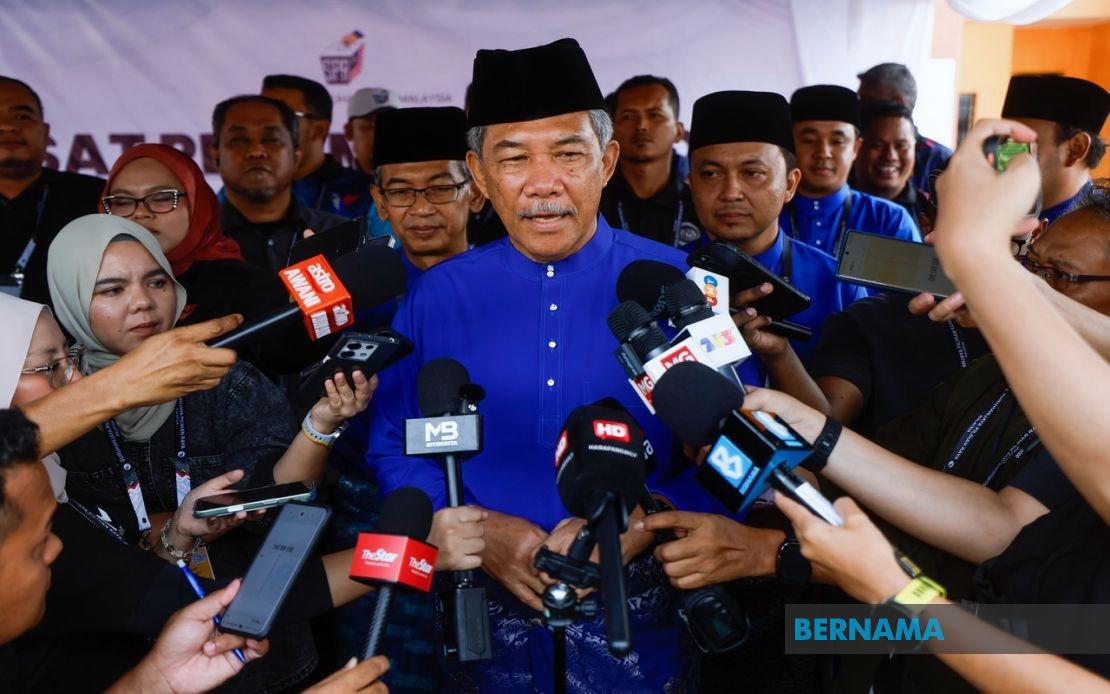
Barisan Nasional deputy chairman Datuk Seri Mohamad Hasan has issued a direct caution to party operatives competing in Negeri Sembilan's 16th state election, urging them to refrain from exploiting adat—the state's cherished traditional customs—as campaign fodder. Making the appeal at the nomination process in Rembau on July 18, the UMNO deputy president stressed that preserving the integrity of these longstanding cultural institutions takes precedence over electoral calculations, and that integrating adat matters into political messaging risked fracturing the state's social cohesion.
The Negeri Sembilan adat system carries deep historical and institutional significance. The state's unique feudal structure, governed through its Council of Rulers and adat protocols, has long served as a pillar of governance and communal identity. By explicitly cautioning against politicising these traditions, Mohamad underscored a recognition that adat operates in a sphere demanding neutrality and respect that electoral competition fundamentally threatens. When customary practices become partisan battlegrounds, the legitimacy of the institutions safeguarding them erodes, and public trust—essential to both cultural and political stability—deteriorates.
What renders this warning particularly instructive is its implicit acknowledgment that such temptations exist within Barisan Nasional's own machinery. By preemptively laying down this boundary, Mohamad signalled that individual candidates or state-level operatives might otherwise be inclined to mobilise adat grievances or reinterpretations as mobilisation tools. The candid reminder suggests that the discipline required to maintain this separation demands active leadership enforcement rather than passive adherence. In competitive electoral environments where every messaging angle holds strategic value, voluntary self-restraint becomes exceptional.
The timing of this appeal is instructive as well. With the Negeri Sembilan Legislative Assembly dissolved on June 5 and polling set for August 1, the campaign window compresses competition into a high-pressure sprint. Under such conditions, parties often stretch ethical and institutional boundaries seeking marginal advantage. Mohamad's statement functioned partly as preventive discipline—establishing a clear line before frontline campaigners might blur it under electoral pressure. This approach reflects mature institutional thinking, recognising that some boundaries, once crossed, prove difficult to re-establish.
Regarding broader electoral architecture, Mohamad addressed the ongoing understanding between Barisan Nasional and Perikatan Nasional in the state contest. He characterised their arrangement as a continuation of existing electoral coordination rather than a formal coalition merger akin to the Johor arrangement. This distinction carries weight: while coalition formation implies structural unity and shared governance frameworks, an electoral understanding permits discrete operation with tactical cooperation on candidate placement. Across the 36 state seats, both coalitions have negotiated which constituencies each will contest, effectively dividing the battlefield to concentrate their respective strengths and avoid three-cornered contests that might splinter anti-incumbent votes.
This architecture reflects evolving pragmatism in Malaysian electoral politics. Rather than pursuing zero-sum competition across every seat, sophisticated operators recognise that maximising total seats won by ideologically aligned or mutually acceptable coalitions sometimes surpasses attempts at total victory. For Negeri Sembilan, this understanding ostensibly permits BN and PN to each win constituencies where they possess natural advantages, avoiding wasteful vote-splitting that benefits neither. The sustainability of such arrangements depends critically on honour—on both coalitions genuinely respecting agreed boundaries and not deploying resources to undermine partners in designated constituencies.
The Negeri Sembilan electorate, numbering approximately 600,000 voters across 36 constituencies, faces substantive choices regarding state governance and development priorities. A fractious campaign environment contaminated by adat disputes would distract from these material considerations. Infrastructure, education, healthcare access, and economic opportunity constitute the genuine stakes in state elections, yet these issues often fade when cultural and identity grievances dominate campaign discourse. Mohamad's intervention therefore implicitly advocates for elevating campaign discourse toward substantive governance questions rather than allowing tribal or customary disputes to commandeer public attention.
For Malaysian politics more broadly, this episode illuminates enduring tensions between institutional respect and electoral competition. Adat, like Islam, monarchy, and bumiputera arrangements, represents a foundational pillar of the Malaysian constitutional settlement. Parties compete fiercely on economic and governance questions, yet boundaries exist—however contested—that responsible players theoretically decline to transgress. Mohamad's statement reaffirmed this principle, suggesting that even in intensely competitive environments, preserving institutional sanctity and cultural respect constitutes a non-negotiable commitment.
The enforcement mechanisms underlying such commitments, however, remain opaque. Mohamad issued the warning as deputy chairman, commanding institutional authority; yet field operatives, especially those facing defeat, might rationalise that pushing boundaries slightly would yield electoral advantage. Whether BN's internal party discipline proves sufficient to maintain this boundary throughout a heated two-week campaign remains uncertain. Malaysian electoral history contains episodes where high-level principled statements have failed to constrain lower-level practitioner behaviour, particularly when electoral margins prove tight.
For Southeast Asian observers, Negeri Sembilan's approach offers a case study in how multiethnic democracies manage the intersection of cultural institutions and competitive politics. Unlike systems where adat remains purely ornamental, Negeri Sembilan's governance structures genuinely incorporate customary law and institutional authority. This integration creates both richness and vulnerability—richness through authentic cultural representation, vulnerability through the risk that political actors might exploit customary grievances or reinterpret traditions to serve electoral ends. The state's success in compartmentalising these domains depends on sustained elite consensus that certain institutional spheres transcend partisan competition.
The election schedule—early voting on July 28 and polling on August 1—provides limited time for observing whether Mohamad's admonition shapes actual campaign behaviour. Monitoring whether candidates, particularly those trailing in opinion surveys, resist the temptation to mobilise adat grievances as desperation strategies will reveal the depth of institutional commitment. If both coalitions maintain discipline, Negeri Sembilan's election could model how plural societies navigate the delicate balance between democratic competition and institutional respect. Conversely, any significant breaches would signal that electoral pressure, when sufficiently intense, erodes even consensual boundaries protecting core cultural institutions.

