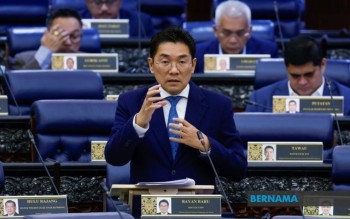
Kedah recorded RM1.4 billion in approved investments spanning 50 projects during the first three months of 2026, Deputy Investment, Trade and Industry Minister Sim Tze Tzin announced in Parliament this week. The figures reflect the ongoing execution of a deliberate government strategy aimed at leveraging major industrial zones to stimulate broader economic activity across the northern region while deliberately extending opportunities to historically underserved rural communities.
The government has identified three anchor development zones as the primary engines for this strategy: Kulim Hi-Tech Park, Kedah Rubber City, and the Kerian Integrated Green Industrial Park. Each facility serves as a concentrated hub for advanced manufacturing and technology-based enterprises. However, the policy framework extends well beyond these designated parks. Surrounding districts including Sik, Baling, and Padang Terap are positioned to benefit through employment generation and the development of vendor networks that support the larger industrial operations. This spillover mechanism represents a shift in regional development thinking, moving away from geographically concentrated growth toward a more integrated territorial approach.
Sim articulated the government's philosophical commitment during parliamentary questioning, emphasizing that economic benefits flowing from high-technology industrial investment must reach rural populations equitably. Rather than allowing wealth concentration in established industrial zones, the strategy envisions rural residents accessing quality employment and local businesses participating meaningfully in supply chains. This perspective directly addressed concerns raised by Ahmad Tarmizi Sulaiman, an opposition parliamentarian representing Sik, who pressed the government on concrete mechanisms for ensuring rural communities share in northern industrial prosperity.
The three priority rural districts possess distinct economic foundations that officials believe can be strengthened rather than displaced by regional industrialization. Baling, Sik, and Padang Terap maintain traditional strengths in agriculture-based manufacturing, particularly food processing and agro-industry sectors. Rather than competing with high-tech manufacturing, these areas are being encouraged to modernize within their existing competence. Government policy positions food processing and related agro-industries as priority sectors worthy of investment incentives equal to those offered to technology enterprises. This acknowledgment of comparative advantage respects local expertise while creating pathways for value addition within familiar production domains.
Infrastructure investment forms a crucial pillar supporting this dispersed development model. The government is directing substantial resources toward upgrading Federal Route FT004, specifically the corridor connecting Kulim Hi-Tech Park interchange to Bukit Karangan. This project, anticipated for completion by April 2028, addresses a critical transportation bottleneck limiting industrial expansion into inland areas. Improved connectivity directly influences business location decisions; enhanced road infrastructure makes rural sites viable for suppliers and supporting industries that currently concentrate near existing parks due to logistical constraints. The timing and scope of this infrastructure commitment demonstrates genuine government investment in enabling rural industrialization rather than mere rhetoric.
The New Incentive Framework introduced in March 2026 represents an innovative policy lever designed to naturally encourage supply chain localization. Under this system, foreign investors willing to increase their reliance on local vendors and domestically manufactured inputs receive enhanced government incentives compared to those maintaining imported supply chains. This structure creates market-driven motivation for multinational corporations to establish relationships with local suppliers rather than defaulting to established overseas networks. For rural districts, the mechanism opens pathways for local enterprises to participate in global supply chains through contracts with anchor investors, effectively creating technology transfer opportunities and capability development without requiring expensive direct foreign investment attraction efforts.
The localization incentive framework carries particular significance for Malaysian and Southeast Asian regional dynamics. As supply chain tensions persist globally and manufacturing increasingly distributes beyond single-country concentration, investor interest in developing robust local supplier networks has intensified. The NIF design positions Kedah competitively for capturing investment from companies seeking to diversify sourcing and reduce geographic concentration risk. Simultaneously, the policy creates opportunities for small and medium enterprises across northern Malaysia to graduate toward participation in multinational production networks, addressing longstanding concerns about SME integration into global value chains.
Rural employment generation represents perhaps the most immediate household-level benefit from this industrial strategy. High-technology manufacturing facilities typically create ancillary service and support roles beyond core production, spanning logistics, maintenance, quality assurance, and administration. Even without direct factory employment, supplier development creates opportunities across broader occupational ranges. For districts experiencing historical rural-to-urban migration, employment availability closer to home strengthens demographic stability and reduces pressure on urban housing and infrastructure. The strategy implicitly acknowledges that industrial development need not mean urban concentration if supporting infrastructure and vendor ecosystems develop in coordination with manufacturing hubs.
Implementation challenges remain substantial. Coordinating infrastructure development, investor recruitment, and local business capability building across multiple jurisdictions requires sustained institutional effort. Rural businesses must upgrade operational standards and production capacity to meet international supplier requirements, demanding access to financing, technical training, and market information. The success of the NIF mechanism depends partly on investor willingness to invest in local supplier development rather than simply meeting incentive thresholds through marginal localization adjustments. Government agencies responsible for implementing these interconnected initiatives must function cohesively despite organizational silos and political divisions that sometimes characterize Malaysian administrative structures.
For investors already operating within Kedah's industrial zones, the policy framework creates both opportunities and obligations. Companies benefit from enhanced incentives by deepening local sourcing, yet face responsibilities for supplier development that extend beyond transactional procurement. Forward-thinking multinational corporations view this as advantageous; building reliable local supply networks enhances operational resilience and reduces long-term costs. However, companies accustomed to relying on global supply networks may perceive localization requirements as imposing operational constraints. The government's challenge involves calibrating incentives sufficiently attractive to motivate behavioral change without rendering investment uneconomical for participating firms.
The broader context for Kedah's industrial strategy involves Malaysia's positioning within regional manufacturing competition. Thailand, Vietnam, and Indonesia have made substantial progress attracting technology-intensive manufacturing investment. Kedah's strategy of combining industrial clusters with deliberate rural economic integration offers a distinctive value proposition. Where competitors sometimes concentrate investment in capital-city regions, Malaysia's approach emphasizes geographic distribution of industrial benefits. This potentially appeals to investors conscious of social license concerns and seeking production locations with stable, prosperous communities rather than concentrated wealth enclaves vulnerable to labor disputes and social tension.
Looking forward, the trajectory established by RM1.4 billion in first-quarter approvals will shape regional economic outcomes across multiple years. If the Kulim Hi-Tech Park, Kedah Rubber City, and Kerian Integrated Green Industrial Park catalyze expected employment generation and if surrounding districts successfully develop supplier ecosystems, the model could inform industrial policy across Malaysia's other regions. Conversely, if spillover benefits fail to materialize and rural communities remain disconnected from industrial development despite proximity, the strategy would warrant substantial revision. The coming months and quarters will reveal whether coordination mechanisms sufficiently address implementation challenges and whether investors genuinely embrace localization opportunities or merely satisfy minimum threshold requirements.
The investment approvals announced by Deputy Minister Sim reflect not merely statistical achievements but reveal competing visions for Malaysian regional development. One perspective emphasizes maximal investor attraction through minimal constraints, allowing market forces to determine geographic concentration. The alternative, embodied in current policy, acknowledges that industrial development involves choices about inclusion and benefit distribution. By deliberately positioning infrastructure investment, supply chain incentives, and sector prioritization to extend industrial opportunity into rural districts, the government signals commitment to development models serving broader constituencies than immediate industrial zones. Whether subsequent implementation matches this ambition remains an open question central to Kedah's economic future.

