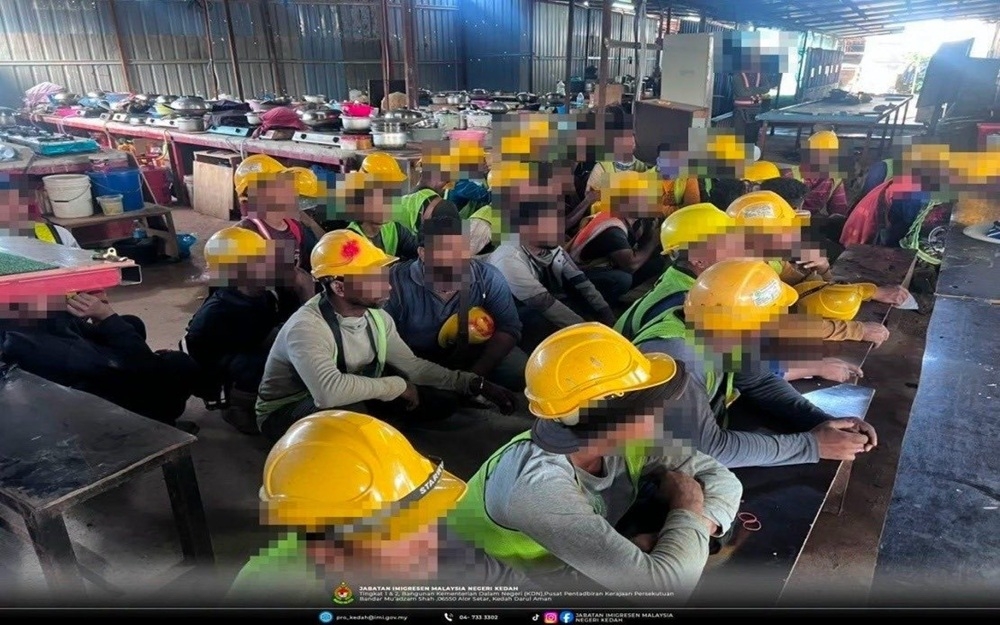
The Kedah Immigration Department has apprehended 81 undocumented migrants during an enforcement operation at a construction site in Alor Setar, marking a significant crackdown on unauthorised foreign workers in the state's building sector. The arrests, conducted as part of Ops Sapu, represent a coordinated effort by immigration authorities to identify and detain individuals residing or working without proper documentation.
Construction sites across Malaysia have long been identified as hotspots for undocumented migrant employment, where labour market pressures and cost-cutting incentives create conditions conducive to hiring workers without valid permits. The Kedah operation underscores ongoing compliance challenges within the building industry, where contractors sometimes rely on undocumented workers to reduce operational expenses. These enforcement sweeps serve as critical tools for authorities attempting to regulate the informal employment landscape and ensure workplace standards are maintained across major economic sectors.
Ops Sapu operations, meaning "sweep operations" in Malay, have become routine across Malaysian immigration enforcement. These coordinated raids target establishments suspected of harbouring undocumented migrants, from construction sites and manufacturing facilities to hospitality venues and agricultural operations. The Kedah Department's recent action demonstrates sustained commitment to immigration law enforcement, even as resources and personnel constraints continue to challenge enforcement capacity nationwide.
The detention of 81 individuals places significant administrative and logistical demands on immigration authorities. Detained migrants typically undergo documentation verification, health screening, and processing before deportation or other legal dispositions. The scale of this single operation illustrates the persistent volume of irregular migration throughout Malaysia, suggesting systemic challenges that extend beyond any single state or industry sector.
Undocumented migration creates multifaceted challenges for Malaysia's policymaking environment. Beyond immigration control concerns, irregular workers often face exploitation by unscrupulous employers who take advantage of their precarious legal status, paying below-market wages and providing substandard working conditions. Simultaneously, the presence of undocumented workers can create downward pressure on wages for Malaysian citizens and documented migrant workers, complicating labour market dynamics across sectors.
Construction remains particularly susceptible to irregular employment because of project-based hiring patterns, decentralised subcontracting arrangements, and high labour turnover. Site supervisors and contractors may prioritise speed and cost reduction over documentation verification, creating institutional incentives for hiring irregular workers. The physical remoteness of many construction sites also complicates oversight and monitoring by regulatory agencies.
The Kedah operation reflects broader national strategies to address irregular migration. Malaysia's immigration authorities have increasingly emphasised workplace enforcement alongside border control measures, recognising that many undocumented migrants enter the country through legitimate channels but subsequently overstay or work without authorisation. This distinction matters strategically, as it suggests enforcement must extend beyond traditional border management to encompass employment sector monitoring.
Regional context matters significantly for understanding Malaysia's immigration challenges. The country remains a primary destination for migrant workers from neighbouring economies including Bangladesh, Indonesia, Myanmar, and the Philippines, drawn by relatively higher wages and employment opportunities. While Malaysia maintains formal bilateral labour agreements with several source countries, irregular pathways continue to channel migrants into the workforce, outpacing documented channels and complicating regulatory oversight.
The detained migrants will likely face formal immigration proceedings, including health assessments and documentation reviews. Established procedures typically result in deportation to countries of origin, though processing timelines vary considerably depending on bilateral cooperation and individual circumstances. For Malaysia, each successful enforcement operation generates administrative costs while providing limited deterrent effect if labour market conditions remain favourable for irregular hiring.
For the construction industry specifically, this operation may prompt employers to review hiring practices and documentation verification procedures. However, unless enforcement becomes consistently stringent across all sectors and regions, competitive pressures may continue incentivising irregular employment practices. Companies achieving cost advantages through undocumented labour recruitment gain competitive edge over compliant competitors, creating perverse market incentives.
The incident also highlights implications for Malaysia's broader economic governance. Construction sector vitality matters considerably for economic growth and development objectives, yet reliance on undocumented workers creates vulnerabilities and inefficiencies. Sustained migration management requires addressing underlying labour market dynamics, including wage levels, working conditions, and employer compliance incentives, rather than enforcement operations alone.
Future immigration policy effectiveness in Malaysia will likely depend on balancing enforcement intensity with practical labour market realities. Sectors facing documented labour shortages may require expanded legal migrant worker programmes tailored to industry needs, potentially reducing irregular employment incentives. The Kedah operation demonstrates continued enforcement commitment, yet structural solutions addressing supply-demand mismatches may prove more effective for achieving long-term migration management objectives.

