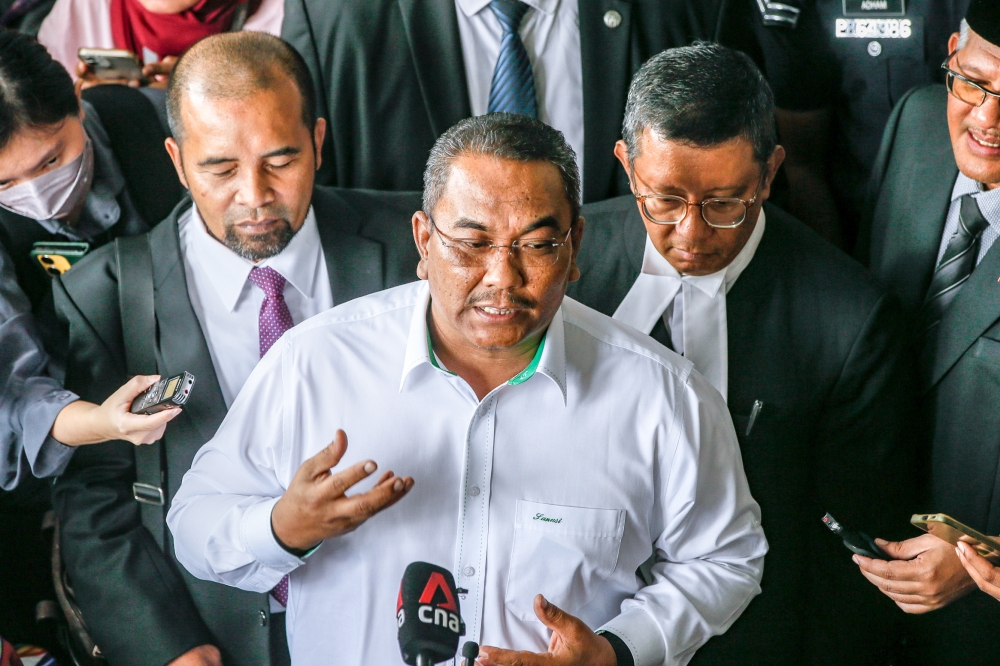
Kedah Menteri Besar Datuk Seri Muhammad Sanusi Md Nor has taken legal action against DAP politician Nga Kor Ming and two others, issuing formal letters of demand on allegations that they misrepresented his remarks to the public. The move reflects escalating tensions between the state administration and the opposition party, with the chief minister's office asserting that his comments were deliberately twisted to portray him in an unfavourable light.
The letters of demand signal Sanusi's willingness to pursue court action should the recipients fail to respond adequately or provide satisfactory explanations for their alleged conduct. In Malaysian political discourse, such formal legal notices typically precede defamation suits or other civil proceedings, and they represent a significant escalation beyond routine partisan exchanges. The decision to involve legal channels rather than rely solely on public rebuttals demonstrates the gravity with which the Kedah leadership views the dispute.
Nga Kor Ming, a senior DAP figure and prominent voice in Peninsular Malaysia's opposition coalition, has been identified as a primary recipient of the demand. The DAP, which holds considerable influence in several states and maintains a presence in the Dewan Rakyat, has become increasingly vocal in its criticism of various state administrations, including Kedah's. The conflict between Sanusi's administration and the party reflects broader national political divisions that have become more pronounced in the post-2022 political landscape.
The specific nature of the alleged distortions centres on statements Sanusi made during recent weeks, though the exact remarks have not been fully detailed in available reports. Political figures often find themselves in disputes over the interpretation of their words, particularly when comments made in one context are reproduced in another or subjected to different framing by political opponents. In Kedah's case, the chief minister appears convinced that a deliberate campaign has been mounted to misrepresent his position on matters of public concern.
This confrontation must be understood within Kedah's particular political dynamics. The state, governed by Barisan Nasional under Sanusi's leadership, operates in an environment where opposition voices have grown stronger in recent years. The relationship between the state government and federal-level opposition parties like DAP has become increasingly adversarial, with both sides deploying various tools—legislative, administrative, and legal—to advance their interests and constrain their opponents.
The involvement of two additional recipients alongside Nga Kor Ming suggests that multiple individuals may have participated in amplifying or circulating the disputed statements. This could include party members, media representatives, or public figures who helped disseminate content that Sanusi's office deems misrepresentative. The breadth of the legal challenge indicates the scale of the perceived distortion campaign from the chief minister's perspective.
For Malaysian readers, particularly those in Kedah, this development carries practical implications regarding political accountability and the boundaries of permissible criticism. When senior politicians resort to legal measures, they are essentially asking courts to determine where the line between legitimate political opposition and actionable misrepresentation lies. These cases often generate significant public attention and can influence perceptions of political fairness and press freedom.
The timing and substance of such disputes frequently intersect with broader policy disagreements. Politicians typically do not pursue legal action over trivial matters; the decision to issue letters of demand suggests that Sanusi believes the misrepresentation has caused tangible harm to his reputation or political standing, or has misled the public on substantive matters of governance. Understanding what triggered this response would require clarity on the original statements and how they were allegedly distorted.
For the DAP and its allies, the letters of demand present both challenges and opportunities. On one hand, they face potential legal liability and the costs associated with defending against claims. On the other hand, opposition parties often use such legal challenges as evidence of political suppression, arguing that governments weaponise the courts against critics. The party's response strategy will likely balance legal defence with public messaging aimed at portraying themselves as victims of governmental overreach.
The broader context includes Malaysia's complex legal framework surrounding defamation, sedition, and political speech. Unlike some democracies with robust protections for political commentary, Malaysian law provides considerable scope for individuals—particularly those in power—to pursue legal remedies against statements they consider false or damaging. This asymmetry has long been a subject of debate among civil society organisations and media freedom advocates.
The coming weeks will be crucial in determining how this dispute evolves. Should the recipients of the letters of demand respond substantively and to Sanusi's satisfaction, the matter may be resolved without court proceedings. If not, the chief minister's office may proceed with formal legal action, potentially creating a precedent that other state leaders could follow. Such litigation would extend beyond Kedah's borders, offering insights into how Malaysian courts interpret political speech and the limits of permissible criticism directed at public officials.
This incident underscores the increasingly legalistic character of contemporary Malaysian politics, where factual disputes between politicians often become judicial matters. It also highlights the persistent tension between protecting individuals' reputational rights and preserving space for robust democratic debate—a challenge that Malaysian democracy continues to navigate without clear consensus.

