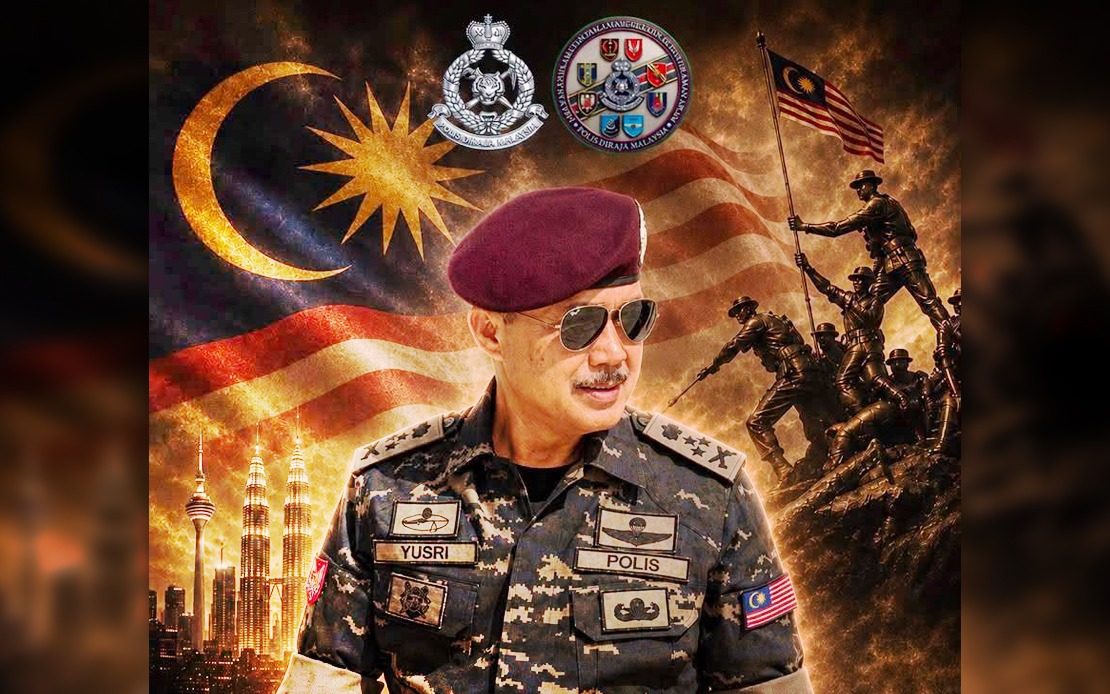
Datuk Seri Mohd Yusri Hassan Basri will trade his high-powered BMW motorcycle for a white horse when he leads the Royal Malaysia Police contingent at the 69th National Day Parade in Putrajaya on Monday. The shift from last year's roaring engine to the clip-clop of hooves represents a significant symbolic change in how the police force presents itself during Malaysia's most important national celebration.
As director of the Department of Internal Security and Public Order (KDNKA), Mohd Yusri will ride Al-Sakb, a white horse, to lead a 595-strong police detachment comprising officers at various ranks. The Federal Reserve Unit's Mounted Unit, featuring 20 personnel and 20 horses, will form the vanguard of this contingent. This arrangement blends Malaysia's police heritage with its modern operational identity, presenting both traditional pageantry and contemporary capability.
The transition from motorcycle to mounted leadership reflects Mohd Yusri's changing responsibilities within the police hierarchy. Previously, when he headed the Traffic Investigation and Enforcement Department (JSPT), he led that department's parade team aboard a BMW R 1250 RT motorcycle. His appointment as KDNKA director brought with it the honour and challenge of leading a broader security contingent through a different mode of presentation. The shift demands not only a change in riding skills but also a recalibration of how he approaches leading Malaysia's internal security apparatus in public view.
Preparing for this ceremonial role has proven demanding. Mohd Yusri underwent more than a month of intensive training to ensure he could guide both the Mounted Unit and the wider contingent with precision and grace. This preparation period underscores the seriousness with which Malaysian security leadership approaches National Day participation. The training focused on synchronisation between horse and rider, coordination with the broader contingent, and maintaining the formal bearing expected of a senior police official during the nation's premier celebration.
Beyond the mounted pageantry, the KDNKA contingent will demonstrate the full spectrum of Malaysia's internal security capabilities. The General Operations Force and Air Operations Force will be prominently featured, illustrating how PDRM operates across different operational domains. This comprehensive display serves multiple purposes: it celebrates Malaysia's security infrastructure while reassuring citizens of their protection and showcasing the professionalism of those tasked with maintaining national order.
Technology will play an equally prominent role in demonstrating PDRM's evolution. Ten newly acquired All Terrain Tactical Assault E-Bikes, high-performance electric motorcycles supplied to the GOF, will feature alongside the traditional mounted unit. These vehicles represent investment in border patrol, security operations, and tactical response capabilities. The juxtaposition of modern electric motorcycle technology with horses symbolises how Malaysia's security forces blend heritage respect with technological advancement, a balance increasingly important in Southeast Asian defence and policing contexts.
The K9 Unit's 16 dogs will add another operational dimension to the parade display. These elite canine units represent specialised security capabilities that have proven invaluable in counter-terrorism and border security operations across the region. Their presence reminds Malaysians that contemporary police work depends on diverse tools and training, from trained animals to advanced electronics. The unit showcases PDRM's investment in specialised capabilities that many international observers consider amongst Southeast Asia's more sophisticated security resources.
Airspace will not be neglected in PDRM's demonstration. An AW139 helicopter operated by the force will conduct a flypast over Dataran Putrajaya, representing the police air operations capability. This element adds a three-dimensional aspect to the contingent's presentation, visually demonstrating that PDRM's reach extends from ground level to the skies above Malaysia's territory. For a region facing increasing challenges from aerial incursions and drone-based security threats, this display carries particular relevance.
Mohd Yusri has emphasised that meticulous coordination will be essential for the parade's success. Every element, from the Mounted Unit's formation to the deployment of tactical assets, must operate in perfect synchronisation to project an image of police professionalism and cohesion. This attention to detail reflects broader efforts within PDRM to maintain public confidence in security institutions during a period of evolving security threats across Southeast Asia. The parade serves not merely as spectacle but as a statement of capability and commitment.
Weather considerations loom as a practical concern for the Monday parade. Tropical conditions in Putrajaya during August can be unpredictable, potentially affecting both horse and rider performance, and the comfort of spectators. Mohd Yusri acknowledged this variable while expressing confidence that preparations and training have positioned the contingent to deliver an effective display regardless of conditions. This pragmatic approach reflects operational thinking within PDRM, where planning must account for environmental factors that could affect performance.
Mohd Yusri has urged Malaysians to attend the parade with their families, framing National Day participation as an opportunity to experience national unity and independence commemoration firsthand. This appeal to public engagement carries weight beyond ceremonial observation, as widespread civilian attendance at national celebrations reinforces social cohesion and collective identity. In a multicultural, multi-faith nation like Malaysia, such moments of shared national participation serve important social functions alongside their commemorative purpose.
The parade represents an intersection of tradition and modernity that characterises contemporary Malaysia. The white horse and mounted officers evoke the country's heritage and the historical role of mounted police in colonial and post-independence Malaysia, while the tactical electric bikes, helicopter assets, and K9 units demonstrate how PDRM has evolved to meet 21st-century security challenges. This synthesis reflects Malaysia's broader positioning as a nation respecting its past while embracing technological and operational advancement necessary for regional security leadership and domestic stability in an increasingly complex geopolitical environment.

