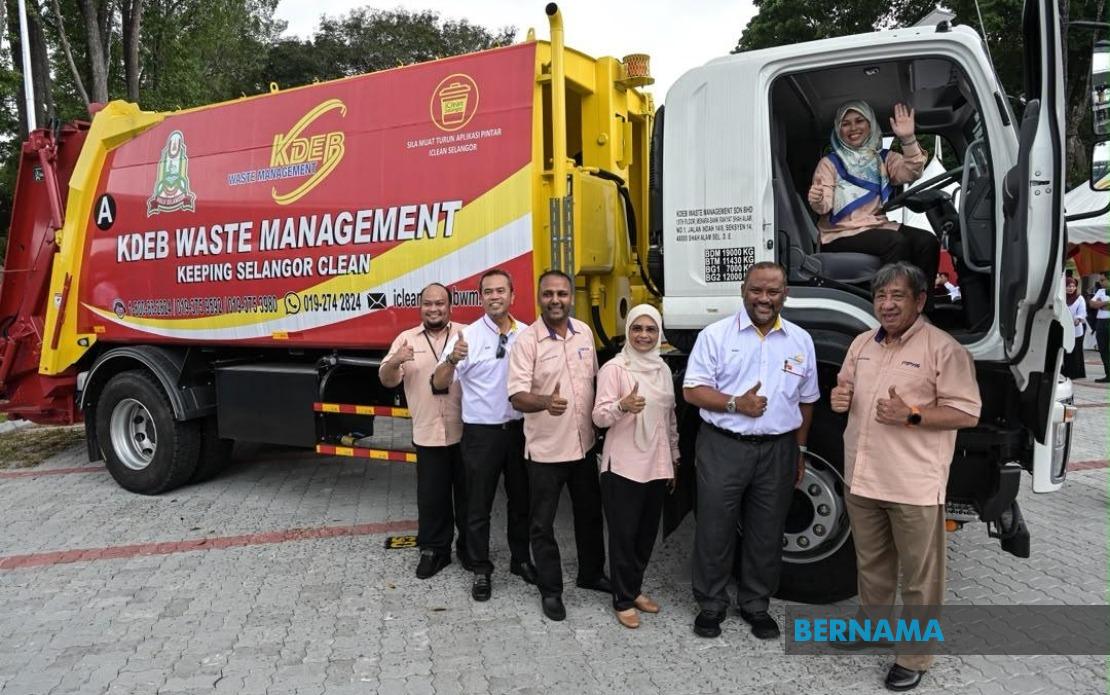
KDEB Waste Management (KDEBWM) has formally launched its second cycle of refuse collection operations in Hulu Selangor, commencing July 1 with a substantial investment in fleet modernisation. The company has deployed 33 newly acquired compactor lorries to handle domestic waste streams across the municipality, marking the beginning of a seven-year service agreement that extends until June 30, 2033.
The refreshed fleet comprises vehicles from three major manufacturers tailored to local operational requirements. Eighteen units feature Isuzu engineering, complemented by five Mitsubishi Fuso vehicles and ten UD Trucks, each equipped with contemporary waste compression technology designed to optimise collection routes and reduce environmental impact. This deliberate mix of suppliers suggests KDEBWM's approach to maintain competitive procurement practices whilst ensuring equipment reliability across diverse terrain types typical of Selangor's municipalities.
Datak Ramli Mohd Tahir, who leads KDEBWM as managing director, contextualised the expansion within the company's established performance record. During its initial seven-year tenure commencing in 2018, the operator consistently managed volumes ranging between 100 and 150 tonnes daily. The incoming contract anticipates significantly higher demand, with projections indicating daily collections between 150 and 250 tonnes, with potential to exceed 300 tonnes under peak conditions. This trajectory reflects population growth and increased commercial activity within Hulu Selangor district, positioning waste management infrastructure as a barometer for regional economic development.
The financial commitment underpinning this arrangement totals RM117.2 million across the contract period, translating to approximately RM16.7 million in annual expenditure. For Malaysian municipal administrators overseeing similar waste portfolios, this expenditure level provides a useful benchmark for budgeting refuse collection services across comparable urban-suburban landscapes. The arrangement represents one of Southeast Asia's substantial waste management contracts, illustrating the region's growing investment in sanitation infrastructure as urbanisation accelerates.
Hulu Selangor Municipal Council president Julaihah Jamaludin articulated the municipality's complementary strategy regarding industrial waste streams. Recognising that small and medium enterprises generate distinct disposal requirements, KDEBWM and the council have established a parallel framework deploying licensed concession panel operators to collect manufacturing and commercial waste separately from residential sources. This segregated approach prevents contamination of domestic waste streams whilst enabling recycling and material recovery opportunities within the SME sector.
A significant operational transformation accompanying this contract involves transitioning residential collection methodology. Beginning July 1, KDEBWM implemented a door-to-door collection schedule replacing the conventional leach bin system previously utilised across Hulu Selangor. This modernisation demands resident participation through provision of standardised waste receptacles, specifically covered bins with minimum 120-litre capacity clearly marked with property identifiers. The transition represents a common municipal evolution toward managed collection systems that enhance public health outcomes and facilitate waste data collection for resource planning.
Residents navigating this transition must observe specific waste preparation protocols. All domestic refuse must be contained within securely tied plastic bags prior to placement in the standardised bin, with bin lids maintained in closed position throughout the collection cycle. These requirements serve multiple objectives: preventing scavenger access, reducing stray animal interference with waste materials, minimising water ingress from tropical rainfall, and maintaining collection vehicle hygiene. For Malaysian householders accustomed to informal disposal practices, such formalised requirements represent a significant behavioural adjustment requiring sustained public education campaigns.
The door-to-door system's implementation reflects broader municipal governance trends across Malaysia and Southeast Asia, where local authorities increasingly adopt integrated waste management frameworks balancing environmental protection with service delivery efficiency. By establishing scheduled collection points and standardised container requirements, municipalities gain visibility into waste volumes, composition, and temporal patterns—data essential for optimising landfill operations and identifying recycling opportunities. Hulu Selangor's adoption positions the district as an early adopter of contemporary waste management practices within Selangor state.
KDEBWM's contract renewal after successful initial performance indicates institutional confidence in the operator's operational capabilities. Continuity in service provision reduces transition costs and maintains established community relationships, factors valued by municipal administrations managing large-scale infrastructure contracts. However, the significant increase in projected waste volumes suggests either population growth acceleration or improved collection coverage extending services to previously underserved areas within Hulu Selangor.
The 33-vehicle deployment addresses critical infrastructure capacity constraints identified during the preceding contract cycle. Malaysian municipalities frequently struggle to maintain adequate fleet availability when addressing unexpected maintenance requirements or peak seasonal demand periods. By deploying sufficient compactor units, KDEBWM buffers against operational disruptions whilst ensuring consistent service availability across collection zones. For residents, this translates to predictable collection schedules essential for residential planning, particularly in high-density areas where improper waste accumulation creates public health hazards.
Looking forward, the successful implementation of Hulu Selangor's door-to-door system may inform waste management policies across other Selangor municipalities and neighbouring states. Malaysia's ongoing urbanisation creates mounting pressure on sanitation infrastructure, with most municipalities operating near design capacity. Contracts such as KDEBWM's arrangement demonstrate how public-private partnerships, when properly structured with performance benchmarks and equipment investments, can enhance service quality whilst managing municipal fiscal constraints in an era of rising operational costs and environmental expectations.

