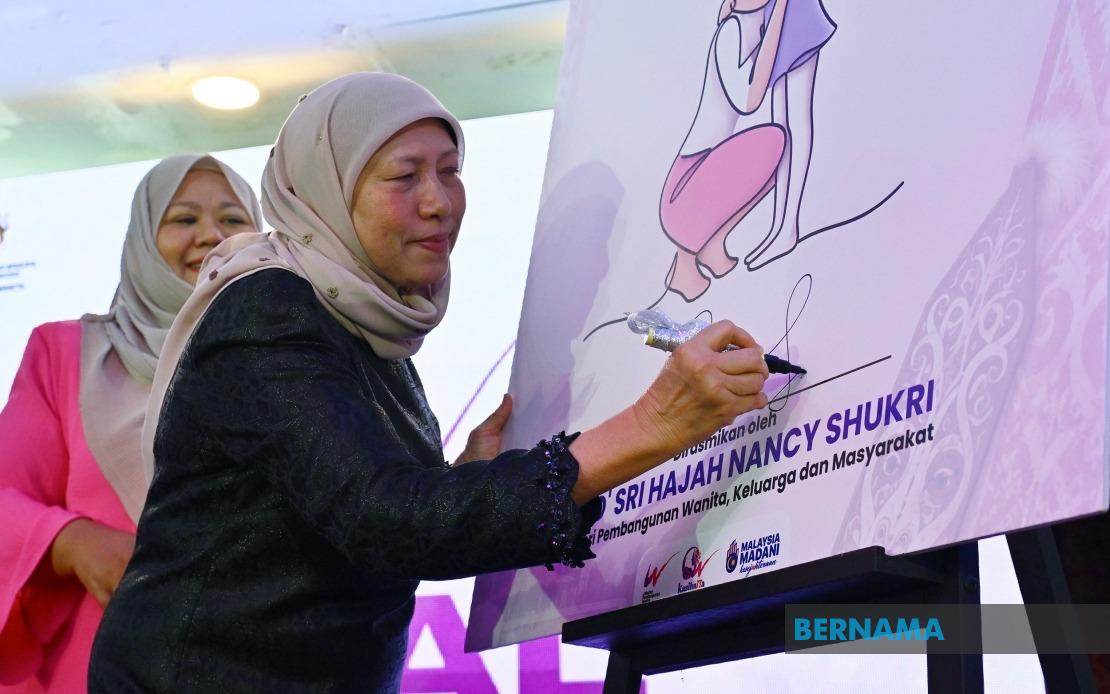
The Ministry of Women, Family and Community Development (KPWKM) has rolled out its KasihnITa single mothers support initiative in Sarawak, marking the latest phase of a nationwide empowerment drive that aims to equip vulnerable women with practical knowledge and access to government services. The programme represents a coordinated approach to addressing the multifaceted challenges faced by single mothers, bringing together multiple federal agencies under one platform to deliver comprehensive support across financial, legal and social dimensions.
Datuk Seri Nancy Shukri, the minister leading KPWKM, unveiled the Sarawak leg of the KasihnITa 2026 programme following its initial deployment in Selangor. She characterised the initiative as a carefully sequenced rollout designed to eventually reach single mothers across the country, reflecting the ministry's determination to systematically address gaps in existing support structures. The staged approach allows the government to refine its delivery mechanisms and gather insights from each location before expanding further, ensuring that interventions remain relevant and responsive to local contexts.
The programme operates by assembling representatives from key financial and judicial institutions to provide integrated guidance to participants. The Credit Counselling and Debt Management Agency (AKPK), Bank Negara Malaysia, the Legal Aid Department and the Syariah Judiciary Department each contribute specialised expertise, enabling single mothers to access advice across multiple domains simultaneously. This integrated model moves beyond siloed assistance, recognising that financial instability, legal disputes and welfare concerns often intersect in the lives of vulnerable families.
Financial literacy forms a cornerstone of the KasihnITa approach. Participants receive practical training in household budgeting, asset management and long-term financial planning—skills that enable single mothers to navigate economic pressures more effectively. Many single-income households in Malaysia face acute vulnerability to economic shocks, and equipping mothers with robust financial management capabilities can substantially improve family resilience. The programme acknowledges that poverty and financial stress often perpetuate cycles of instability, making financial education a transformative intervention.
Child maintenance disputes represent a critical challenge for Malaysian single mothers, and KasihnITa addresses this directly through its partnership with legal institutions. Many women struggle to enforce maintenance orders when ex-partners fail to comply, leaving them without critical income streams. By providing access to the Legal Aid Department and Syariah Judiciary specialists, the programme removes barriers to pursuing legal remedies. Nancy emphasised that legal support enables mothers to protect their children's economic interests, underscoring that assistance extends beyond temporary welfare handouts to encompass structural protections.
The ministry has positioned KasihnITa as part of a broader commitment to inclusive development, with Nancy stressing that no woman should be marginalised from Malaysia's development agenda. This framing reflects recognition that single mothers represent a significant demographic whose needs have historically received limited policy attention despite their vulnerability and contribution to the workforce. By positioning single mother support within the inclusivity framework, the ministry elevates the issue beyond charity to a matter of social equity and national development.
Participant feedback mechanisms embedded within KasihnITa serve a policy feedback function, allowing the ministry to gather direct input from beneficiaries rather than relying solely on administrative assessments. The inaugural Sarawak programme attracted approximately 130 participants across a three-day intensive, providing the ministry with valuable data on gaps between current policy provisions and actual single-mother needs. This evidence-gathering approach signals a shift toward more data-driven policymaking in the social support sphere.
The psychological dimension of the programme merits attention alongside its practical components. Nancy noted that gatherings like KasihnITa provide participants with community connection and mutual support, reducing the isolation that often characterises single motherhood. Peer networks generate emotional resilience and facilitate knowledge-sharing among women facing similar challenges, creating solidarity that complements formal institutional support. This community-building function addresses not only material deprivation but also social disconnection.
Sarawak's selection as the second deployment location reflects considerations about regional disparities in service accessibility. Many Peninsular Malaysians assume that federal government programmes concentrate in the Klang Valley, yet extending KasihnITa to Sarawak signals commitment to reaching disadvantaged mothers across East Malaysia. Geographic expansion also acknowledges that single mothers in rural and remote areas often face compounded challenges in accessing financial institutions, legal services and welfare information, making integrated outreach programmes particularly valuable.
The programme's integration with Bank Negara Malaysia and AKPK positions financial inclusion as central to single-mother empowerment. Access to formal financial services—including savings accounts, credit products and insurance—remains limited for many women in vulnerable circumstances. By facilitating connections between single mothers and major financial institutions, KasihnITa reduces reliance on informal lending and enables wealth accumulation pathways. This institutional integration also signals to financial providers that single mothers constitute a viable customer segment, potentially encouraging longer-term service innovation.
The timing of KasihnITa's expansion reflects growing policy recognition of single motherhood's prevalence and socioeconomic impact in Malaysia. Demographic shifts and changing family structures mean that single-mother households represent a growing portion of Malaysian families, yet policy frameworks have not kept pace. By institutionalising support through structured programmes, the government moves beyond ad-hoc assistance toward systematic intervention. The KasihnITa model could potentially become a template for other vulnerable populations, demonstrating how integrated agency approaches can address multidimensional social challenges more effectively than departmental silos allow.

