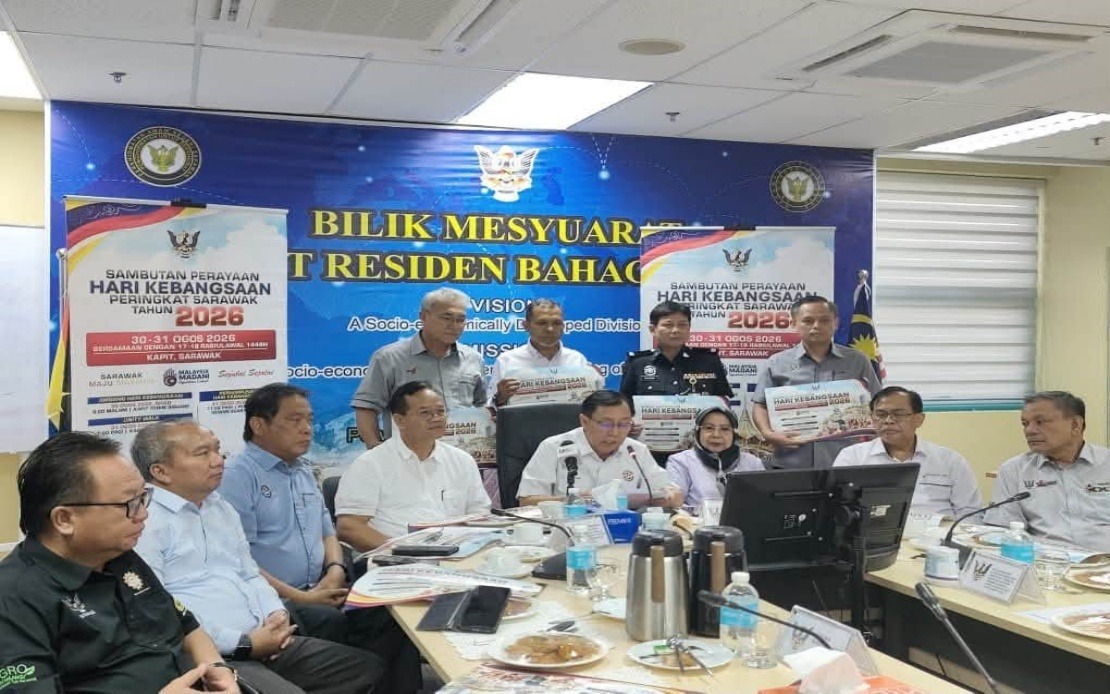
Kapit will serve as the venue for Sarawak's state-level National Day commemoration on August 30 and 31, with a comprehensive programme designed to deepen patriotic sentiment and reinforce communal bonds across the region. The two-day celebration represents a significant occasion for the Kapit Division and neighbouring areas to collectively observe Malaysia's independence with coordinated ceremonies at multiple locations throughout the town.
Datak Seri Dr Stephen Rundi Utom, the Sarawak Food Industry, Commodity and Regional Development Minister overseeing the celebration's organisation, emphasised that the event transcends mere ceremonial observance. According to his statement, the festivities aim to construct a shared narrative around Malaysian nationhood while simultaneously acknowledging the sacrifices of earlier political leaders whose decisions shaped the nation's trajectory. This multi-layered approach reflects contemporary thinking about how state-level celebrations can simultaneously honour historical contributions and foster present-day cohesion among diverse populations.
Tun Dr Wan Junaidi Tuanku Jaafar, the Sarawak Governor, and Tan Sri Abang Johari Tun Openg, Sarawak's Premier, will provide official presence across the scheduled activities, lending gubernatorial and executive authority to proceedings. The attendance of these high-ranking officials underscores Putrajaya and Kuching's commitment to maintaining ceremonial traditions around Malaysia's independence, even as federal-state governance dynamics continue to evolve in complex ways across the peninsula and East Malaysia.
Three flagship events structure the celebration schedule. The festivities commence with an evening celebration at Kapit Town Square on August 30, establishing an anticipatory atmosphere as residents gather ahead of the primary commemorative day. The following morning, participants will undertake a Unity Walk beginning at 7 am, a symbolic procession intended to physically embody the togetherness that organisers seek to cultivate. This is followed by the principal National Day Gathering at Dewan Suarah Kapit at 11 am, where formal addresses and ceremonial components typically occur.
The Governor's schedule includes participation in both the morning Unity Walk and the midday gathering, positioning him as an active participant in the community-oriented dimensions of the celebration rather than remaining confined to formal proceedings. The Premier's attendance at the National Day Gathering alone suggests a division of ceremonial responsibilities, with the Governor perhaps viewed as more symbolically aligned with grassroots participation activities. Such protocol arrangements often reflect calculations about official visibility and accessibility within particular constituencies.
Organisers have intentionally designed the celebration to accommodate diverse participation levels, recognising that not all residents can attend in-person events. Live broadcasting on TVS and streaming through the Sarawak Public Communications Unit's social media channels extend the reach of proceedings beyond Kapit's physical boundaries. This multimedia approach reflects adaptations to contemporary media consumption patterns, particularly relevant in East Malaysian contexts where dispersed settlement patterns and challenging geography can impede attendance at centralised venues.
The selection of Kapit as Sarawak's state-level celebration site carries particular significance. As a division in the state's interior regions, Kapit often occupies a peripheral position relative to coastal urban centres like Kuching and Sibu. Designating it as the host venue for a major state commemoration potentially signals an administrative intention to distribute attention and resources more equitably across Sarawak's diverse geography. For residents of the Kapit Division and surrounding areas, the presence of top-tier state leadership and coordinated ceremonial activities provides rare opportunities for direct engagement with official governance rituals.
The emphasis on fostering patriotism and unity through the celebration reflects broader Malaysian political discourse around national cohesion. In the Malaysian context, particularly given East Malaysia's historical relationship with peninsular Malaysia and ongoing conversations about federalism, state-level National Day observances carry nuanced meanings. By framing the celebration in terms of strengthening unity and honouring past contributions to independence, organisers position the occasion within narratives of shared citizenship and mutual commitment to the nation-state framework.
The public invitation strategy extends beyond Kapit Division residents to include people from surrounding areas, suggesting organisers anticipate drawing crowds from a wider regional catchment. This expansion of the geographic scope may reflect confidence in Kapit's infrastructure to accommodate larger gatherings, or alternatively, a deliberate choice to make the celebration a regional event rather than merely divisional one. Either interpretation indicates the occasion's perceived importance within Sarawak's governance calendar.
For Malaysian readers and Southeast Asian observers, the celebration exemplifies how nations maintain ceremonial connections to independence narratives while adapting these observances to contemporary realities. The integration of digital media, the participatory elements like the Unity Walk, and the deliberate inclusion of peripheral administrative divisions all illustrate evolving approaches to state pageantry in Malaysia. Such developments merit attention as they reflect how established institutions respond to changing social expectations around accessibility, representation, and inclusive governance performance.

