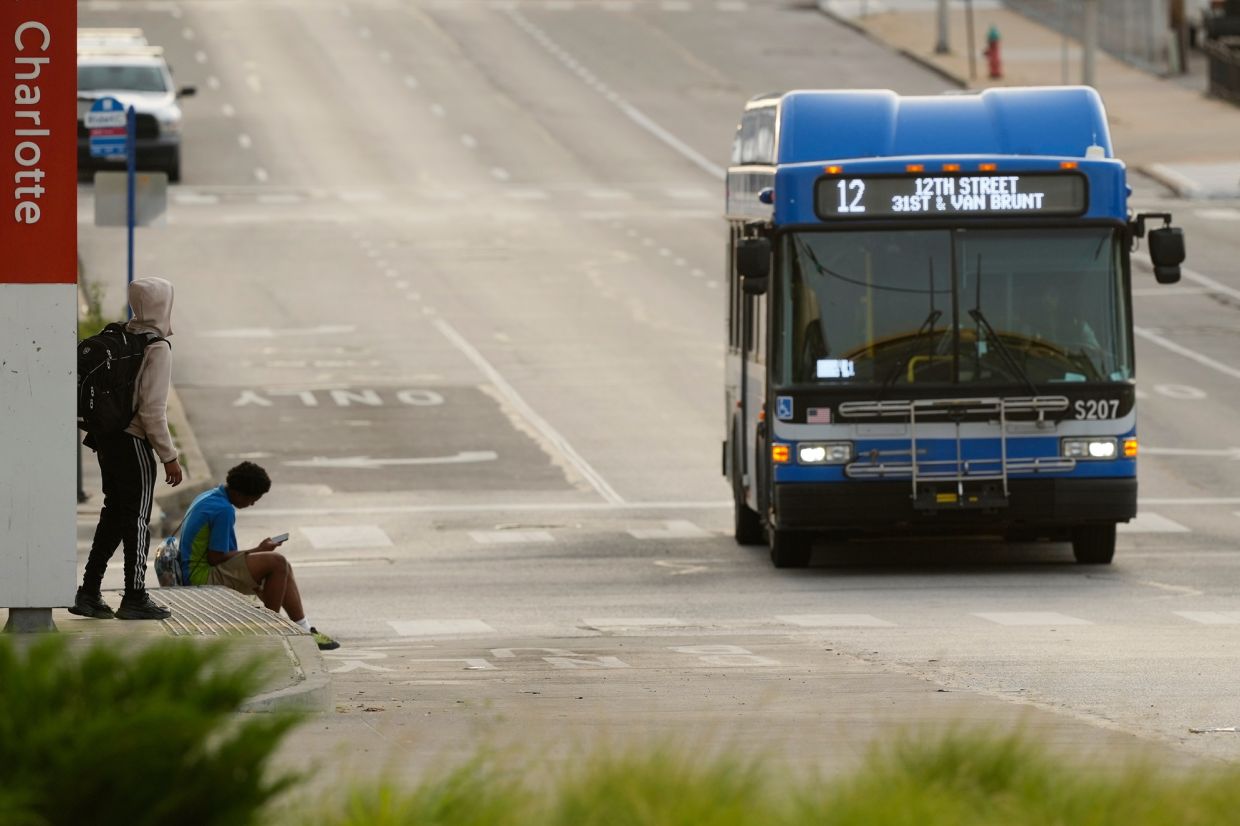
Kansas City, Missouri is preparing to deploy artificial intelligence-powered facial recognition cameras aboard some of its public buses, marking what many consider a watershed moment in the deployment of surveillance technology on American mass transit systems. The initiative would enable authorities to automatically identify passengers who match criteria such as banned riders, missing persons, or individuals flagged by law enforcement, positioning the Midwestern city as a testing ground for a controversial technology that has polarised communities and civil liberties advocates across the United States.
The project has crystallised a fundamental tension between two competing visions of public safety in the digital age. Proponents argue that the technology represents a logical extension of security measures that already exist on transit vehicles, while critics contend it crosses a significant threshold by enabling continuous tracking and identification of ordinary citizens moving through public spaces. For Malaysian observers watching surveillance technology adoption globally, Kansas City's experience offers crucial lessons about how cities navigate the intersection of innovation, governance, and fundamental rights.
Jay Stanley, a senior policy analyst at the American Civil Liberties Union's Project on Speech, Privacy and Technology, frames the Kansas City initiative as potentially establishing a dangerous precedent. He emphasises that live facial recognition on cameras monitoring open public spaces represents uncharted territory in surveillance deployment, a capability that has largely remained absent from American public infrastructure for the past quarter-century. This distinction matters because it suggests a qualitative shift rather than merely a quantitative addition to existing security apparatus.
The partnership between Kansas City and SafeSpace Global, a Knoxville, Tennessee-based technology company, represents the transit system company's first venture into transportation after years of implementing similar systems in nursing homes, correctional facilities, and schools. The company's technology would instantaneously compare captured facial data against active watch lists generated whenever authorities flag missing persons, banned passengers, or individuals designated by law enforcement. According to SafeSpace Global CEO Scott Boruff, the system operates with built-in data protection mechanisms: facial information is discarded if no match occurs, while regular video footage is retained on local servers for up to five years for security purposes.
Interestingly, the project encountered significant resistance at the state level. Missouri authorities declined to provide anticipated funding specifically citing concerns about the facial recognition component, forcing Kansas City to pursue alternative revenue sources through local budgets and federal grants. This decision highlights growing wariness among policymakers regarding surveillance technology, even in jurisdictions traditionally supportive of security investments. Tyler Means, the Kansas City Transportation Authority's chief mobility and strategy officer, attempted to normalise the technology by characterising it as an inevitable evolution of existing camera systems, arguing that citizens would eventually recognise it posed no substantive difference to their experience.
The implementation timeline has already encountered obstacles that reveal the practical complexities surrounding technology deployment in public systems. Originally scheduled for installation in spring 2026 before the FIFA World Cup matches in Kansas City, the rollout was postponed due to technical requirements—namely upgrading Wi-Fi infrastructure to support both the facial recognition cameras and a new fare collection system simultaneously—and the state funding withdrawal. These delays, while frustrating to project administrators, have created space for more thorough policy development and public dialogue.
Historical precedent suggests legitimate grounds for scepticism about surveillance technology deployment trajectories. Tampa, Florida's facial recognition experiment in the Ybor City neighbourhood following the 9/11 attacks generated immediate public opposition and was subsequently abandoned. More recently, New Orleans police covertly utilised facial recognition cameras operated by private contractors in violation of municipal ordinances prohibiting such technology. Detroit's experience demonstrates how initial enthusiasm for surveillance capabilities can be tempered but rarely eliminated; after public backlash against its partnership with gas stations and liquor stores for real-time crime feeds, the programme was reformed rather than discontinued. Former Detroit police chief James Craig acknowledged the political pressure but continues advocating for the technology, provided it operates under transparent, accountable policies.
Civil liberties advocates articulate a fundamental concern that extends beyond current implementation parameters. Will Owen of the Surveillance Technology Oversight Project warns that surveillance technology tends to expand over time once institutional infrastructure and precedent are established. Stanley amplifies this concern, noting that artificial intelligence surveillance systems are particularly susceptible to scope creep because the technical capacity to broaden applications emerges rapidly once foundational systems are operational. A watch list initially restricted to banned transit riders and missing persons could gradually encompass individuals flagged for protest activity, immigration violations, or other categories determined by authorities exercising discretionary power.
The broader context includes proliferation of AI-powered cameras in transportation settings for purposes ostensibly distinct from facial recognition. Several American cities have already installed AI cameras on buses and school buses that read vehicle license plates and automatically ticket infractions such as illegal parking in bus lanes. While these automated enforcement systems generate different civil liberties concerns than facial recognition, they establish precedent for accepting AI surveillance as routine transit infrastructure. This layering of surveillance capabilities creates cumulative effects that extend monitoring capacity well beyond what individual technologies might accomplish alone.
The Kansas City Transportation Authority has responded to postponement by expanding the planned programme scope. Officials now envision deploying cameras across approximately thirty buses rather than the nine initially proposed for the pilot phase, suggesting that delays have not dampened ambitions but rather created opportunities for larger-scale implementation. Boruff indicated that SafeSpace Global remains prepared to proceed once funding materialises, requiring three to four months for software customisation to accommodate Kansas City's specific operational requirements. This trajectory suggests that unless sustained political opposition emerges, the technology deployment will proceed in expanded form.
City Council member Ryana Parks-Shaw, serving as mayor pro tem, expressed preference for extended implementation timelines that permit thorough deliberation. She articulated the position that facial recognition deployment demands careful, transparent approaches incorporating clear procedural guardrails—suggesting that technological capability alone does not dictate deployment speed or parameters. For the World Cup security requirements, the city pivoted to traditional approaches: deploying approximately forty additional police officers patrolling transit stops and centres, reverting to human-based security provisions rather than algorithmic identification systems.
For Southeast Asian observers, including Malaysian policymakers considering surveillance technology adoption, Kansas City's experience illuminates several critical tensions. The gap between state-level hesitation and local government enthusiasm suggests that surveillance technology faces variable receptivity depending on jurisdictional politics and institutional cultures. The expansion from initial pilot scope to substantially larger programmes demonstrates how early implementation decisions create momentum toward broader deployment. Most significantly, the difficulty establishing meaningful restrictions on surveillance technology once infrastructure and policy precedent are established suggests that decisions made during initial deployment phases carry consequences extending far beyond immediate applications. As governments across the region contemplate their own surveillance technology policies, Kansas City's unfolding experience provides cautionary evidence that technological capabilities, once embedded in public systems, prove extraordinarily difficult to constrain regardless of initial intentions.
The delay in Kansas City's facial recognition rollout provides a valuable window for public debate and policy development before systems become operationally entrenched. Whether the city ultimately implements protections stringent enough to satisfy civil liberties concerns, or whether the technology proceeds with minimal restrictions, will establish important precedent influencing how American and international cities approach comparable decisions in coming years.

