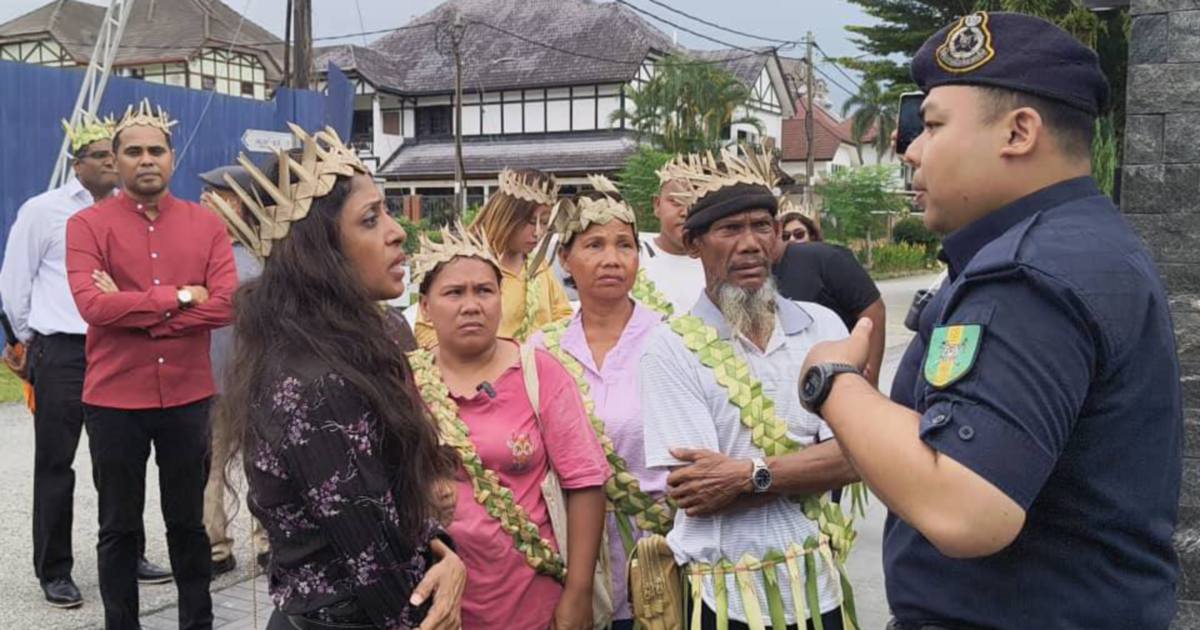
The Orang Asli community of Kampung Sungai Cot in Maran has received a glimmer of hope in their long struggle for recognition of their ancestral lands, with Prime Minister Datuk Seri Anwar Ibrahim committing to escalate the matter with the Pahang government. The assurance, delivered during what observers describe as a significant engagement with the indigenous families, marks a potential turning point in a dispute that has persisted for years without resolution. For the residents of this rural settlement, the PM's direct involvement represents their strongest opportunity yet to secure formal acknowledgement of their territorial claims and secure their community's future.
The land dispute affecting Kampung Sungai Cot exemplifies a broader pattern affecting indigenous communities throughout Malaysia. Orang Asli populations have historically faced obstacles in establishing and protecting their rights to ancestral territories, often caught between competing interests from state governments, private developers, and various federal initiatives. The specific circumstances surrounding Kampung Sungai Cot have resulted in years of negotiations and appeals that have yielded minimal tangible progress, leaving families uncertain about their long-term security and the ability to maintain their traditional way of life. The community's resort to appealing directly to federal leadership underscores the frustration with existing channels for redress at the state level.
Anwar Ibrahim's pledge to personally engage with Pahang's leadership carries particular weight given his position as Prime Minister and his administration's stated commitment to addressing indigenous rights. The federal government has nominally prioritized indigenous welfare through various agencies and programmes, but implementation has frequently fallen short of community expectations. By personally taking on this matter, the PM has elevated the profile of Kampung Sungai Cot's grievance within the federal bureaucracy and signalled that the issue warrants high-level attention. This direct intervention could potentially unlock resources and political capital that state-level discussions have been unable to muster.
The resolution of such disputes typically requires navigating complex legal questions about land ownership, customary rights, and the balance between indigenous claims and state authority over territorial matters. Malaysia's legal framework provides limited formal recognition for Orang Asli customary land rights, creating structural obstacles that advocates have long criticized. Any breakthrough at Kampung Sungai Cot would likely establish important precedents and demonstrate a model for addressing similar claims elsewhere in the country. The precedential implications may explain why this particular case has captured attention beyond the immediate community.
From a regional perspective, Malaysia's handling of indigenous land disputes carries significance for Southeast Asia's broader indigenous rights landscape. Neighbouring countries including Thailand and Indonesia grapple with similar tensions between indigenous communities and state resource management. How Malaysia resolves cases like Kampung Sungai Cot influences regional approaches to indigenous governance and may set standards that peer nations monitor. A successful federal-level intervention could strengthen Malaysia's positioning on indigenous issues internationally, particularly within forums addressing indigenous rights and environmental stewardship.
The families of Kampung Sungai Cot have maintained their community despite decades of uncertainty. Their persistence reflects both the cultural and spiritual significance these territories hold for Orang Asli populations, and the practical dependence on land-based livelihoods that characterizes many indigenous settlements. The psychological toll of prolonged disputes should not be underestimated; community members have undoubtedly experienced stress and disruption related to the ongoing uncertainty. An effective resolution would provide not only material benefits but also psychological relief and restored dignity for residents.
The PM's commitment requires follow-through with concrete action over coming months. Stakeholders will be watching to assess whether the intervention translates into substantive progress with the Pahang government, or whether it becomes another unfulfilled promise in a long series of assurances. The credibility of federal intervention mechanisms rests partly on delivering measurable outcomes that communities can observe and benefit from directly. For Kampung Sungai Cot, the test of sincerity will be whether the PM's engagement produces tangible movement toward resolving the dispute.
Landmarks in indigenous rights advocacy suggest that successful interventions typically require sustained attention and coordination across multiple government levels. The Pahang state government holds significant discretionary power over land matters within its jurisdiction, meaning cooperation is essential for meaningful progress. Federal pressure alone may prove insufficient without complementary efforts to demonstrate mutual benefits or address specific concerns the state government may harbour. The diplomatic challenge involves framing resolution as advantageous to all stakeholders rather than as an imposition from federal authorities.
Social media and advocacy networks have amplified awareness of cases like Kampung Sungai Cot among younger Malaysians and international observers. This expanded attention creates both opportunities and pressures. Greater visibility increases scrutiny on whether government commitments are honoured, but also potentially constrains authorities' room for backtracking. For the community itself, public attention brings both protection and risk; sympathetic coverage supports their claims but also increases exposure.
The coming months will determine whether PM Anwar's assurance represents a watershed moment for Kampung Sungai Cot or merely another chapter in a frustrating saga. Community members have learned through experience to view official promises with cautious reserve. Nevertheless, the direct involvement of the nation's top executive signals that circumstances may finally be shifting in their favour. Other indigenous communities facing similar disputes will undoubtedly monitor this case closely, recognizing that its outcome could influence the feasibility of their own claims and the channels most likely to produce results.

