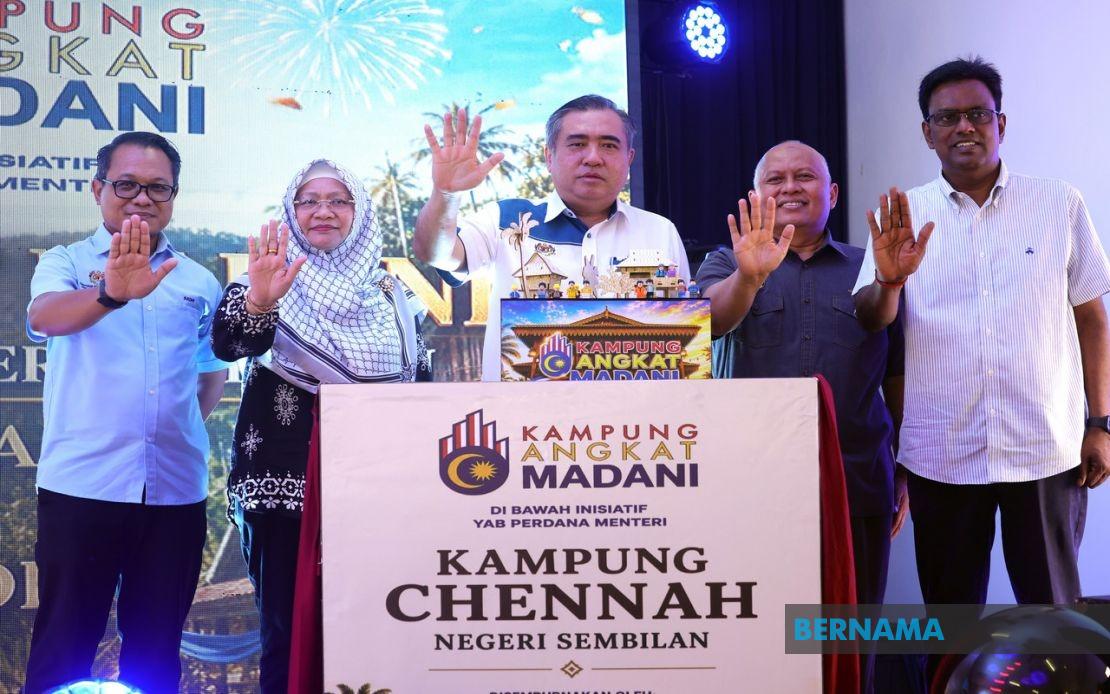
Transport Minister Anthony Loke Siew Fook has moved to dispel any perception that the government's "Kampung Angkat MADANI" rural development initiative is timed to coincide with ongoing state elections, insisting instead that the programme represents a sustained commitment to improving village communities across Malaysia that commenced two years prior. Speaking in Jelebu after launching the Land Public Transport Agency's contribution to the initiative at Kampung Chennah on July 12, Loke characterised the effort as a carefully sequenced national undertaking designed to systematically address infrastructure and socio-economic deficiencies in remote settlements that have historically been underserved by development resources.
The minister's clarification comes amid heightened scrutiny of government activities during election periods, a sensitivity that reflects broader concerns about the propriety of state resources during campaign cycles. Loke acknowledged this political context directly, explaining that the administration has implemented strict protocols governing the deployment of official programmes in constituencies undergoing electoral contests. He highlighted that the government complies with established conventions prohibiting formal government initiatives from proceeding during active campaign periods following nomination day, a standard he described as part of a newly instituted administrative culture promoted by the Prime Minister.
Loke articulated the programme's foundational objective with particular emphasis on equity and targeted intervention. By identifying villages situated at considerable distances from urban centres and assessing their specific infrastructure requirements, the government aims to marshal resources toward tangible improvements in living conditions for populations that frequently lack access to basic amenities. This approach distinguishes the Kampung Angkat MADANI initiative from conventional development frameworks by prioritising diagnosis of local needs before resource allocation, thereby increasing the likelihood that investments directly address community deficiencies rather than following standardised templates.
The minister provided concrete evidence of the programme's pre-existing operational history, referencing his own implementation activities from the previous year, including developmental work undertaken in an Orang Asli settlement in Lenggeng. This track record demonstrates that the current iteration represents continuity of an established governmental practice rather than a novel electoral strategy. Loke noted that multiple government agencies have participated in rolling out the programme across numerous localities, with the July timeline for Kampung Chennah's selection representing part of a previously determined implementation schedule rather than an electoral calculation.
Kampung Chennah's designation as the 2024 beneficiary reflects deliberate criteria assessment by APAD, with the village's remoteness and documented community needs serving as the primary selection factors. The allocation of RM500,000 in government funding for five specific projects underscores the programme's practical orientation toward addressing identifiable deficiencies. The planned interventions—encompassing library facility upgrades, futsal court refurbishment, and mosque drainage system improvements—directly target infrastructure domains that village residents identified as priorities, suggesting a consultative process underpinning resource deployment.
The anticipated two to three-month completion timeline for these projects demonstrates the government's commitment to expeditious delivery of tangible improvements rather than extended planning cycles that might dilute community enthusiasm or defer benefits indefinitely. Loke's commitment to close ministerial monitoring of project execution signals administrative accountability, addressing longstanding perceptions that government development initiatives sometimes experience implementation delays or quality inconsistencies. This supervisory approach reflects evolving expectations around project governance within Malaysia's public sector.
Loke's articulation of the Transport Ministry's expanded social remit reveals shifting understandings of departmental responsibility within the Malaysian bureaucratic framework. Beyond its constitutive functions of regulating and developing ports, airports, railways and public transport infrastructure, the ministry increasingly conceptualises its mandate as encompassing broader community welfare objectives. This reframing suggests recognition that infrastructure development divorced from attention to rural livelihoods may produce incomplete developmental outcomes, particularly in regions where transport connectivity alone cannot resolve deficiencies in essential services or civic amenities.
The programme's phased rollout methodology addresses practical implementation realities within Malaysia's diverse geography and settlement patterns. Rather than attempting comprehensive national coverage simultaneously, the staged approach permits adaptive learning as the government observes which project typologies generate most substantial community benefits and which implementation pathways encounter fewest obstacles. This iterative strategy potentially improves programme effectiveness over time and reduces risks of resource misallocation inherent in broader-based but less carefully calibrated interventions.
For rural constituencies throughout Malaysia facing similar infrastructure and service delivery gaps, the Kampung Angkat MADANI programme represents a structured pathway for articulating local development priorities and accessing government funding mechanisms. Communities seeking to participate would benefit from understanding the selection criteria and application procedures, particularly the emphasis on demonstrating remoteness and documented infrastructure deficiencies. The initiative's ongoing implementation suggests that opportunities for funding will emerge across multiple election cycles, creating potential for equitable distribution of resources across diverse regions regardless of electoral calendars or political alignments.
The minister's measured response to electoral timing questions also reflects broader professional standards increasingly emphasised within Malaysia's governance culture, wherein careful separation of administrative functions from campaign activities enhances institutional credibility and public confidence in government impartiality. By pre-positioning the Kampung Angkat MADANI activities before nomination day rather than exploiting the period following elections, the government demonstrates adherence to established norms governing the appropriate scope of state activity during contested elections. This disciplined approach may serve as a precedent for other ministries evaluating their own programme calendars during election periods.

