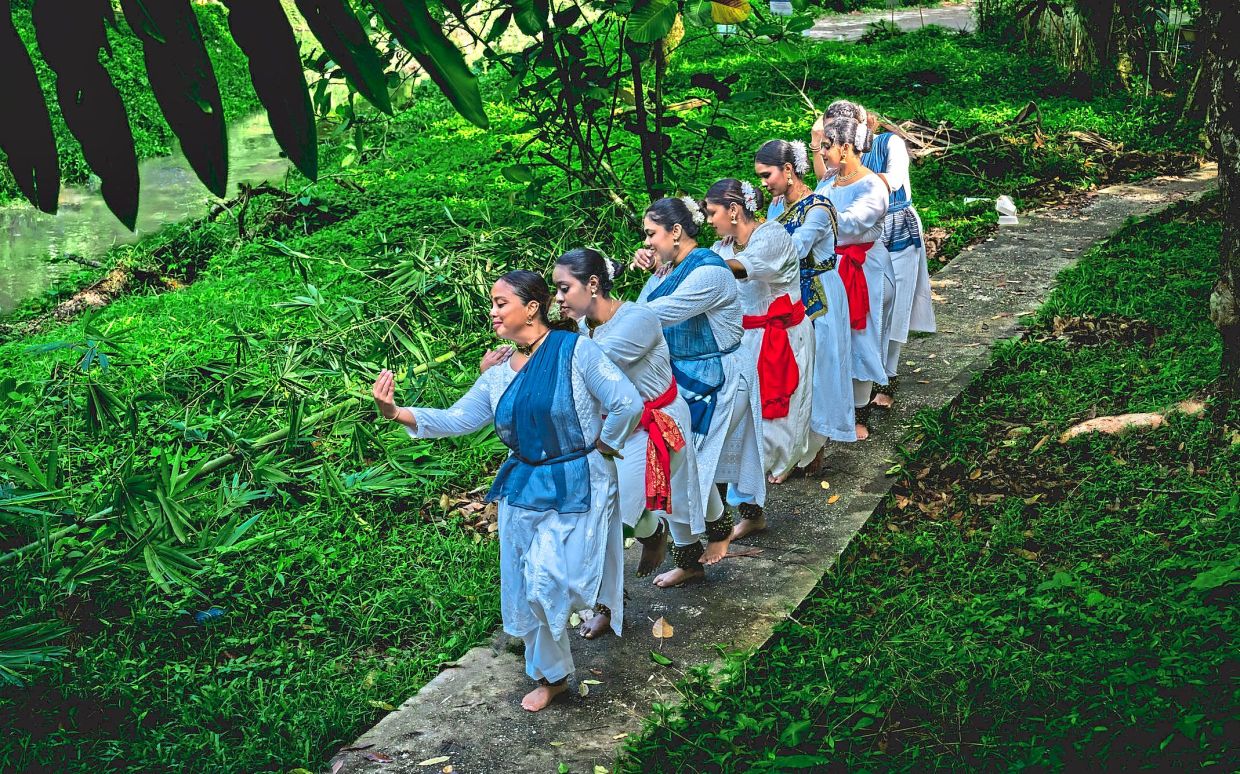
Kalpana Dance Theatre, the Kuala Lumpur-based cultural institution, reaches a significant milestone this year with its 30th anniversary, a feat of creative endurance in an industry marked by financial precarity and constant upheaval. Founded and led by Shangita Namasivayam, the company has weathered decades of uncertainty through persistent artistic reinvention, much like the rivers that now inspire its anniversary production. To mark the occasion, KDT will present a bharatanatyam concert at the Shantanand Auditorium, Temple of Fine Arts in Kuala Lumpur on August 8, taking audiences on a narrative journey rooted in India's most spiritually and culturally significant waterways.
The creative vision underpinning this production draws from two major Indian rivers that have shaped civilisations and artistic traditions for centuries. The Ganga in northern India and the Kaveri in southern India serve as both the thematic anchor and the symbolic framework for exploring contemporary environmental challenges. While the Ganga holds unparalleled spiritual significance across Hindu and Indian culture, the Kaveri—revered as the "Ganga of the South"—sustains agricultural systems, hydroelectric infrastructure and the livelihoods of millions across Karnataka, Tamil Nadu and neighbouring regions. Beyond their geographic and economic importance, these waterways have long inspired classical and folk dance traditions, their mythological narratives and regional characteristics woven into centuries of performance.
Namasivayam's conceptual approach transforms the rivers from merely cultural symbols into vehicles for urgent environmental messaging. She positions the Ganga as "the shore of compassion" and the Kaveri as "the mother of prosperity," using these metaphors to frame water as simultaneously sacred and imperilled. By linking ancient spiritual reverence for rivers to their modern degradation through pollution and overexploitation, the production speaks directly to contemporary anxieties about resource scarcity and ecosystem collapse. This integration of climate consciousness into classical art forms represents a deliberate strategy to engage younger generations—both dancers and audiences—in environmental stewardship by demonstrating that artistic tradition and ecological responsibility are not separate domains but interdependent concerns.
To embed this environmental message beyond theatrical performance, KDT has partnered with The Alliance of River Three (ART!), a Malaysian volunteer-driven conservation organisation established in 2018 by Kennedy Michael. ART! focuses on rehabilitating the Klang River through community-developed River Three Parks, systematic clean-up initiatives and ecosystem restoration projects. The organisation gained recognition when it won The Star Golden Hearts Awards in 2020 for pioneering an urban river restoration model applicable across Southeast Asian cities. By engaging KDT dancers directly in fieldwork since January, the collaboration transforms performance artists into environmental activists, connecting their artistic practice to tangible conservation outcomes.
Dancers affiliated with KDT have participated in cleaning operations at Taman Melawati River Three SDG Park and Mid Valley River Three SDG Park, sites that ART! aims to rehabilitate fully by 2030. Namasivayam observes that this hands-on experience proves revelatory for her students, many of whom have limited exposure to manual labour or direct environmental responsibility. She notes with particular emphasis that this generation rarely engages in physical, ground-level conservation work, suggesting that the collaboration addresses not merely environmental education but broader questions about privilege, embodied knowledge and artistic accountability. The deliberate choice to connect dancers with river cleanup efforts creates a feedback loop: environmental awareness informs choreographic choices, while physical participation in restoration validates the production's thematic commitments.
The production itself represents the culmination of extensive creative collaboration between Namasivayam and a roster of internationally regarded artists based in Chennai, India. Choreographer PT Narendran, musician OS Arun and scriptwriter Dr Va Ve Subramanian have worked repeatedly with Namasivayam across more than half of KDT's major productions, creating a foundation of artistic trust that enables sophisticated creative risk-taking. Their months of conceptual dialogue transformed initial ideas about rivers into a cohesive artistic statement balancing technical ambition with thematic depth. This transnational creative partnership demonstrates how Southeast Asian arts institutions can draw on South Asian expertise without surrendering artistic autonomy, establishing models of cross-regional collaboration increasingly important as regional cultural networks deepen.
The performance features 54 dancers ranging in age from six to 62 years, including performers with disabilities—a compositional choice that rejects conventional hierarchies within classical dance. The deliberate absence of featured soloists or star performers means that every dancer receives equitable choreographic attention and stage presence. This egalitarian approach carries philosophical weight beyond mere aesthetic novelty; it suggests that environmental responsibility and artistic participation are collective rather than individual achievements, mirroring the interdependence of ecosystems themselves. The 90-minute thematic presentation incorporates Tamil-language script alongside English narration, allowing the production to resonate across linguistic and cultural boundaries relevant to Malaysian audiences increasingly familiar with Tamil arts traditions but perhaps less versed in classical dance terminology.
Musical accompaniment involves 30 instrumentalists, though the logistical challenge of transporting an entire ensemble from India necessitated recruiting additional Malaysian musicians to supplement the core team. This practical constraint became an opportunity for knowledge transfer, allowing young Malaysian artists to work alongside internationally established practitioners in real time rather than through workshop contexts alone. Namasivayam emphasises that such collaborations offer dancers and musicians far more than technical refinement; they expose emerging artists to diverse interpretative philosophies and evolving understandings of bharatanatyam as a living rather than archival tradition. These intergenerational and cross-border exchanges prove essential for sustaining classical arts in Southeast Asian contexts where institutional support and performance opportunities remain limited.
Navigating the financial and logistical demands of producing a full-scale dance theatre work requires extraordinary determination, particularly in Malaysia's competitive arts landscape where government and private funding remain sporadic and inadequate. Namasivayam acknowledges the constant struggle to secure resources, yet describes this struggle as inseparable from her commitment to providing dancers with meaningful stage experience. She argues persuasively that teaching bharatanatyam through classroom instruction alone, without creating performance opportunities, fails to transmit the full heritage to the next generation. The discipline and focus demanded by preparing for public presentation cultivates different capacities than studio training alone, she suggests—essentially claiming that performance constitutes pedagogy in its own right rather than merely its product.
For Malaysian audiences and particularly the Southeast Asian diaspora communities for whom classical Indian arts hold cultural significance, this production offers both artistic substance and contemporary relevance. The intersection of climate activism, artistic tradition and cross-border collaboration reflects how Southeast Asian cultural institutions engage with inherited forms while addressing urgent present-day concerns. KDT's 30th-anniversary project suggests that classical arts need not retreat into nostalgic preservation but can serve as frameworks for collective problem-solving and ethical reckoning. As rivers throughout Malaysia and the broader region face pollution, overextraction and climate stress, theatrical works that render water's spiritual and material significance visible become not peripheral luxuries but essential voices in environmental discourse.

