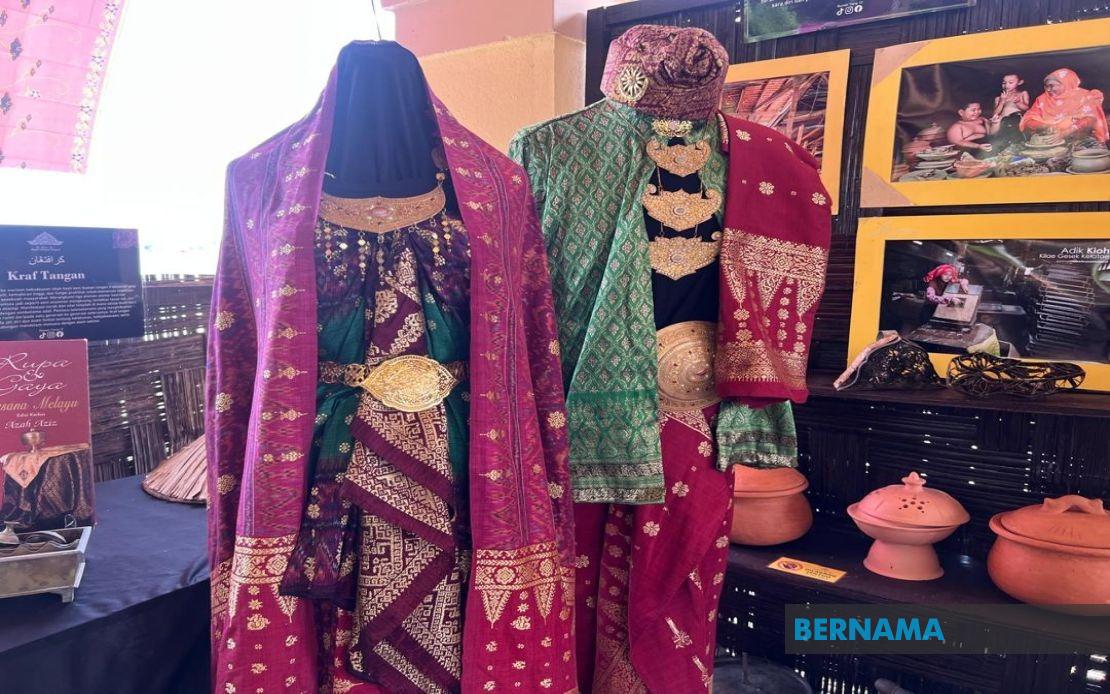
The ancient art of Kain Lima weaving, a quintessentially Malaysian textile tradition that once adorned royalty and nobility, stands at a critical juncture as the number of skilled practitioners dwindles to a troubling degree. Nik Mohd Murdani Nik Hassan, caretaker at Galeri Rumah Tiang 12, underscores the urgency of this cultural moment, explaining that the distinctive craft faces an uncertain future without immediate intervention and renewed public interest.
What distinguishes Kain Lima from more common Malaysian textiles like songket lies in its fundamentally different production philosophy. Rather than relying on gold or silver threads as decorative embellishments, Kain Lima employs a labour-intensive tied or tie-dye weaving methodology that creates intricate, multi-coloured motifs through precise thread manipulation. This approach produces a remarkable colour-reflection effect that cannot be replicated through conventional weaving practices, making each piece a singular artistic achievement that showcases the weaver's technical mastery and creative vision.
The technical complexity involved in producing even a single length of Kain Lima cannot be overstated. Weavers must maintain extraordinary precision throughout the process, carefully arranging each motif using multiple coloured threads before commencing the actual weaving. This meticulous methodology explains why Kain Lima commands substantially higher prices than standard textiles—pieces typically sell for between RM3,000 and over RM4,000 in contemporary markets, with valuations influenced by factors including age, motif complexity, physical condition, and the fineness of execution.
Historically, Kain Lima occupied an elite position within Malay material culture. Reserved for royalty and the nobility, these fabrics served as sarongs, shawls, and essential components of ceremonial dress for Malaysia's court traditions. This royal association imbued the textile with cultural significance extending beyond its economic value, positioning it as a tangible expression of Malay sovereignty and aesthetic refinement. The craft's decline thus represents not merely the loss of an economic activity but the erosion of a heritage practice intimately connected to Malaysian identity and historical continuity.
The distinction between Kain Lima and other traditional Malaysian textiles requires sophisticated visual literacy that few contemporary Malaysians possess. For those genuinely conversant with traditional weaving heritage, the differences manifest clearly in the pattern construction, underlying weaving structure, and material composition. However, as knowledge transmission between generations weakens, fewer people can readily identify these distinguishing characteristics, inadvertently diminishing demand for authentic pieces and creating a vicious cycle of declining production and reduced market viability.
Galeri Rumah Tiang 12, where Nik Mohd Murdani has worked since 2020, represents one institutional response to this crisis. The gallery has assembled collections of Kain Lima from private collectors, creating public exhibition spaces where visitors encounter these textiles directly. This approach serves multiple functions simultaneously—it reintroduces younger Malaysians to their textile heritage, provides contemporary artisans with inspiration and technical reference points, and creates market visibility that might stimulate renewed appreciation among potential collectors and wearers.
Exhibitions and cultural showcases serve as crucial educational interventions in preserving endangered craft traditions. When heritage textiles remain confined to private collections or academic archives, they become invisible to the general public and lack the visibility necessary to inspire new generations of practitioners. Conversely, strategic public display can transform these objects from historical artifacts into living cultural references that influence contemporary creative practice and purchasing decisions.
Young craftspeople like Nur Anira Akmal Che Abdul Aziz, a 34-year-old artisan from Pasir Mas, exemplify how heritage exhibitions catalyse creative innovation rooted in traditional knowledge. By studying the forms, motifs, and production methodologies of Kain Lima and related textiles, contemporary makers can synthesise traditional techniques with modern design sensibilities, creating products that honour cultural heritage while remaining commercially viable in contemporary markets. This cross-pollination between heritage study and contemporary production offers a viable path toward sustaining endangered crafts through economic sustainability.
The relationship between heritage preservation and innovation requires careful navigation. Purists sometimes argue that modernisation dilutes authenticity, yet rigidly maintaining traditional practices without adaptation risks consigning entire traditions to museum status—preserved but lifeless. The more productive approach recognises that living traditions necessarily evolve while maintaining core technical and aesthetic principles. When young artisans derive inspiration from Kain Lima's intricate weaving structures and distinctive motifs, they simultaneously preserve technical knowledge and demonstrate its contemporary relevance.
Malaysia's broader cultural sector faces similar pressures affecting numerous traditional crafts, from batik production to silversmithing. Economic pressures, labour availability, and declining market demand collectively threaten practices that once formed the backbone of regional commerce and cultural expression. The Kain Lima crisis therefore merits attention not as an isolated concern but as a symptomatic issue reflecting structural challenges facing traditional Malaysian industries across the country.
Government cultural agencies and private collectors bear shared responsibility for preventing extinction of heritage crafts. This requires multifaceted approaches encompassing documentation and archiving of existing techniques, strategic support for remaining practitioners, educational integration into schools and universities, and market development initiatives that reconnect contemporary consumers with heritage textiles. Some Southeast Asian nations have implemented heritage textile apprenticeship programmes and cooperative marketing structures that have demonstrated effectiveness in sustaining endangered practices.
The disappearance of Kain Lima would represent an irreplaceable cultural loss extending beyond economic considerations. These textiles embody centuries of accumulated knowledge about colour, pattern, structure, and the aesthetic possibilities inherent in hand-weaving traditions. Once such knowledge systems vanish, recovering them becomes impossible; cultural transmission represents a one-way process that cannot be reversed through archival research or nostalgic revival efforts.
As Malaysia navigates rapid modernisation and economic transformation, conscientiously preserving heritage crafts like Kain Lima weaving becomes an increasingly deliberate choice rather than an inevitable cultural practice. Without sustained intervention from cultural institutions, government agencies, and consumers willing to value these textiles appropriately, this distinctive Malaysian tradition faces probable extinction within the coming decades. The Festival Kesenian Rakyat Kelantan and similar platforms remain crucial venues for halting this cultural erosion.

