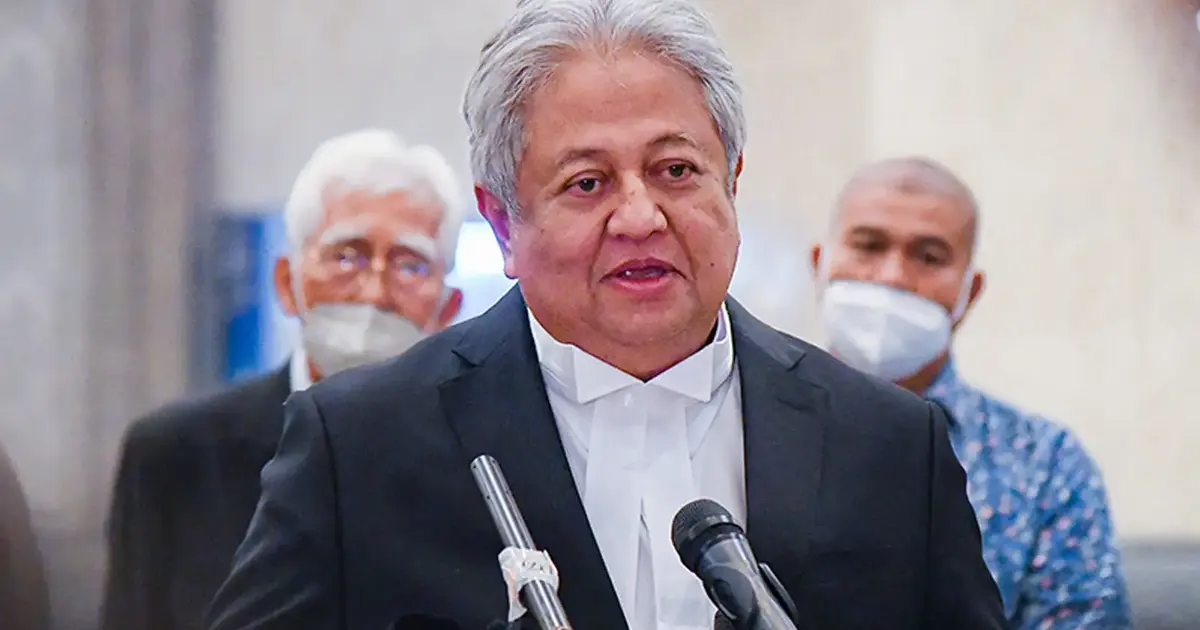
The Court of Appeal has scheduled July 13 for case management proceedings to establish a new hearing date in the ongoing defamation dispute involving Zaid Ibrahim and Malaysian Bar representatives, following Justice Latifah Tahar's decision to recuse herself from the matter. The withdrawal sets in motion a procedural reset that will require assignment of the case to a different judicial panel before substantive proceedings can resume.
The recusal marks a significant development in what has become a closely watched legal battle centring on statements made regarding the prominent lawyer and his relationship with the legal profession's primary regulatory body. The case has drawn attention from legal circles and the broader Malaysian public, given Zaid Ibrahim's prominent standing as a lawyer, former law firm founder, and political figure who has previously held ministerial positions. His involvement in a dispute with the Bar Council—the governing body responsible for professional standards and discipline—underscores the tensions that occasionally emerge between individual legal practitioners and institutional oversight mechanisms.
Defamation proceedings in Malaysia's appellate system typically involve complex questions about what constitutes actionable falsehood, the balance between protecting individual reputation and safeguarding freedom of speech, and the distinct roles played by the judiciary in interpreting applicable law. When a judge withdraws from a case, it generally signals either a perceived or actual conflict of interest, or circumstances that might compromise the impartiality the judicial system demands. The reasons for Justice Latifah Tahar's recusal have not been publicly detailed, though such withdrawals are handled with discretion in Malaysian courts.
The appointment of a fresh panel introduces procedural delays inevitable in appellate work, but also provides an opportunity for the case to proceed before judges with no prior involvement in preliminary or related proceedings. This reset can occasionally influence how legal arguments are framed, as new judicial officers approach the matter without the context of earlier interactions or submissions. For the parties involved—whether Zaid Ibrahim as appellant or the Bar representatives as respondents—the change requires careful coordination to ensure all material is properly presented to the incoming judges.
The Malaysian Bar Council serves as custodian of professional ethics and conduct standards across the legal profession, wielding considerable authority over lawyers' practice rights and disciplinary matters. When disputes arise between the Bar and individual practitioners, they touch on questions about institutional power, procedural fairness, and the boundaries of permissible criticism. The defamation angle suggests that statements made by one party about the other crossed into territory that the originating court deemed potentially actionable, prompting the lawsuit that has now reached the appellate stage.
Defamation law in Malaysia requires claimants to demonstrate that statements were false, communicated to third parties, and caused quantifiable harm to reputation. The burden of proof and standard of evidence in such cases reflects common law principles inherited from Malaysia's legal system, though applied within the distinct context of professional regulation and institutional governance. Appeals in defamation matters often turn on whether the lower court correctly interpreted evidence and applied legal principles, rather than on new factual disputes.
The involvement of multiple lawyers in the case—noted in the original charge—suggests complexity around whether statements were made by individuals in their personal capacity or in representative roles on behalf of the Bar. This distinction carries legal weight, as institutional entities may face different liability considerations than individual speakers. The Bar Council's status as a statutory body established under the Legal Profession Act 1976 adds another layer to the analytical framework courts must apply.
The July 13 case management date will enable the court to hear submissions regarding scheduling, procedural requirements, and any outstanding preliminary matters before the substantive hearing. During this phase, the parties will typically confirm that all relevant documentation is in order and that both sides are prepared to proceed before the newly constituted panel. The duration between the case management date and the actual hearing will depend on judicial availability and the complexity of the issues requiring oral argument.
For the legal profession more broadly, the case reflects ongoing conversations about professional accountability, the scope of Bar Council authority, and mechanisms through which individual lawyers can challenge institutional decisions or statements. Malaysia's legal system has seen periodic tensions between professional bodies and their members, with courts serving as arbiters when disputes escalate to litigation. This particular appeal will ultimately contribute to jurisprudence on how Malaysian law balances these competing interests.
The recusal and appointment of fresh judges also underscores the importance courts attach to maintaining public confidence in judicial impartiality—a foundational principle for the legitimacy of legal proceedings. Even where a judge's withdrawal might delay resolution, the priority remains ensuring that all parties perceive the process as fair and untainted by bias or conflict. In high-profile cases involving prominent figures and significant institutions, this commitment to impartiality becomes especially visible through such procedural steps.

