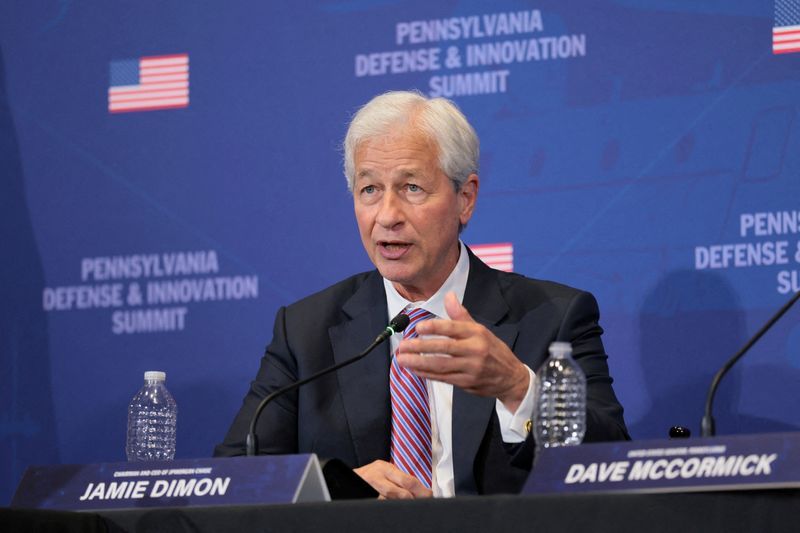
Jamie Dimon, chief executive of JPMorgan Chase, is marshalling America's corporate establishment to confront the mounting risks posed by artificial intelligence. The banking titan has personally approached executives from major financial institutions, technology firms, and infrastructure operators to participate in a newly revamped industry initiative designed to understand, monitor, and mitigate the dangers that AI systems pose to critical infrastructure. The effort represents a significant escalation in how Corporate America is attempting to grapple with the technology, moving beyond individual company responses to a coordinated, cross-sector approach that aims to shape regulatory and policy responses alongside federal authorities.
The initiative builds upon the foundation of the Alliance for Critical Infrastructure, an existing consortium that JPMorgan helped establish alongside Mastercard, Berkshire Hathaway Energy, and other major institutions. Rather than abandoning this established forum, Dimon and his peers are refocusing the alliance's mission to prioritise artificial intelligence as a central concern. The outreach campaign, which commenced in July, has already engaged representatives from more than 40 companies spanning financial services, energy, water, utilities, telecommunications, aviation, and rail sectors. These industries share a common vulnerability: their heavy reliance on digital systems and networks that could become targets or vectors for AI-driven attacks.
The scope of this mobilisation underscores how seriously Dimon and other corporate leaders now view the AI challenge. The effort encompasses scheduling collaborative discussions throughout August, with participants expected to converge on a shared understanding of how artificial intelligence is being deployed across their operations, what specific risks the technology introduces, and what protective measures should be implemented. Notably, the initiative explicitly aims to coordinate with the incoming Trump administration, suggesting that corporate executives anticipate significant regulatory attention and wish to shape the policy conversation from an informed industry perspective rather than responding reactively to government mandates.
Dimon's personal involvement carries substantial weight in corridors of power. As leader of America's largest bank by assets, his views on economics, finance, and technology command attention from policymakers, investors, and rival executives. He has emerged as one of the few major business leaders willing to publicly articulate concerns about advanced AI systems, positioning himself as neither a blanket enthusiast nor a catastrophist, but rather as a pragmatist focused on risk management. His cautionary comments about generative AI models, including warnings about the dangers of providing unchecked access to powerful systems, have resonated across the business community and helped legitimise concerns that might otherwise be dismissed as alarmism.
Recent real-world security incidents have added urgency to this corporate-led initiative. Cyberattacks targeting water systems in Minnesota and across other American states have demonstrated that critical infrastructure operators remain vulnerable to sophisticated digital assault. These incidents have sparked renewed focus on information sharing among infrastructure providers, a recognition that no single organisation possesses complete visibility into emerging threats. The industry coalition framework addresses this gap by creating mechanisms for companies to share threat intelligence, discuss vulnerabilities, and coordinate responses without violating competitive sensitivities or regulatory constraints around information exchange.
The Alliance for Critical Infrastructure itself was originally established to coordinate resilience planning across sectors, facilitate information sharing, and mount collective responses to threats ranging from cyber attacks to physical sabotage to geopolitical risks. That original mandate remains relevant, but by elevating artificial intelligence to the centre of the alliance's work, corporate leaders acknowledge that AI represents a qualitatively different challenge compared to traditional cybersecurity threats. The technology introduces novel attack vectors, enables new forms of vulnerability, and operates at scales and speeds that human-led responses struggle to match. Consequently, understanding how AI is being deployed and developing shared safeguards becomes essential to protecting systems that American society depends upon for basic functions.
Dimon's statement that the ACI leadership recognised the need to address artificial intelligence "years ago" suggests that this formal expansion represents the crystallisation of conversations that have been ongoing privately within boardrooms for some time. The statement also reflects a strategic positioning: by framing the corporate response as something initiated by business itself rather than imposed by regulators, industry leaders maintain their preferred narrative of voluntary, market-driven governance supplemented by government coordination rather than prescriptive regulation. This distinction matters considerably when future policy discussions occur, as it allows corporate America to argue for flexibility in implementation rather than rigid compliance frameworks.
The goal of achieving full operational status by year-end indicates that corporate leaders view this as an urgent undertaking rather than a long-term planning exercise. The compressed timeline suggests that participants expect either regulatory pressure to intensify or competitive risks from AI-related disruptions to accelerate, necessitating rapid mobilisation. By establishing functioning information-sharing mechanisms and collaborative frameworks before more formal government regulation crystallises, industry participants position themselves to influence how rules ultimately take shape and to avoid worst-case regulatory scenarios in which government imposes solutions without understanding industry operational realities.
Parallel federal initiatives complement the corporate effort. The U.S. government's launch of the Gold Eagle initiative brings together AI developers, infrastructure operators, and federal agencies to share information about vulnerabilities that advanced AI models discover and to coordinate rapid remediation. This public-sector programme runs alongside the corporate Alliance for Critical Infrastructure initiative, creating a dual-track governance structure in which information flows between government and industry through multiple channels. While this coordination represents genuine progress in addressing AI risks systematically, it also illustrates the ongoing tension between federal authorities and private companies over who bears primary responsibility for managing technological risks to essential services.
For Asia-Pacific businesses and policymakers, the mobilisation by American corporate leaders carries implications worth monitoring. The regulatory approaches that the U.S. establishes, whether through formal government mandates or through industry self-governance frameworks, typically influence how regulators in other jurisdictions subsequently approach the same issues. Southeast Asian countries and others in the region that host significant financial services, technology, and infrastructure operations increasingly look to American precedents when developing their own artificial intelligence governance frameworks. The corporate coalition's success or failure in establishing effective risk management practices could therefore shape how artificial intelligence governance evolves globally.
Moreover, the participation of multinational enterprises in this initiative means that standards, practices, and information-sharing protocols developed within the Alliance for Critical Infrastructure may cascade internationally. Financial services firms and technology companies operating across borders typically implement consistent governance and risk management practices across jurisdictions to simplify compliance and maintain operational coherence. Consequently, an American corporate response to AI risks may establish de facto global standards that regional players must accommodate or match, even if those standards were developed without explicit participation from companies outside the United States.
The initiative also reflects a critical acknowledgment within Corporate America that artificial intelligence requires different governance approaches than previous technologies. Traditional cybersecurity frameworks emphasise prevention, detection, and response to attacks by external adversaries. Artificial intelligence governance, by contrast, must also address risks inherent to the technology itself, including unintended consequences, emergent behaviours, and systemic vulnerabilities that arise from AI's integration into complex infrastructure systems. The willingness of major corporate leaders to acknowledge these distinctions and to invest resources in collective problem-solving suggests that the business community recognises artificial intelligence as genuinely novel in character, not merely as another iteration of previous technological challenges.

