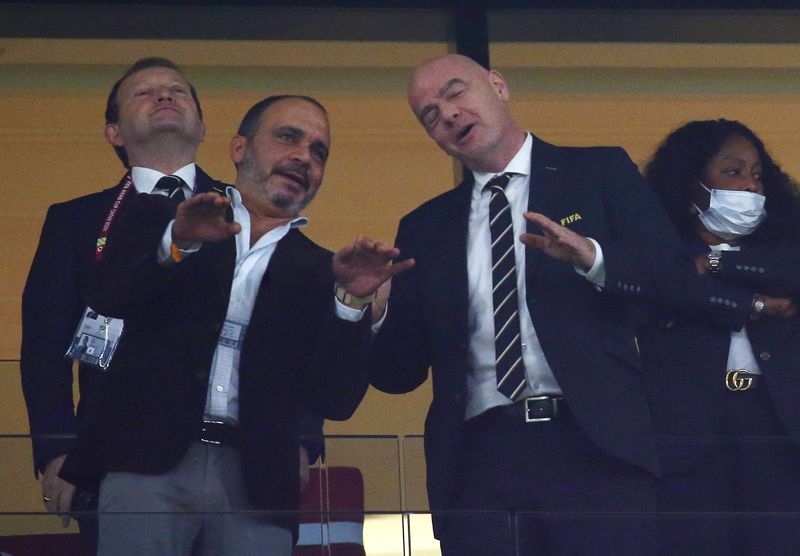
Jordan's Football Association president Ali bin Hussein has launched a scathing public critique of FIFA President Gianni Infantino, accusing the world soccer governing body's leader of employing coercive tactics to secure political backing. The Jordanian official alleges that FIFA made verbal overtures during the World Cup period, suggesting that endorsing Infantino's re-election "would go a long way to helping our FA out" after the organisation had previously stonewalled requests for assistance on multiple fronts. Hussein rejected these advances categorically, issuing a forceful statement on social media condemning what he characterises as a form of institutional extortion that violates the ethical standards his nation purports to uphold.
The timing of this rebuke underscores the mounting pressure surrounding Infantino's leadership as opposition crystallises within football's establishment. The FIFA president recently abandoned a controversial proposal to monetise a minority stake in the organisation's commercial operations—a scheme designed to generate billions of dollars earmarked for global sports development initiatives. The plan faced swift rejection from soccer confederations and national associations, who collectively resisted Infantino's hard deadline of September 19. High-ranking FIFA officials including Secretary General Mattias Grafstrom and renowned football figure Arsene Wenger have publicly distanced themselves from the initiative, signalling fractures in the governing body's internal consensus.
Hussein's grievances extend beyond the alleged quid pro quo arrangement. As leader of a smaller football nation operating under severe budgetary constraints, he articulated a litany of practical hardships that reflect systemic inequities within FIFA's operational framework. Jordanian supporters have encountered prohibitively expensive ticket prices paired with visa denials for participation in the North American World Cup—a particularly damaging combination that undermines grassroots engagement and international representation. These barriers exemplify how structural obstacles disproportionately affect football associations from developing regions with limited resources.
A particularly striking complaint centres on fiscal discrimination regarding taxation obligations arising from World Cup participation. Jordan faced significant tax liabilities imposed through FIFA when hosting matches in the United States, costs that were not levied against teams establishing operations in Canada or Mexico. Hussein emphasised the direct impact on player compensation and staff remuneration, highlighting how these unexpected expenses diminish funds that should support the human infrastructure supporting national team programmes. This disparity raises questions about FIFA's consistency in applying financial obligations across participating nations.
The monetary disputes extend backward to outstanding compensation owed for Jordan's historic maiden World Cup qualification, which concluded with an early group-stage elimination. More contentiously, the Jordanian association has awaited payment of performance bonuses since December for the national team's achievement of reaching the final of the 2025 Arab Cup, a FIFA-sanctioned tournament. Hussein's frustration is amplified by the apparent contradiction between FIFA's public pronouncements about financial reserves in the billions of dollars and the organisation's delayed disbursement of relatively modest sums owed to member associations—funds that represent vital resources for developing football programmes in nations with constrained budgets.
For Malaysian and Southeast Asian football stakeholders, this confrontation between Hussein and Infantino carries instructive implications about governance structures within FIFA and the unequal treatment of smaller and less wealthy associations. Regional federations similarly encounter resource constraints and navigating FIFA's bureaucratic apparatus frequently proves cumbersome for developing football nations. The transparency challenges Hussein highlights—particularly regarding reward distribution timelines and application of financial obligations—resonate across Asia-Pacific footballing communities struggling to allocate scarce resources efficiently.
The dispute also illuminates broader questions about FIFA's leadership legitimacy and the mechanisms through which the organisation's president consolidates political support. If Hussein's allegations reflect actual practice, the suggestion that FIFA extends preferential treatment contingent upon political endorsement would fundamentally compromise the governing body's legitimacy as a neutral arbiter of global football. The principle that institutional benefits should flow according to membership rights rather than personal allegiance to leadership represents a foundational governance question extending well beyond football.
Hussein's public stance demonstrates growing willingness among smaller associations to articulate criticisms that previously might have remained private grievances. This emerging assertiveness likely reflects accumulating frustrations with systemic inequities and a calculation that reputational damage to Infantino provides opportunity for demanding reforms. The convergence of Hussein's accusations with simultaneous departures by other FIFA executives suggests the organisation faces a genuine crisis of institutional confidence that extends across multiple constituencies.
The practical consequences of these disputes could reshape FIFA's internal power dynamics heading into electoral cycles and policy deliberations. Associations controlling voting power, particularly those representing less privileged footballing nations, possess leverage that Infantino and his administration cannot dismiss. Hussein's willingness to frame the situation as blackmail rather than routine political negotiation establishes a rhetorical frame that other aggrieved members may adopt, potentially catalysing broader coalition-building among associations dissatisfied with current governance arrangements.

