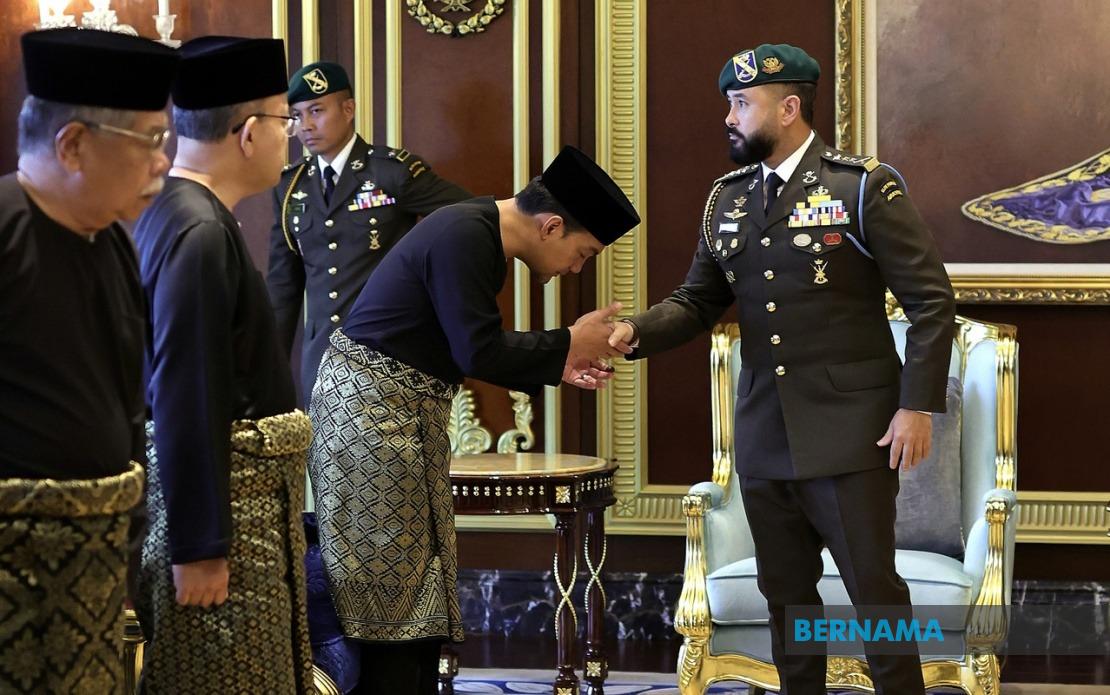
Johor's freshly constituted State Executive Council will formally assume office in a swearing-in ceremony at Istana Bukit Serene tomorrow, marking the official beginning of the state administration's new chapter after a decisive election victory. The ceremony, scheduled for the morning, will see council members pledge their oaths in the presence of the Regent of Johor, Tunku Mahkota Ismail, who will grace the proceedings as the ceremonial figurehead overseeing the constitutional moment.
The formality comes just days after Menteri Besar Datuk Onn Hafiz Ghazi himself was sworn in for a fresh term on July 12, cementing his position at the helm of Johor's state government following his coalition's commanding performance at the ballot box. The timing of the full council's inauguration reflects standard constitutional procedure, whereby the chief minister takes office first before the broader executive team formally accepts their respective portfolios and responsibilities.
Barisan Nasional's electoral triumph in last Saturday's 16th Johor State Election has provided the political foundation for this new administration. The coalition secured 48 of the 56 available state assembly seats, a supermajority that grants the government substantial room to pursue its policy agenda without the usual legislative constraints that plague narrower victories. This commanding mandate represents validation of the BN-led government's previous term and positions the administration with considerable political capital heading into the next five years.
According to the official invitation from Istana Bukit Serene, the gathering will include prominent figures from the state administration's upper echelons. Datuk Dr Abdul Rahim Ramli, who holds the position of Johor Council of Royal Court president, is scheduled to attend, alongside state secretary Datuk Mohammed Ridha Abd Kadir. These officials play crucial roles in the machinery of state governance, providing continuity and institutional knowledge that bridges political leadership with the professional civil service.
The palace has extended invitations to media practitioners to document the occasion, demonstrating the transparent nature of these constitutional proceedings. Access will be facilitated through both main entrances to Istana Bukit Serene from 9.30 am onwards, allowing the press corps to capture images and footage of council members arriving for the ceremony. This openness reflects contemporary governance practices in Malaysian states, where significant political transitions are conducted with public visibility and journalistic scrutiny.
The swearing-in ceremony represents more than mere formality within Malaysia's constitutional framework. These oaths, administered before the Regent as the state's supreme constitutional authority, bind council members to uphold the Federal Constitution, the Johor State Constitution, and their fiduciary duties to the public. Each member pledges to discharge their portfolios faithfully and impartially, a solemn undertaking that carries both legal and moral weight in Malaysia's Westminster-derived system.
For Johor specifically, the new council's composition and priorities will shape policy direction across the state's diverse portfolio of responsibilities. From infrastructure development and economic management to education, health, and social services, the executive council's decisions ripple across a state that remains economically significant to the broader Southeast Asian region. Johor's position as a manufacturing and logistics hub means its governance choices have implications beyond state borders.
The overwhelming electoral mandate secured by Barisan Nasional provides the incoming council with political flexibility to pursue strategic initiatives without constant legislative obstruction. This is particularly relevant in Johor's context, where significant development projects and economic positioning require sustained governmental focus. The 48-seat supermajority essentially guarantees passage of legislation the council deems necessary for advancing its agenda.
Menteri Besar Onn Hafiz Ghazi's reappointment and the formation of his new executive council mark the culmination of the electoral process that began with the state election announcement. His leadership of a united BN coalition, which includes UMNO, MCA, and MIC components, reflects the traditional power-sharing arrangements that have characterised Malaysian federalism. The council he assembles will inevitably balance representation across these coalition partners while maintaining administrative coherence.
The ceremony tomorrow will formally inaugurate what many observers will be watching closely as Johor's administration enters a fresh mandate period. Political analysts across Malaysia and the broader region often view Johor's governance as indicative of broader trends within Barisan Nasional and Malaysian politics more generally. How effectively this council delivers on its electoral promises will likely influence political dynamics in other states and at the federal level heading toward subsequent election cycles.

