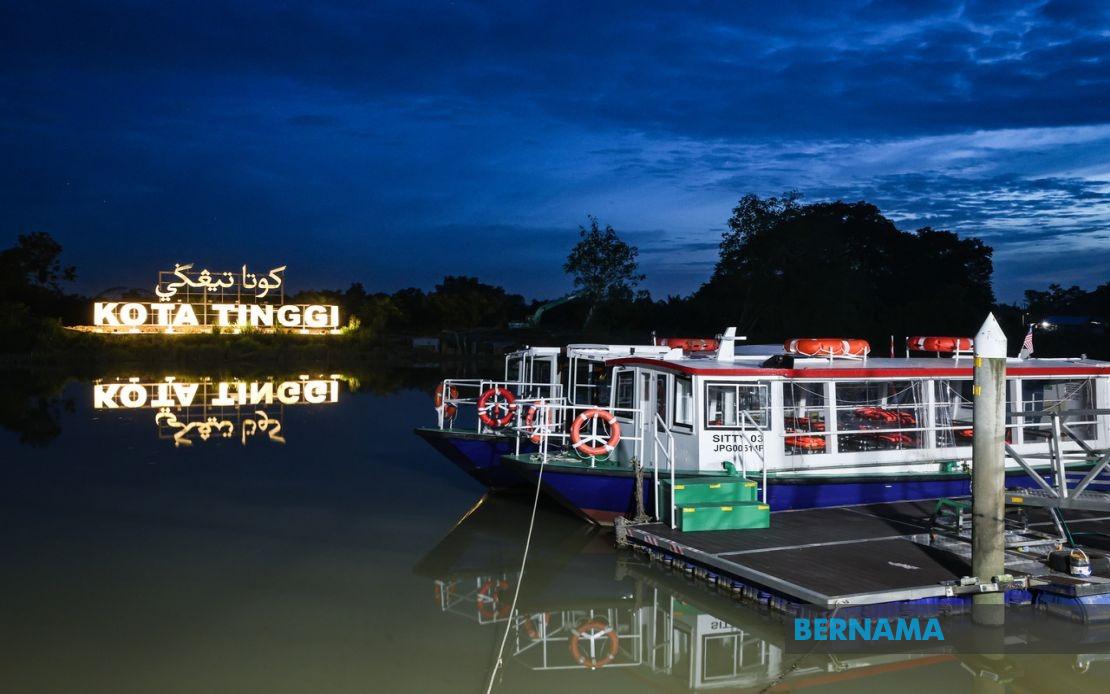
Kota Tinggi's Sungai Johor has emerged as an unlikely focal point for regional heritage tourism, with a new river cruise operation successfully marrying environmental stewardship with historical preservation. The venture represents a broader shift across Southeast Asia towards experiential tourism products that connect visitors directly with cultural narratives while generating sustainable income for riverside communities. The 6.7-kilometre cruise departs daily from Pangkalan Kota Jetty, transporting passengers into a landscape where the natural and historical dimensions of Johor's sultanate past become immediately tangible.
The waterway itself holds significance far beyond its geographical function as a river. When Malacca fell during the 16th century, Sungai Johor became the crucial artery supporting the establishment and expansion of the Johor-Riau Sultanate, serving communities from the earliest settlements to established administrative centres. Places such as Johor Lama and Kampung Makam once thrived along these banks, with the latter serving as a burial ground for several former sultans—a spiritual and political geography that remains embedded in the landscape today. Understanding this layered history transforms the river from a simple geographical feature into a living archive of Peninsular Malaysia's pre-colonial and early Islamic kingdoms.
Operations manager Aiman Haikal Mohd Azmi articulated the commercial and cultural appeal of positioning royal history as the cruise's primary draw during its initial months of operation. The venture has achieved remarkable early traction, recording more than 10,000 passenger journeys within the first seven months—a figure that encompasses not only domestic Malaysian tourists but also regional visitors from Singapore, Indonesia, and Brunei. This cross-border appeal suggests that heritage-focused ecotourism in Johor possesses genuine competitive advantages within the broader Southeast Asian tourism marketplace, where such experiences command premium positioning among affluent, educated travellers seeking authenticity.
The daytime cruise itinerary incorporates several photogenic landmarks that have become secondary attractions in their own right. Titian Laksamana, a pedestrian suspension bridge spanning the river, and the Johor River Barrage feature prominently on the route, offering visitors both aesthetic experiences and practical pauses in the journey. The approximately one-hour passage incorporates structured historical narratives through either recorded audio commentary or live interpretation by trained guides, ensuring that passengers encounter stories of significant figures such as Sultan Mahmud Mangkat Dijulang and Laksamana Bentan within their proper geographical and cultural contexts. This interpretive framework elevates the cruise beyond mere sightseeing into a form of informal historical education.
The operational model reveals sophisticated product diversification tailored to different visitor preferences and temporal constraints. Beyond the standard daytime offering, Kota Tinggi River Cruise operates a specialized Mesmerising Fireflies package that transforms the river environment during evening hours, when bioluminescent displays create a naturally illuminated spectacle across the darkened waterway. This evening iteration appeals to visitors seeking more intimate, photography-focused experiences and represents a creative exploitation of seasonal natural phenomena. Simultaneously, a Dining Cruise package accommodates those prioritizing comfort and leisurely pacing, delivering panoramic views of Kota Tinggi while passengers consume meals on floating platforms.
The pricing structure reflects deliberate positioning as an accessible yet premium experience. Day cruise fares of RM20 for adults, RM15 for children, and RM10 for senior citizens and persons with disabilities establish entry points affordable to middle-class Malaysian families and regional tourists with modest budgets. Evening packages commanding RM23, RM17, and RM13 respectively maintain affordability while capturing additional spending from visitors seeking enhanced experiences. This tiered approach maximizes market penetration across income segments while maintaining operational sustainability—a crucial consideration for ecotourism ventures that must balance commercial viability with environmental protection.
The operational schedule reflects peak tourism demand patterns across Malaysian destinations. Weekday operations spanning 9 am to 7 pm cater to domestic tourists and educational groups, while weekend and Friday extensions to 10 pm target leisure travellers with flexible schedules. Hourly departure intervals ensure visitor flexibility while maintaining operational efficiency, preventing congestion that would compromise the peaceful, naturalistic atmosphere essential to the cruise's appeal. This scheduling discipline suggests professional management attuned to balancing accessibility with quality control.
Aiman Haikal's advocacy for continued government support reveals awareness that such ecotourism initiatives extend beyond individual commercial enterprises. The Johor River Cruise functions simultaneously as an ecosystem protection mechanism and an economic generator for surrounding communities, aligning with Visit Johor 2026's broader strategic objectives. By creating market incentives for riverside habitat preservation and community participation in tourism, the cruise model shifts conservation from a burden imposed by regulation into an economically rational choice for local stakeholders. This alignment between environmental protection and livelihood generation represents sophisticated policy integration.
The regional context amplifies Kota Tinggi's positioning within competitive Southeast Asian tourism markets. Both Thailand and Indonesia operate well-established river cruise and heritage tourism products that have achieved international recognition and generated substantial revenues. Johor's entry into this market segment, emphasizing sultanate history and natural scenery, establishes differentiation through authenticity and accessibility. Unlike some tourism products that require extensive international marketing and high price points, Kota Tinggi's proximity to Singapore and its historical significance create organic demand flows that require relatively modest promotional investment.
The early success of this venture carries implications for Malaysia's broader tourism strategy beyond Johor. The convergence of heritage narrative, natural environment, and community economic participation creates a replicable model applicable to other Malaysian rivers and historical sites. The Sungai Rajang in Sarawak, the Sungai Perak, and numerous other waterways possess comparable historical significance and ecological value yet remain underutilized as tourism destinations. Kota Tinggi's pilot effectively demonstrates commercial viability at scales that could justify similar investments elsewhere, potentially distributing tourism income across regions currently marginal to international tourism circuits.
The cross-border visitor composition—particularly the notably high proportion of Singaporean participants—reflects longer-term market trends in regional tourism. As air travel becomes increasingly expensive and environmentally contentious, regional destinations offering premium experiences within short driving distances from major metropolitan centres gain competitive advantage. Kota Tinggi's two-hour proximity to Singapore positions it ideally for weekend excursions and extended stays, capturing spending that might otherwise flow to more distant destinations. This geographic proximity transforms what might appear a provincial river into a regional tourism asset of genuine significance.
The fireflies experience particularly merits attention as a differentiator in competitive markets. Natural bioluminescent displays possess inherent scarcity and cannot be replicated through infrastructure investment or commercial interventions—visitors seek authenticity unavailable in urban theme parks or constructed attractions. This natural monopoly on firefly experiences, combined with professional interpretation and safety infrastructure, creates sustainable competitive advantage. The evening packages simultaneously address the environmental concern that unregulated firefly tourism generates, as the professional operation maintains viewer distances and timing protocols that protect insect populations from excessive disturbance.
Looking forward, the sustainability of Kota Tinggi River Cruise depends on multiple factors extending beyond immediate commercial performance. Maintaining water quality, protecting riparian habitats, and managing visitor volumes represent ongoing management imperatives. The crew's capacity to deliver historically accurate, engaging interpretation directly influences repeat visitation and word-of-mouth marketing that drives long-term growth. Equally crucial is ensuring that local communities perceive equitable benefit distribution, reducing social tensions that could undermine operational sustainability. The model's success ultimately rests on genuine integration of commerce, conservation, and community benefit—a balance more easily articulated than achieved.

