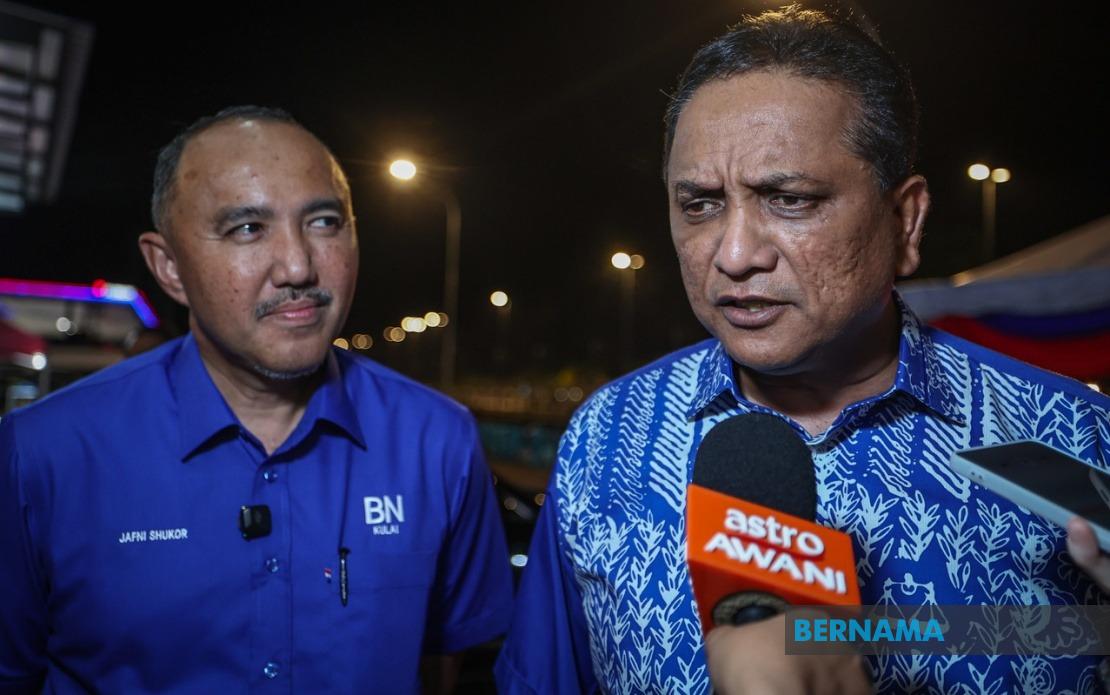
Allegations that Johor's Regent, Tunku Mahkota Ismail, has transformed the state government into a tool of palace interests lack substance and represent gross exaggeration, according to a prominent UMNO figure. Datuk Seri Reezal Merican Naina Merican, an UMNO Supreme Council member, made the assertion while addressing reporters in Johor Bahru on June 25, pushing back against controversial claims that have surfaced within the state's political establishment.
The timing of these allegations is particularly significant, coming at a critical juncture in Johor's electoral cycle. The Election Commission has designated June 27 for nomination proceedings and set July 11 as the polling date, meaning the state faces imminent electoral contests. This backdrop makes the dispute over the Regent's role in governance especially contentious, as rival factions appear to be leveraging the monarchy's prominence to score political points during a season of heightened partisan activity.
Reezal Merican's defence centred on distinguishing between legitimate royal oversight and inappropriate political interference. He contended that the Regent's vocal positions on matters affecting Johor's development should be interpreted as fulfilling constitutional obligations rather than overstepping boundaries. This framing attempts to normalise the Regent's interventions by portraying them as integral to the institutional checks that the monarchy is meant to provide within Malaysia's constitutional framework.
According to Reezal Merican, every pronouncement issued by Tunku Mahkota Ismail flows directly from his lawful prerogatives and inherent duty to safeguard the state's interests. He specifically noted that the Regent functions as a mechanism for checks and balances against the Menteri Besar and state administrative apparatus, a role that should be viewed as institutional rather than autocratic. This argument attempts to reposition what critics characterise as undue influence as nothing more than the monarchy performing its prescribed supervisory function.
The dispute emerged after Datuk Dr Mohd Puad Zarkashi, a former Speaker of the Johor State Legislative Assembly, departed UMNO while levelling accusations against Menteri Besar Datuk Onn Hafiz Ghazi. Mohd Puad's decision to exit the party and his subsequent public statements have thrust the relationship between the palace and executive government into uncomfortable scrutiny, particularly regarding the degree of autonomy enjoyed by elected officials in managing state affairs.
Reezal Merican expressed concern about Mohd Puad's apparent strategy of invoking royal authority as a weapon in intra-party disputes. He questioned the motives of someone deliberately injecting constitutional matters into partisan political calculations, especially at a moment when Johor is preparing for electoral contests. This critique suggests unease within UMNO's hierarchy about how palace-related controversies might destabilise party messaging and voter confidence heading into polling day.
From his position within UMNO's highest decision-making body, Reezal Merican claimed to have encountered no suggestion that Johor's UMNO machinery operates as an appendage of palace authority. His assertion amounts to an institutional denial that palace influence has permeated party structures, though it does not directly address whether the Regent has exercised considerable sway over specific governmental decisions or policies, a distinction that critics might exploit.
The broader context involves long-standing tensions within Johor's political ecosystem regarding the appropriate balance between royal prerogatives and elected administration. Malaysia's constitutional monarchy grants Rulers substantial formal authority in their respective states, yet the practical exercise of this power varies considerably across the federation. Johor has historically witnessed more visible palace engagement in governance than some other states, partly reflecting the Sultan's and Regent's personal investments in the state's trajectory.
For Malaysian observers and Southeast Asian analysts, this episode illuminates underlying dynamics within UMNO as it navigates electoral pressures and attempts to maintain dominance in historically loyal territories. The willingness of figures like Mohd Puad to break ranks and invoke constitutional matters suggests fissures within the coalition that cannot simply be dismissed as personality clashes but may reflect substantive disagreements about governance direction and the distribution of influence between traditional power holders and elected representatives.
The accusations and rebuttals also carry implications for how Malaysia's constitutional monarchy operates in practice versus theory. While formal constitutions delineate the Ruler's powers with precision, the actual scope of royal influence often depends on individual monarchs' temperaments, their relationship with elected officials, and the broader political climate. A Regent actively voicing positions on development and governance may be exercising legitimate constitutional role-modelling, or may be inadvertently constraining the Menteri Besar's freedom of action—or both simultaneously depending on one's analytical perspective.
As Johor prepares for its electoral exercise, these controversies will likely influence voter perceptions regarding which factions best represent their interests and which candidates enjoy sufficient autonomy to govern independently. The narrative Reezal Merican is promoting—that palace oversight strengthens rather than weakens accountability—will compete with Mohd Puad's implied counterclaim that excessive royal influence diminishes democratic governance. The outcome of these competing narratives could reverberate through Johor's political landscape for years beyond the imminent elections.

