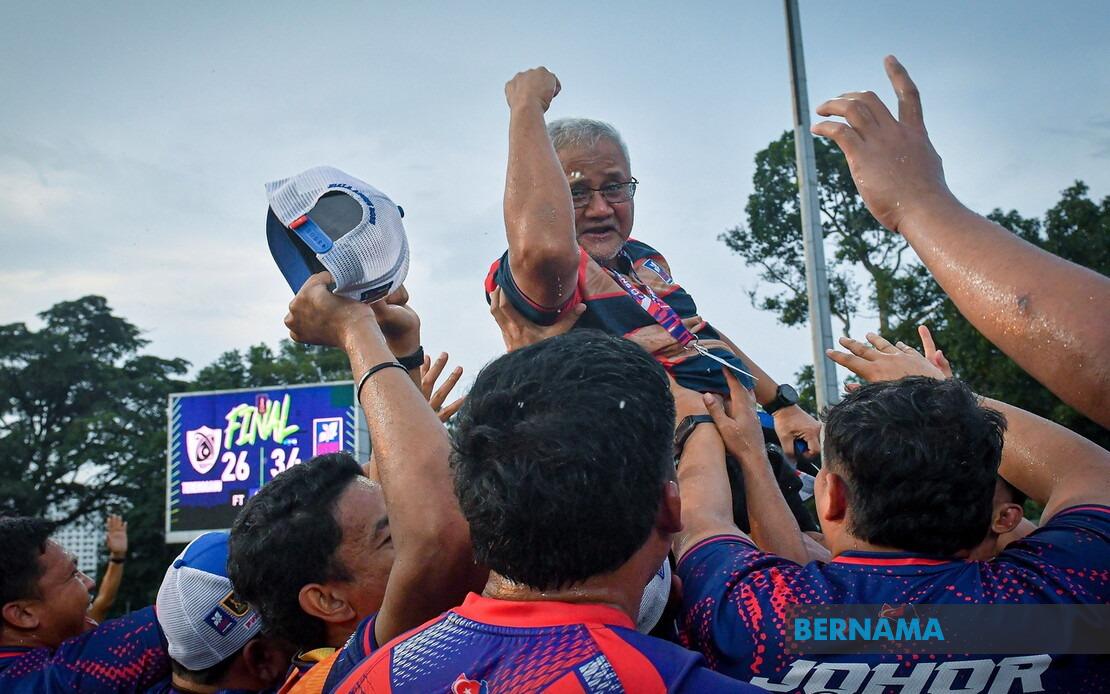
Johor has finally ended its nine-year championship drought in Malaysian rugby's most prestigious domestic competition after mounting a powerful second-half turnaround to overcome Terengganu 34-26 in the final of the 42nd Agong's Cup at UiTM Stadium in Shah Alam. The comeback victory marks a significant milestone for the southern state, which had not lifted the trophy since clinching their second title in 2017, and represents a triumphant return to the summit of local rugby after a period in which other states had dominated the tournament.
The final itself proved to be a compelling contest that reflected the competitive depth of Malaysian rugby at the domestic level. Terengganu started with considerable momentum and executed an effective first-half performance to establish a 19-17 advantage going into the interval, suggesting that the eastern state team might be positioned to claim their own share of silverware in this tournament. However, the match took a decisive turn after halftime when Johor's backline and forward pack adjusted their tactics and execution, ultimately outscoring their opponents by 17 points during the second forty minutes to secure the trophy.
This victory represents Johor's third Agong's Cup title overall, having previously won the championship in 2013 and 2017. The tournament has traditionally served as a barometer of rugby strength across Malaysia's constituent states, and Johor's return to the winners' circle demonstrates the quality of player development and coaching infrastructure within the state rugby union. The nine-year gap between titles underscores how competitive the domestic landscape has become, with multiple states capable of fielding competitive squads that can challenge for major honours.
In a parallel competition held during the tournament, Kelantan demonstrated impressive mettle by edging out Royal Malaysia Police 43-41 in a thrilling third-place playoff that showcased attacking rugby and resilience from both teams. The PDRM team, often a strong force in Malaysian rugby competitions owing to their institutional resources and player development programmes, ultimately finished fourth despite their competitive showing. These results indicate that rugby depth extends well beyond the traditional powerhouses, with emerging talent apparent across multiple state representations.
The financial rewards distributed to the four finalists reflected the tournament's established prestige within Malaysian sporting circles. Johor received RM20,000 as champions, while runner-up Terengganu secured RM15,000, third-placed Kelantan took home RM10,000, and PDRM received RM5,000. These prize pools, though modest by international standards, represent meaningful recognition within the Malaysian rugby ecosystem and provide important funding for state rugby development programmes that might otherwise struggle with limited government allocation or sponsorship support.
Aqasha Daniel Irwan of Johor captured the individual honours for the tournament by being named player of the match, an accolade that typically reflects outstanding performance across multiple matches during the competition. In addition to the recognition, Irwan received RM1,000 in prize money and a commemorative plaque. Such individual awards serve an important function in motivating players and highlighting standout performers who might attract attention from national selectors or provincial rugby associations seeking to develop talent for higher levels of competition.
The 42nd edition of the Agong's Cup holds particular significance as it demonstrates the tournament's enduring importance within Malaysia's sporting calendar. Named after the Malaysian sovereign, the competition carries ceremonial weight beyond its athletic dimensions and serves as a platform for identifying potential candidates for national representation. The tournament structure, which pits states against one another in rugby union format, has historically produced players who have gone on to represent Malaysia at regional and international level.
Johor's comeback victory may also signal a shift in the competitive balance within Malaysian rugby, particularly given the depth of their squad performance across the tournament. The state's ability to adapt strategically during the final and execute effectively when required suggests a level of coaching sophistication and player conditioning that had perhaps been lacking during the nine-year period when other teams claimed the trophy. This development could have implications for future Agong's Cup competitions and for Malaysian rugby's representation in regional tournaments such as the Southeast Asian rugby championships.
The significance of Johor's triumph extends beyond the immediate trophy itself, reflecting broader trends in how states are investing in grassroots rugby development and youth player pathways. The comeback nature of the victory, rather than a dominant performance from start to finish, suggests that Terengganu has also developed considerable strength and that future editions of this tournament will likely continue to showcase competitive matches. For Malaysian rugby enthusiasts and administrators monitoring the health of the domestic game, such competitive balance represents encouraging progress for the sport's long-term development within the region.

