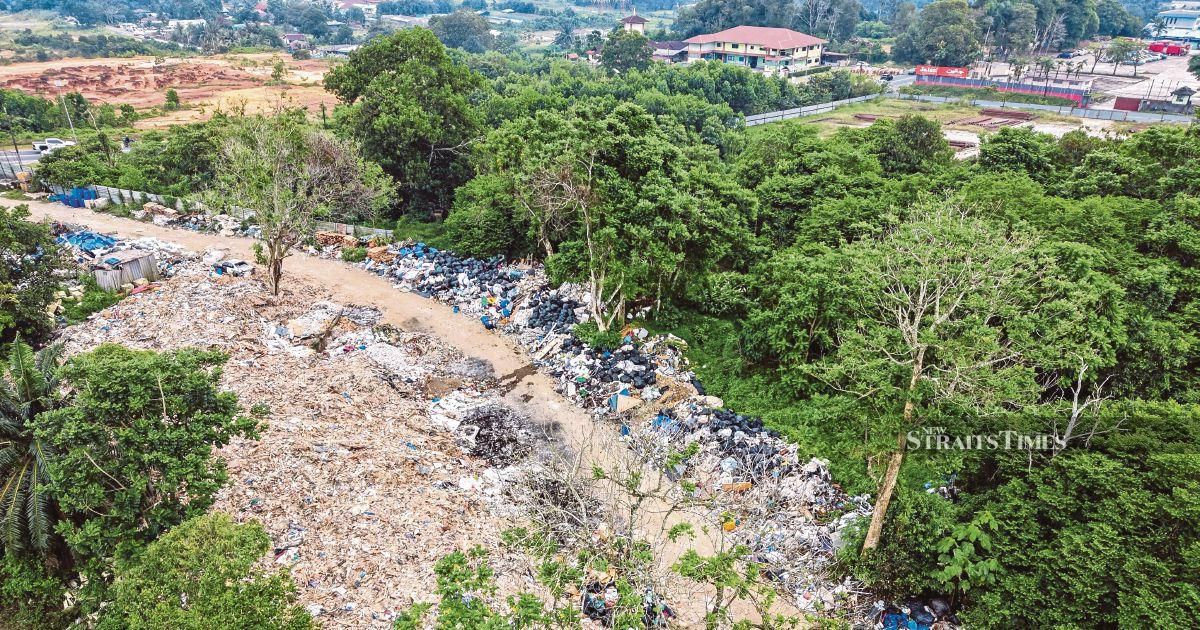
Johor is mobilising a coordinated inter-agency taskforce to investigate allegations that construction debris originating from Singapore has been deposited at multiple locations throughout Pontian, marking an escalation in regional waste management concerns between the two neighbours. The state government's commitment to establishing this joint investigative body signals the seriousness with which authorities are treating the reported dumping incidents, which could carry implications for cross-border environmental compliance and bilateral relations.
The allegations centre on the illicit movement of construction waste across the causeway, a practice that has long concerned Malaysian authorities managing waste disposal in border regions. Pontian, situated at the southern tip of Johor directly opposite Singapore, represents a logistically convenient location for waste traffickers seeking to circumvent the island nation's stringent waste management regulations and associated costs. The proximity and established transportation routes between the two territories create vulnerability to such environmental violations.
SWCorp, the Selangor Waste Management Company that has been investigating the matter, appears to have escalated findings to state authorities, prompting the formation of the comprehensive taskforce. This multi-agency approach reflects the complexity of cross-border waste management, which typically involves coordination between environmental, customs, municipal, and port authorities. The taskforce composition will likely include representatives from the Johor Department of Environment, local municipal councils, Royal Malaysian Police, and customs enforcement divisions.
The investigation will need to establish several critical elements: whether construction waste bearing Singapore origins was indeed deposited in Pontian, the volume and composition of materials involved, the duration of the alleged dumping operations, and the identities of parties responsible for the illegal transportation and disposal. These findings will determine whether the incidents constitute isolated cases or evidence of systematic waste trafficking requiring sustained enforcement action.
For Malaysia, the implications extend beyond environmental remediation costs. Uncontrolled construction waste disposal contaminates groundwater, degrades agricultural land, and creates public health hazards in residential areas. The border region's vulnerability to such violations underscores the need for enhanced monitoring infrastructure and cross-border cooperation mechanisms. Malaysia has invested substantially in domestic waste management systems, and illegal dumping undermines these efforts whilst shifting environmental costs to local communities.
Singapore's regulatory environment has progressively tightened waste disposal requirements, making proper handling of construction debris increasingly expensive for developers and contractors. This economic disparity creates incentive structures that can drive illegal transboundary waste movements. The island nation generates substantial construction waste through continuous urban renewal and development projects, creating volume pressures that make illicit disposal options superficially attractive to cost-conscious operators willing to circumvent regulations.
The investigation's findings could inform policy discussions at both governmental and regional levels regarding waste management harmonisation and enforcement cooperation. Enhanced bilateral communication channels for environmental compliance, shared intelligence on waste trafficking networks, and mutual monitoring protocols may emerge as recommendations. Such frameworks would benefit other Southeast Asian nations experiencing similar challenges with transboundary waste movements, particularly in densely populated border regions.
Local communities in Pontian have legitimate concerns about environmental degradation and public health impacts from uncontrolled waste deposits. The taskforce investigation should include consultation with affected residents and assessment of any existing environmental damage requiring remediation. Public communication throughout the investigative process will be essential for maintaining community confidence in authorities' commitment to environmental protection.
The timeframe for completing the investigation remains unstated, though the complexity of establishing evidence chains across jurisdictional boundaries typically requires sustained effort. Authorities will need to interview relevant stakeholders, conduct site inspections, trace waste transportation records, and potentially pursue legal proceedings if violations are substantiated. The investigation's ultimate success will depend on resourceing levels and inter-agency cooperation efficiency.
This incident highlights broader Southeast Asian challenges with waste management governance amid rapid urbanisation and industrialisation. As regional economies expand, construction waste volumes increase substantially, straining disposal infrastructure and creating environmental pressures. The Pontian allegations suggest that without robust enforcement mechanisms and cooperative frameworks, transboundary waste trafficking will persist as a significant regional environmental problem requiring coordinated responses across multiple jurisdictions and enforcement agencies.

