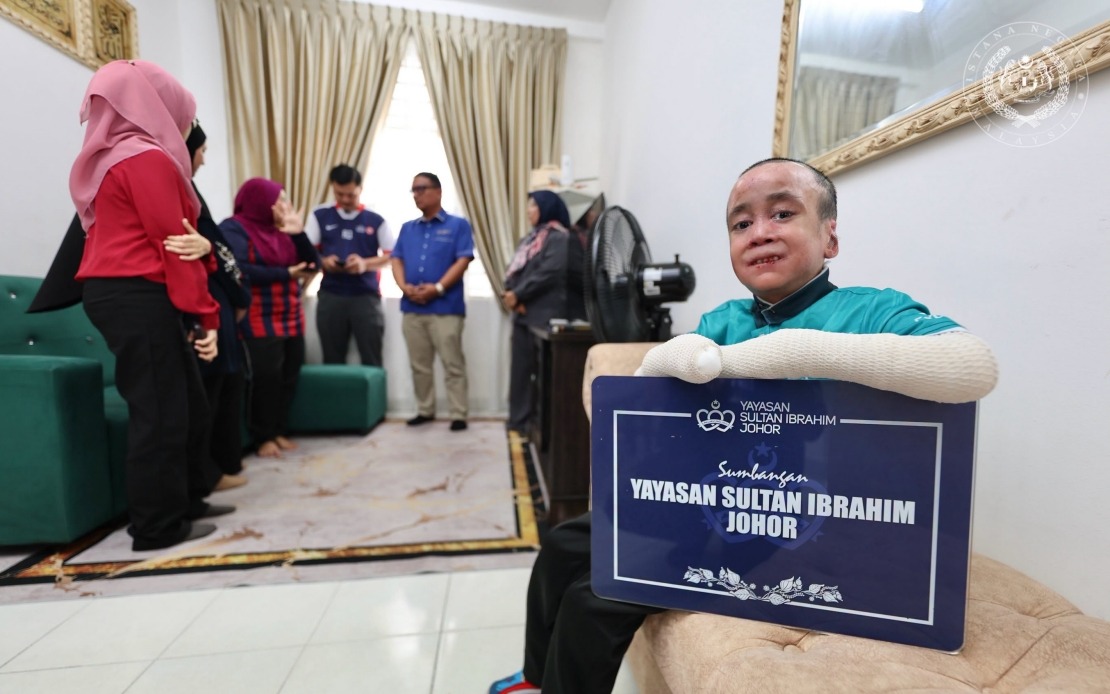
The Yayasan Sultan Ibrahim Johor (YSIJ) has stepped in to provide crucial financial relief to Muhammad Hazreel Mikhail Hizar, a 15-year-old living with epidermolysis bullosa, a rare and severely debilitating genetic skin disorder that has affected him since birth. The assistance was delivered through the foundation's Ziarah Kasih outreach programme at the residence of Hazreel's mother, Noor Halimaton Hashim, in the Sungai Tiram People's Housing Project in Johor Bahru on August 18.
Epidermolysis bullosa represents one of the most challenging chronic conditions to manage in a domestic setting. The disease causes the skin and mucous membranes to become extremely fragile, resulting in severe blistering and wounds that develop spontaneously or from minor trauma. For Hazreel, this translates into a demanding medical regimen that requires constant vigilance and considerable financial resources. The condition necessitates meticulous wound management, including regular cleaning and dressing changes performed with sterile technique to prevent potentially life-threatening bacterial infections that could rapidly escalate into sepsis.
Beyond the immediate medical interventions, environmental control plays an equally vital role in managing the condition. Patients with epidermolysis bullosa must be kept in cool, air-conditioned surroundings to minimise sweating and friction, both of which exacerbate skin breakdown. This requirement for constant climate control significantly elevates household utility costs and restricts the family's mobility and lifestyle choices. The cumulative financial burden of specialised medical supplies, medications, climate-controlled accommodation, and the opportunity costs associated with full-time caregiving place extraordinary pressure on affected families.
Noor Halimaton's situation exemplifies the hidden social costs of managing rare genetic disorders in Malaysia. As a single mother supporting three children, she faces the impossible calculus of providing round-the-clock personal care to Hazreel while simultaneously needing to generate income for the family. Her inability to secure full-time employment reflects a broader reality facing many caregivers of children with severe chronic conditions—employers rarely accommodate the unpredictable absences and scheduling inflexibility that intensive caregiving demands. This trap of caregiving poverty affects not only her immediate family but also Hazreel's overall health outcomes, as stress and financial insecurity compound the already significant medical challenges.
The YSIJ's intervention through the Ziarah Kasih programme represents a targeted approach to supporting vulnerable families facing catastrophic health circumstances. Rather than treating assistance as charity, the foundation recognises that Hazreel's condition requires sustained, systemic support to ensure both medical stability and family economic viability. The timing of this assistance is particularly significant, as it acknowledges that welfare support must be responsive and compassionate, extending beyond the purely transactional nature of conventional social safety nets.
For Malaysian families managing epidermolysis bullosa and other rare genetic disorders, access to consistent financial assistance remains inconsistent and often dependent on the goodwill of philanthropic institutions. The public healthcare system, while broadly comprehensive, struggles to fully address the ancillary costs associated with rare diseases—the specialised dressings, air-conditioning costs, and lost wages from caregiving duties. Foundation-based interventions like YSIJ's programme help bridge these gaps, though they cannot substitute for systemic, government-backed coverage of rare disease management costs.
The broader context of Hazreel's circumstances also touches on questions of medical equity in Southeast Asia. Epidermolysis bullosa is more commonly documented in developed nations, partly because diagnosis and specialist care are more readily accessible. In Malaysia and the broader region, many individuals living with severe genetic skin conditions may be undiagnosed or lack access to specialist dermatological care. This diagnostic gap means that families struggling with unrecognised genetic disorders may not even know they qualify for assistance programmes, further deepening their isolation and hardship.
Noor Halimaton's public gratitude, as expressed through the Royal Press Office statement, underscores the profound impact that timely, appropriate assistance provides to overwhelmed families. Her acknowledgment of the foundation's concern is not merely polite rhetoric but reflects the psychological relief that comes when a family realises their struggle is recognised and that support is available. For caregivers operating in crisis mode, such recognition and material support can represent a critical intervention point that restores hope and enables them to sustain the gruelling daily work of caring for a child with a life-limiting condition.
Moving forward, Hazreel's case highlights the need for more comprehensive, coordinated approaches to rare disease management in Malaysia. While foundation-based assistance proves invaluable, policymakers should consider expanding government schemes specifically designed for families managing rare genetic conditions. These schemes could integrate medical support, environmental modifications, caregiver income replacement, and psychological services into holistic packages that acknowledge the multi-dimensional nature of rare disease burden. Only through such comprehensive approaches can Malaysia ensure that children like Hazreel have genuinely equal opportunities to health, education, and dignity, regardless of their families' economic circumstances.

