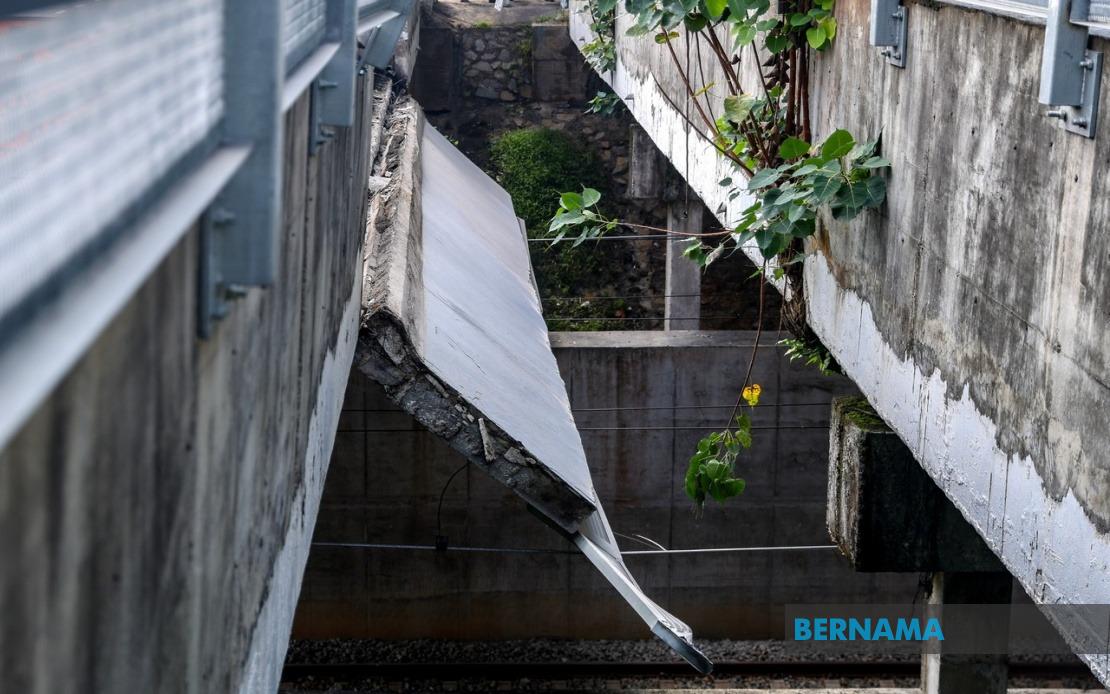
The Electric Train Service network in Johor has been thrown into disarray following a heavy vehicle accident that has forced passengers onto replacement shuttle buses and left critical rail infrastructure in urgent need of repair. The incident on the Kulai-Kempas Baru corridor represents a significant operational setback for Malaysia's key rail operator, Keretapi Tanah Melayu Berhad, and has exposed the vulnerability of transport infrastructure to roadside incidents.
The disruption stemmed from a lorry crash that dislodged concrete structural elements directly onto the rail line's overhead electrical system. The fallen parapet has made passage impossible for trains until comprehensive removal and safety inspections can be completed. Keretapi Tanah Melayu has confirmed that three major ETS services originating from JB Sentral were immediately affected: the long-distance ETS 9442 service to Padang Besar, the central trunk line ETS 9524 heading to Kuala Lumpur Sentral, and the northern route ETS 9326 bound for Butterworth. The breadth of this impact underscores how a single point of failure can cascade through an interconnected rail network, disrupting multiple regional and intercity connections.
Passengers stranded by the service interruption are being accommodated through a temporary replacement system whereby shuttle buses transport affected travellers from either JB Sentral or Kempas Baru stations directly to Kulai Station, where they can resume their journeys by train. This workaround arrangement, while ensuring continuity of passenger movement, adds considerable time to journey durations and represents a significant inconvenience for commuters and long-distance travellers alike. The rail operator has also indicated that those choosing to abandon their trips will receive full refunds, and staff stationed throughout the affected stations remain available to provide additional assistance and information.
The Shuttle Selatan bus services, which provide more localised transport connectivity, have experienced partial suspension. While the Pasir Gudang to JB Sentral route and the Kempas Baru to JB Sentral route continue operating normally, the Kulai-Kempas Baru-Kulai shuttle service has been completely halted, further constraining mobility options for regular commuters on this corridor. This patchwork of partial closures and alternative arrangements reflects the complexity of managing transport systems when critical infrastructure becomes compromised.
The recovery operation itself faces logistical challenges that will determine how quickly normal services can resume. The lorry company responsible for the incident, Transmare-Chemie (M) Sdn Bhd, informed Keretapi Tanah Melayu at 3 am that the 120-tonne crane essential for lifting and removing the fallen concrete structure had not yet been secured. This equipment constraint meant that removal operations could not commence immediately, with initial expectations placing the start of lifting work at approximately 10 am, pending actual crane availability.
The presence of a substantial fallen concrete parapet blocking both rail tracks, combined with damage to the overhead line system, necessitates a methodical and safety-focused remediation approach. The overhead electrical infrastructure, which supplies power to electric trains, requires particular care during recovery operations to prevent further damage or create dangerous conditions for workers. Once the physical obstruction is cleared, comprehensive technical inspections and formal safety certifications must be completed before trains can resume movement through the affected section.
Keretapi Tanah Melayu has adopted a cautious stance regarding the timeline for reopening the corridor, explicitly stating that service resumption depends entirely on the pace of removal works, the results of technical inspections, and the issuance of appropriate safety clearance by relevant authorities. This measured approach, while frustrating for passengers, reflects a recognition that hastily reopening infrastructure could expose both travellers and staff to residual risks. The operator is coordinating with multiple stakeholders to manage the recovery operation, demonstrating the multi-agency nature of critical infrastructure management in Malaysia.
This incident echoes concerns raised by a similar disruption the previous day, when another lorry carrying flammable liquid skidded near the rail corridor, causing electrical power supply failures that delayed both Shuttle Selatan and ETS services on the same route. The recurrence of traffic incidents impacting rail operations within consecutive days raises uncomfortable questions about the adequacy of protective barriers and safety measures separating road and rail infrastructure in this area. For a transport corridor serving significant passenger volumes and serving as a vital link between Johor and national destinations, such repeated disruptions highlight potential vulnerabilities in infrastructure design or roadside hazard management.
The broader implications of this disruption extend beyond immediate passenger inconvenience to encompass considerations about supply chain resilience and logistics reliability. Freight and passenger transport services that depend on predictable rail schedules face cascading complications when service interruptions occur. Businesses relying on regional rail connectivity must factor in contingency arrangements, and the frequency of recent incidents on this particular corridor may prompt logistics operators to reassess routing strategies or service planning methodologies.
For Malaysian commuters and intercity travellers, these incidents underscore the tension between developing modern rail infrastructure and ensuring its protection from external hazards. As the nation continues investing in rail expansion and modernisation, the Kulai-Kempas Baru disruption serves as a practical reminder that physical security, environmental design, and coordinated recovery protocols are equally vital to technological sophistication. The situation also highlights the importance of rapid communication systems and contingency planning, as passengers require timely information and viable alternatives when services fail.
Keretapi Tanah Melayu's response through shuttle bus arrangements demonstrates operational adaptability, yet the incident fundamentally illustrates that rail networks remain dependent on broader infrastructure ecosystems and external factors beyond the operator's immediate control. As restoration efforts proceed and investigations into both incidents progress, the rail operator and relevant authorities will need to evaluate whether additional protective infrastructure or traffic management measures are warranted to prevent future disruptions on this critical transport corridor.

