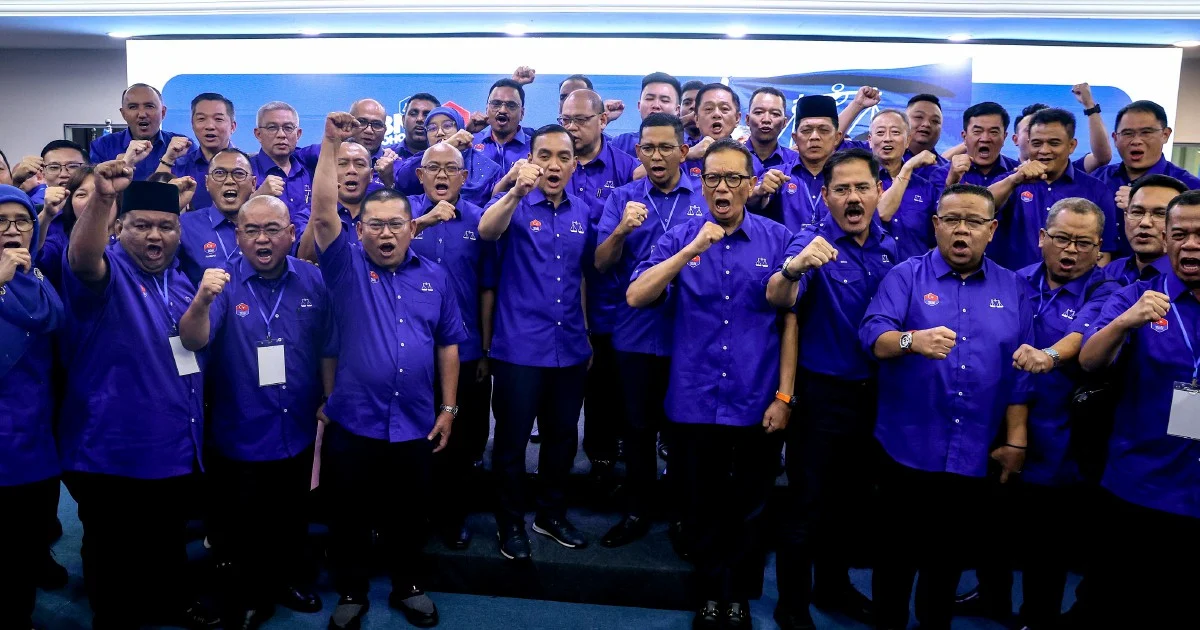
Hopes of a coordinated political alliance spanning three parties in the forthcoming Johor state election have faded after Barisan Nasional revealed its full slate of candidates, pointedly excluding any members from Parti Wawasan Negara. The announcement in Johor Baru effectively closes the chapter on weeks of speculation regarding whether BN might broaden its coalition to encompass both the Islamic-based Pas and the newer Wawasan party in a unified electoral challenge.
Political observers had been tracking discussions about potential cooperation between these three political entities, with proponents arguing that such an alignment could streamline opposition to the ruling Pakatan Harapan government in the state. The prospect of consolidating anti-government votes through a formal arrangement had generated considerable discussion among political analysts and party insiders. However, BN's decision to proceed with a candidate roster drawing exclusively from its component parties—which include Umno, MCA, and MIC—suggests party leadership determined that the mathematical and political advantages of such an arrangement did not justify the complexities of incorporating external partners.
The composition of BN's candidate line-up reflects a traditional approach to electoral competition, relying on the coalition's established machinery and organizational networks rather than expanding its formal membership. This strategy prioritizes party unity and decision-making efficiency over the potential to absorb new voices or electoral constituencies that Wawasan might have represented. For Wawasan, a relative newcomer to Malaysia's fractious political landscape, the exclusion represents a significant setback in its efforts to establish itself as a relevant national political force capable of attracting backing from major coalitions.
Pas, meanwhile, maintains its own independent candidate selections, having chosen to contest the Johor election separately from BN following years of formal alliance breakdown. The Islamic party's decision to field its own candidates indicates the continued fragmentation within opposition politics, where competing ambitions and ideological differences prevent the kind of consolidated challenge that some observers believed could reshape the state's political balance. This fragmentation potentially works to the advantage of Pakatan Harapan, which can present itself as a more unified governing alternative.
The implications for Malaysian politics extend beyond Johor's borders. The rejection of a broader coalition signals that established parties like BN still prefer to compete on their historical strength rather than accommodate newcomers or rebuild damaged alliances. This reflects broader trends in Malaysian electoral politics where personal rivalries, factional disputes within parties, and disagreement over resource allocation continue to obstruct attempts at opposition consolidation. For regional observers, the development underscores the persistent difficulty that Malaysia's opposition faces in presenting a unified front against entrenched governing coalitions.
Wawasan's marginal status in this political calculation highlights the challenges facing new parties attempting to break through Malaysia's duopolistic competition between established coalitions. Despite its claims of representing a fresh political vision unburdened by the historical baggage of older parties, Wawasan lacks the electoral machinery, grassroots organization, and legislative presence necessary to compel BN negotiators to offer substantive partnership terms. The party's inability to secure even token representation in BN's candidate list suggests it remains, from the perspective of coalition strategists, a liability rather than an asset.
For Johor voters, particularly those uncommitted to any established party, the final configuration of candidates suggests limited choices beyond the traditional options. The consolidation of BN's traditional support base without external partnerships may create openings for independent candidates or smaller parties to capture protest votes or appeal to specific demographic groups. However, Malaysia's first-past-the-post electoral system typically penalizes vote fragmentation, making it difficult for parties outside the two major coalitions to translate voter support into legislative seats.
The electoral landscape entering the campaign phase thus remains fundamentally structured around familiar factional disputes and organizational hierarchies. BN's confident move to unveil its candidate slate without external partners suggests internal calculations that the coalition possesses sufficient electoral strength to contest competitively without additional partners. Whether this confidence translates into electoral success will depend on voter response to campaign messaging, performance evaluations of the incumbent government, and on-the-ground organizational effectiveness during the voting campaign itself.
For Malaysian political observers, the Johor candidate selections offer a window into how entrenched power structures adapt to competitive pressures. Rather than fundamentally reorganizing their approach to coalition-building, major parties continue adjusting at the margins while maintaining core organizational relationships. This pattern of incremental adaptation rather than revolutionary restructuring has characterized Malaysian politics throughout recent decades, suggesting that despite periodic speculation about realignment, the underlying architecture of party competition proves remarkably durable across electoral cycles.