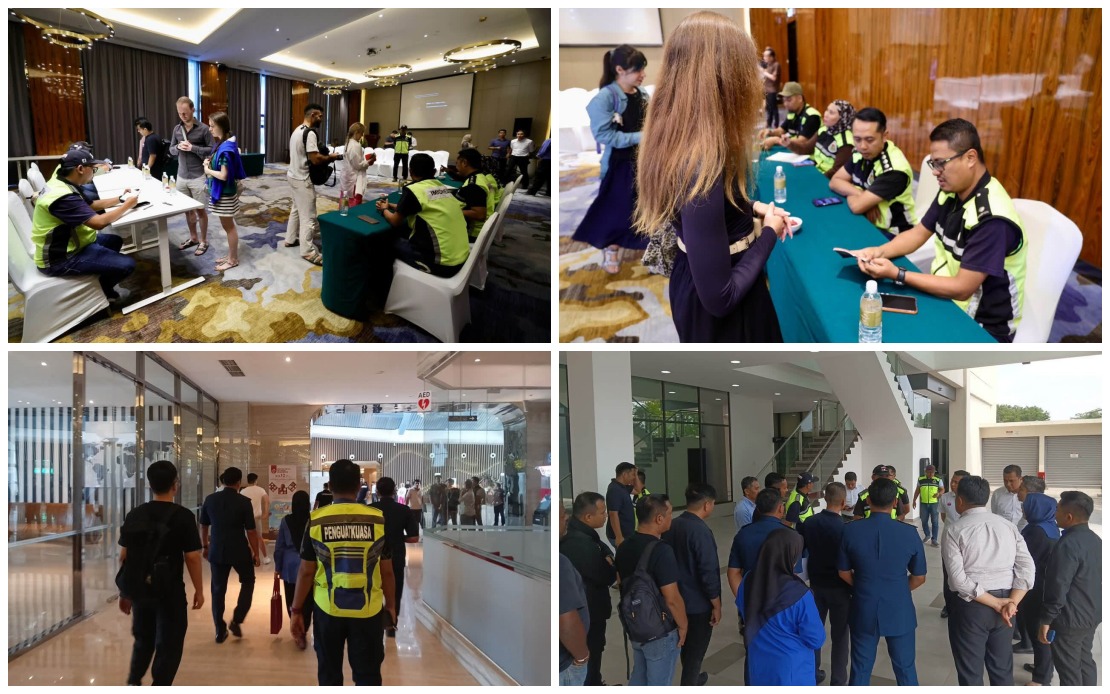
The Iskandar Puteri City Council (MBIP) has taken enforcement action against Network School, operating in the Forest City development, over serious breaches of local business regulations. Johor Menteri Besar Datuk Onn Hafiz Ghazi announced the issuance of a Stop-Business Notice following an investigation that revealed the educational institution had violated multiple conditions of its business licensing and misused its approved premises. The discovery underscores how rapidly growing commercial and mixed-use developments like Forest City can become focal points for regulatory oversight when operators fail to comply with municipal requirements.
The investigation uncovered that Network School was conducting operations from two separate locations within the development. One of these premises maintained a valid business office licence, but the second site was operating entirely without the required MBIP business licence, despite being owned by a Malaysian national. This arrangement raised immediate compliance concerns for the local authority, which must ensure all commercial activities within its jurisdiction meet statutory obligations. The unlicensed operation represents a fundamental breach that triggered the enforcement response.
Beyond the licensing gap, MBIP discovered that the company had fundamentally repurposed its licensed premises in ways that violated the original business conditions. The premises held a licence designated for office use only, yet the company was conducting classroom activities and business promotion operations there—activities that fall outside the permitted scope. This type of misuse is common in fast-developing areas where commercial demand often outpaces regulatory compliance, but it leaves municipalities vulnerable to accountability questions about oversight. The company failed to submit the required detailed application for approval to change the nature of its permitted activities, compounding the violation.
In response, MBIP issued Stop-Business Notice IP012N260714001 against the unlicensed premises on July 17. The council simultaneously issued an Advertisement Licence Notice (6103) under Section 107(2) of the Local Government Act 1976, citing non-compliant signboards that did not align with licensing conditions or the approved permit. These combined enforcement actions represent a comprehensive approach to ensuring the business ceased operations immediately while also addressing secondary breaches in public-facing advertising. The notices establish a formal record of violations that can support further action if the company attempts to resume activities.
Onn Hafiz stated that the Johor state government takes such matters with utmost seriousness and committed to continued investigation of all aspects falling within MBIP's authority. He signalled that additional enforcement action would follow if further breaches were identified in subsequent inspections, suggesting the council intends to maintain close monitoring of the site and potentially other Network School locations. This sustained approach reflects growing awareness among Malaysian local authorities that aggressive initial enforcement must be paired with follow-up oversight to prevent recurrence.
A complicating factor in the case involves the foreign nationals associated with the school's operations. Onn Hafiz clarified that questions regarding these individuals' immigration and work status fall exclusively under the jurisdiction of the Home Ministry. The Menteri Besar acknowledged that the state government had formally urged the ministry to make a prompt and conclusive determination about the status of the foreign nationals involved and the school's broader operational licensing. This jurisdictional hand-off highlights how regulatory crackdowns often require coordination across multiple government agencies, sometimes creating delays in final resolution.
The Network School controversy first emerged when social media posts alleged the institution was connected to efforts to establish an Israeli presence in Malaysia through currency investment activities. While these claims spread widely online, they remained unsubstantiated at the official level and were never formally confirmed by government authorities. Nevertheless, the allegations appear to have heightened public and official scrutiny of the school's operations, potentially accelerating the pace of the regulatory investigation. The geopolitical dimension of these claims added layers of sensitivities that extended beyond simple commercial compliance questions.
For Malaysia's broader regulatory environment, the Network School case illustrates both the strengths and weaknesses of municipal oversight in rapidly developing areas. Forest City, as a major mixed-use development, attracts diverse business interests, including educational ventures that may test the boundaries of licensing categories and permitted uses. The MBIP's response demonstrates that local authorities possess the tools and willingness to enforce compliance when violations are identified. However, the case also reveals potential gaps in real-time monitoring, as unlicensed operations continued long enough to generate public concern and viral social media attention before official action was taken.
The implications extend to other large commercial and residential developments across Malaysia and Southeast Asia that face similar pressures to accommodate diverse business activities within evolving regulatory frameworks. Educational institutions in particular occupy an ambiguous space in municipal licensing systems designed primarily for traditional office and retail uses. Network School's decision to operate without proper licences and to repurpose office space for classroom activities suggests the company either miscalculated enforcement risk or failed to navigate bureaucratic approval processes effectively. Either scenario reflects a breakdown in business compliance practices that undermines the integrity of local regulatory systems.
Looking ahead, the Home Ministry's examination of the foreign nationals involved becomes crucial to determining whether the school can resume operations under corrected licensing arrangements or whether it faces permanent closure on immigration grounds. This decision will significantly impact how Malaysian authorities approach scrutiny of foreign-linked educational initiatives in the future. The Johor government's referral of the immigration aspect to federal authorities, while legally appropriate, also creates a window during which the school remains unable to operate pending the ministry's determination. Investors and operators in commercial developments must now grapple with the clear message that municipal licensing breaches trigger swift enforcement that can halt business operations entirely until compliance is restored.
For residents and stakeholders in Forest City, the enforcement action raises broader questions about how municipal authorities manage the approval and ongoing supervision of diverse business activities in mixed-use developments. The discovery that unlicensed operations had continued undetected suggests that MBIP's inspection and monitoring capacity may require strengthening to catch violations before they become public controversies. As Forest City continues expanding and attracting international business interests, the balance between facilitating commerce and maintaining regulatory standards will remain a central governance challenge. The Network School case provides both a cautionary example and a demonstration that Malaysian authorities are prepared to take decisive action when compliance fails.
For Malaysia's international business reputation, the incident underscores the importance of understanding and adhering to municipal licensing requirements before launching operations in commercial developments. Foreign and local operators alike must recognize that local authorities possess genuine enforcement capacity and political will to shut down non-compliant operations. The case also highlights how unverified social media allegations can amplify official scrutiny, placing additional pressure on businesses to maintain impeccable compliance records. As MBIP continues its investigation and the Home Ministry deliberates on the school's foreign national employees, the Network School situation will likely inform how Malaysian authorities calibrate oversight of educational ventures in commercial zones going forward.

