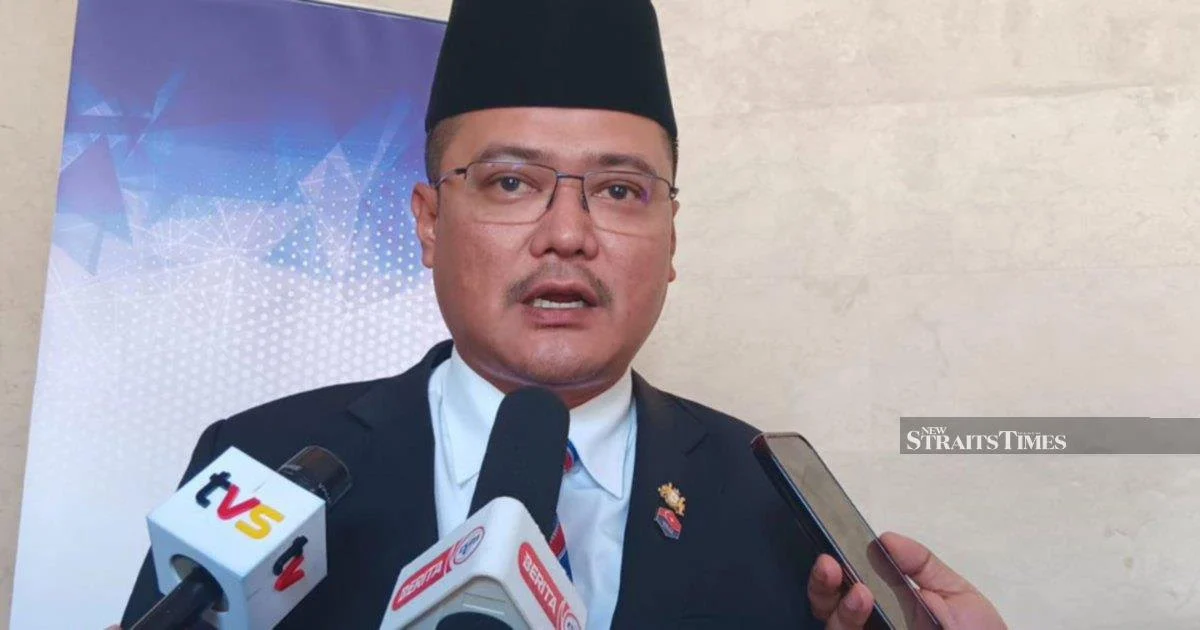
Johor Barisan Nasional has mounted a vigorous defence against assertions made by former state legislative assembly speaker Datuk Dr Mohd Puad Zarkashi, characterising his allegations as baseless, serious and irresponsible. The coalition rejected any suggestions that royal institutions had become entangled in factional party politics or policy decisions, a charge that has emerged as a flashpoint in the state's volatile political landscape.
The escalating dispute reflects deepening fissures within Johor's political establishment. Datuk Dr Mohd Puad Zarkashi, who previously held the speaker's office, has made public statements that implicate royal involvement in political matters—allegations the BN establishment views as an unacceptable breach of convention and decorum. The nature of these claims strikes at the heart of Malaysia's constitutional monarchy, where the institution's political neutrality is considered foundational to democratic stability.
Umno Youth, the party's militant youth wing, has responded by orchestrating what it describes as a grassroots mobilisation. The movement's leadership claims that hundreds of party members and sympathisers have filed official police reports in response to Datuk Dr Mohd Puad Zarkashi's statements. This coordinated action underscores the seriousness with which the party hierarchy is treating the matter, transforming what might otherwise remain an internal dispute into a legal affair with potential public dimensions.
The strategy employed by Umno Youth reflects the party's broader approach to managing dissent and protecting its institutional interests. By channelling grassroots anger into formal police complaints, the youth wing has created a cumulative legal record that could prove significant if authorities determine that complaints warrant investigation. This tactic simultaneously demonstrates internal party discipline and signals to other potential critics that challenging party narratives carries institutional costs.
From a Malaysian political perspective, this episode reveals the ongoing tension between transparency and institutional deference. Public figures occasionally challenge prevailing narratives about how decisions are actually made, particularly when those accounts diverge from official explanations. Yet doing so within Malaysia's political culture often triggers swift institutional pushback, especially when criticism touches on royal prerogatives or palace decision-making.
For Johor specifically, the state has long occupied an unusual constitutional position. The Johor sultanate maintains substantial formal powers, including significant influence over state legislative matters and executive decisions. This reality exists somewhat uneasily alongside democratic norms that emphasise elected officials' accountability. Public allegations that palace preferences drive political outcomes potentially undermine the legitimacy of elected institutions if left unchallenged—hence the BN's forceful response.
The timing of this dispute may also carry significance for broader Malaysian politics. Johor's governance has implications beyond the state itself, given its size, economic importance and proximity to Singapore. Any suggestion that institutional governance is being shaped by extra-parliamentary forces could affect investor confidence and public trust in state administration. This appears to be an implicit concern animating the BN's strong condemnation.
Datuk Dr Mohd Puad Zarkashi's background as speaker suggests he possesses detailed knowledge of the legislative process and institutional relationships. His public statements therefore carry particular weight and credibility, which likely explains the perceived urgency of the BN's response. Allowing such critiques to circulate without vigorous rebuttal risks amplifying their impact and encouraging other insiders to voice similar concerns.
The Umno Youth mobilisation strategy also reflects how Malaysian political parties have increasingly utilised police reporting mechanisms as a form of political pressure. Rather than confining internal disputes to party forums, youth wings have learned to convert political disagreements into criminal or civil matters, leveraging state apparatus to reinforce party messaging. This trend raises broader questions about whether law enforcement resources are being appropriately deployed.
Regionally, Malaysia's political stability remains important to neighbouring governments and regional observers. Public disputes involving royal institutions and suggestions of unconstitutional influence—whether justified or not—attract unwelcome external attention. The BN's swift and comprehensive response likely aims partly to contain the narrative and prevent it from gaining international circulation.
The path forward remains uncertain. If police investigations materialise from the reported complaints, the matter could escalate further or alternatively prove to be procedurally managed and quietly resolved. The institutional relationship between Datuk Dr Mohd Puad Zarkashi and the Umno establishment appears damaged regardless of investigation outcomes, potentially limiting his future role in state politics.
This dispute ultimately illustrates how Malaysian political conflicts, though ostensibly about specific allegations, often function as proxy contests for institutional power and the bounds of permissible political discourse. The BN's response demonstrates the established order's determination to police not just what is said, but who has standing to challenge official narratives about how power actually operates.

