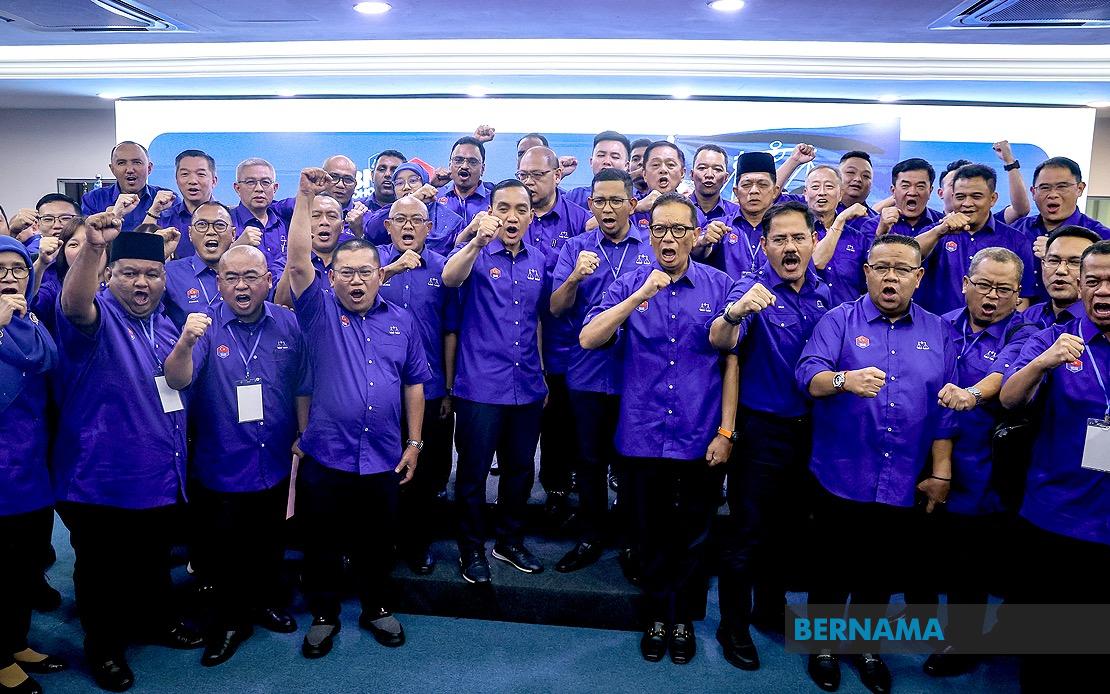
Johor Barisan Nasional has completed its candidate selection process for the 16th state election, unveiling a diverse roster across all 56 contested seats that balances continuity with strategic renewal. The coalition's leadership, headed by chairman Datuk Onn Hafiz Ghazi, presented the carefully curated line-up at a ceremony in Johor Bahru, signalling the importance placed on this electoral contest within Malaysia's political landscape. The candidate announcement represents months of internal deliberation involving party divisions, community feedback, and strategic calculations about which personalities and political forces can best deliver victories in an increasingly competitive electoral environment.
The composition of the candidate slate reflects the traditional power dynamics within the BN coalition structure in Johor, with UMNO fielding the lion's share at 37 candidates, MCA contributing 15 representatives, and MIC providing four contenders. This numerical distribution mirrors the relative strengths of the component parties within the peninsula's southernmost state, where UMNO maintains organisational dominance while component parties negotiate for winnable positions. The balance struck in this allocation carries implications not only for the Johor election but also for broader coalition dynamics, as it demonstrates how BN manages internal party ambitions while maintaining overall unity heading into a significant state-level contest.
Onn Hafiz's decision to defend the Machap seat personally underscores his authority as the current Menteri Besar and Johor's chief political voice within the BN framework. His retention of this constituency, which he first won in 2022, sends a clear signal about his confidence in the government's record and his personal political standing in his home assembly area. The choice also reflects a deliberate strategy to present leadership stability and continuity, qualities that become especially valuable in state elections where voters often seek reassurance about governance and administrative competence.
The reappearance of Datuk Seri Dr Adham Baba as the BN candidate in Pasir Raja marks a significant return for the former health minister, who previously held the seat for two consecutive terms before losing it in 2018. Adham's political trajectory illustrates the complex mathematics of party loyalty and electoral strategy within Malaysian politics, as his appointment comes after a decade away from the state assembly despite maintaining a presence in federal politics. His positioning as Tenggara UMNO division chief provides organisational credentials that likely informed the decision to field him in this particular seat, where his historical roots and party standing may help overcome the natural disadvantage faced by politicians attempting comebacks after substantial electoral absence.
The treatment of former Menteri Besar Datuk Seri Hasni Mohammad in the Benut constituency reveals the often brutal calculus of electoral politics in Malaysia, where experience and past service provide no guarantee of renomination. Despite holding the seat as an incumbent assemblyman, Hasni has been dropped from the candidate slate, with UMNO working secretary Datuk Mohd Sumali Reduan chosen to contest instead. This development suggests that either performance concerns, internal party shifts, or strategic calculations about electability in that particular area prompted the decision, though the party leadership has not publicly explained the reasoning behind what amounts to a significant snub for a senior figure.
The broader retention of nine out of ten former executive councillors from the 2022 election indicates that the BN leadership generally maintains confidence in its governmental team and seeks to project an image of administrative effectiveness. The single exception involves Khairin-Nisa Ismail, who previously chaired the State Women, Family and Community Development Committee and will not defend the Serom seat. This substantial continuity rate suggests that the outgoing government has not faced the kind of widespread rejection that typically prompts wholesale replacement of previous administration members, and it allows the coalition to campaign on the basis of an intact team with demonstrated experience in running state affairs.
Onn Hafiz's framing of candidate nomination as a matter of responsibility rather than privilege carries particular weight in the Malaysian political context, where elected positions have historically been treated as forms of patronage and power consolidation. His emphasis on integrity and courteous campaigning establishes expectations for how the BN candidates should conduct themselves during the election period, potentially setting the tone for what the coalition hopes will be a relatively decorous and issue-focused contest. This rhetorical positioning also implicitly distinguishes BN's approach from the style of opposition campaigning, a common feature of Malaysian electoral politics where parties seek to claim moral high ground through their candidates' conduct.
The requirement that all candidates campaign in ways aligned with Johor's values and traditions reflects a distinctive political culture in the state, where the monarchy and institutional stability hold particular importance within local political discourse. This framing helps BN position itself as the custodian of established order and continuity, contrasting implicitly with opposition parties that might be portrayed as agents of disruption or change. Such messaging carries special resonance in constituencies where voters prioritise stability and where incumbent performance on bread-and-butter issues like infrastructure, education, and public services becomes the primary electoral battlefield.
For Malaysian observers and regional analysts tracking Johor politics, this candidate announcement provides important clues about BN's electoral confidence and strategic priorities heading into the campaign period. The decision to field relatively experienced candidates across most seats, combined with the retention of ministerial-level figures like Onn Hafiz, suggests that the coalition believes it can defend its position and possibly expand representation despite the increasingly competitive nature of Malaysian state elections. The careful balance between incumbents and new faces also indicates sophisticated political management, as it allows the party to placate internal factions seeking candidate positions while maintaining coherence around core political figures who embody the party's brand and messaging.
The geographical spread of candidates across all 56 seats means that voters throughout Johor will encounter a choice between familiar faces from the current BN administration and newcomers selected through party mechanisms. This representational structure becomes especially significant in swing constituencies where marginal margins from previous elections suggest that candidate quality, local rootedness, and campaign intensity could determine outcomes. The absence of prominent names from certain seats also carries meaning, as does the strategic placement of recognisable figures in constituencies where their presence might bolster BN's performance or defend vulnerable seats against determined opposition challenges.
Looking ahead to the campaign period, the composition of this candidate slate will shape how BN presents itself to Johor voters and how effectively it can marshal the administrative machinery, grassroots networks, and communication resources that incumbency provides. The election will test whether the experience and continuity represented by most of these candidates translates into electoral success, or whether voters have become convinced that fresh alternatives warrant consideration despite the risks of change. The outcome will carry implications not only for Johor's state government but potentially for broader Malaysian political alignments, given the state's size, economic importance, and role as a bellwether within the Malay-Muslim heartland.