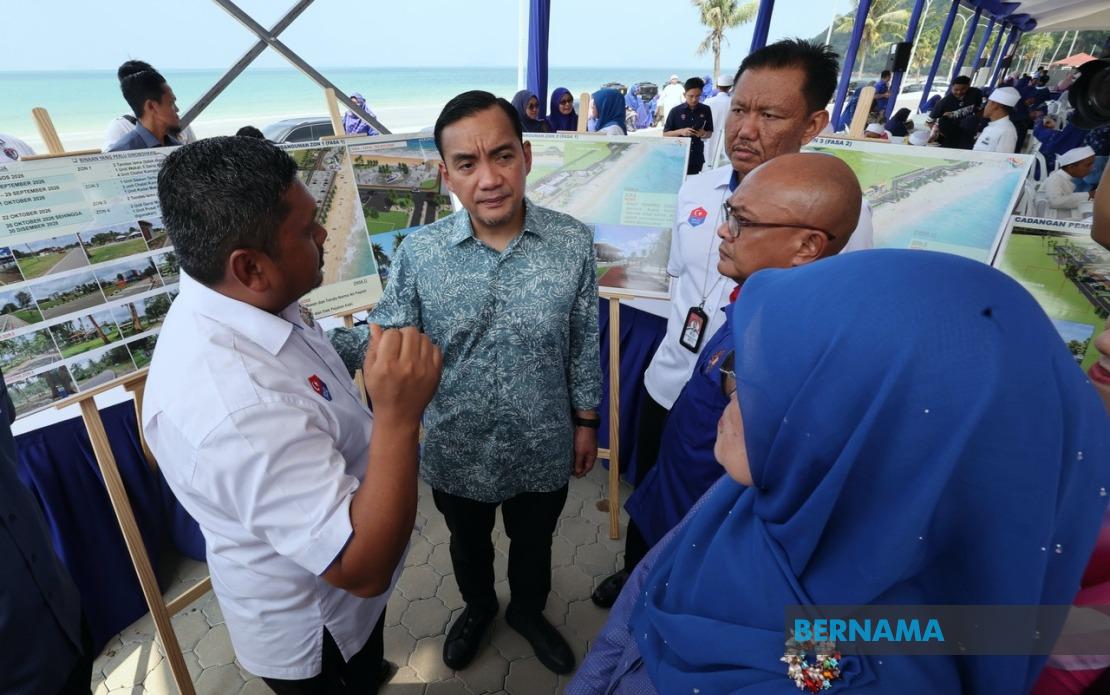
Johor's state government has committed RM1.5 million to finance a comprehensive range of development initiatives across Mersing district, marking a significant step in bringing prosperity to the region's 80,000 residents. The funding package, announced by Menteri Besar Datuk Onn Hafiz Ghazi, encompasses infrastructure improvements, sports facilities, healthcare enhancements, and public utility projects designed to distribute the benefits of Johor's broader economic expansion more equitably across all districts.
The allocation represents an extension of the development strategies that have driven growth in Johor Bahru, with state leadership emphasising the importance of replicating success models throughout the state. This approach reflects a growing recognition in Malaysian governance that regional disparities require targeted interventions to ensure that growth in major economic hubs does not leave peripheral areas behind. For Mersing, a district with significant tourism potential anchored by its marine resources and natural attractions, the investment signals a commitment to transforming visitor economy benefits into sustainable local employment and improved living standards.
The Johor Economic Transformation Plan (JETP) serves as the strategic framework guiding these expenditures. This comprehensive initiative establishes short-term, medium-term, and long-term development objectives intended not merely to strengthen the state economy as a whole, but to generate tangible improvements in residents' daily lives through expanded job creation pathways. Onn Hafiz has explicitly emphasised that prosperity indicators mean little if local communities do not experience material benefits. His statement that tourism products remain hollow without benefiting Mersing's population underscores a philosophy that economic growth must translate into genuine opportunity, particularly for youth seeking stable employment.
Healthcare improvements constitute a major component of the allocation. A substantial RM500,000 has been directed toward upgrading the haemodialysis facilities at Mersing Hospital, addressing critical medical infrastructure needs for residents requiring ongoing kidney treatment and dialysis services. This investment acknowledges gaps in tertiary healthcare provision in more remote Malaysian districts and represents a practical response to residents' health needs rather than aspirational infrastructure development.
Recreational and community infrastructure improvements will consume another RM600,000 of the package. These funds will establish a futsal court at Taman Sri Mersing with RM200,000 allocated for construction, repair the existing futsal facility in Felda Nitar with an equivalent sum, and build a sepak takraw court in Felda Tenggaroh 6 with RM80,000. Such sports facilities serve dual functions in Malaysian communities, providing venues for physical activity and social gathering while potentially nurturing local athletic talent. Additionally, RM200,000 will fund carpet replacements at Kampung Sri Lalang Mosque, a maintenance investment that improves worship facilities for the community.
Rural electrification and quality-of-life improvements for indigenous populations feature prominently in the expenditure plan. Solar-powered streetlights totalling RM200,000 will be installed across two Orang Asli villages—Kampung Peta and Kampung Tanjung Tuan—each receiving RM100,000. This initiative addresses connectivity and safety concerns while promoting renewable energy adoption in areas that may have experienced limited electrification previously. Such investments carry particular significance for Malaysia's indigenous communities, who often face infrastructural disadvantages relative to urban and suburban populations.
Organisational infrastructure also receives attention through the package. The Kami Anak Felda Malaysia (KAF) building in Felda Tenggaroh Timur will receive RM100,000 for upgrades, supporting an institution focused on agricultural enterprise development among Felda settlers' descendants. These younger-generation settlers increasingly seek business opportunities beyond traditional palm oil cultivation, and improved organisational facilities can facilitate their entrepreneurial ambitions.
Beyond immediate capital projects, Onn Hafiz announced several strategic initiatives with longer implementation horizons. A proposal to construct a petrol station exclusively serving the Special Forces Group (GGK) personnel at Camp Iskandar will be coordinated between the local assemblyman and Mersing District Officer, reflecting practical support for military installations within the district. More significantly, plans to establish a dedicated Religious Affairs Office and a Technical and Vocational Education and Training (TVET) campus in Mersing represent infrastructure investments that will generate sustained institutional presence and employment prospects.
The TVET campus announcement holds particular relevance for Malaysian educational development. Vocational and technical training institutions have assumed greater importance in national skills development strategies as the economy shifts toward advanced manufacturing and service sectors requiring specialized competencies. Placing such a facility in Mersing could anchor skilled workforce development in the district while providing pathways for young people seeking alternatives to academic tertiary education. The proposed Religious Affairs Office similarly indicates state commitment to supporting Islamic administrative functions, reflecting the constitutional position of Islam in Malaysian federalism and the community's religious governance needs.
This development package represents pragmatic rather than transformative policy. The RM1.5 million allocation, while substantial, targets specific gaps in Mersing's infrastructure rather than proposing wholesale economic restructuring. The mixture of healthcare, recreational, rural electrification, and institutional investments suggests a holistic approach to development that recognises multiple dimensions of community wellbeing beyond purely economic indicators. Assemblyman Mohd Youzaimi Yusof and assemblywoman Alwiyah Talib's participation in the announcement underscores the sub-state political coordination necessary for effective resource distribution.
For Malaysian and Southeast Asian observers, Johor's development strategy in Mersing exemplifies contemporary state-level governance challenges across the region. Rapidly urbanising nations must balance concentrated economic dynamism in metropolitan centres against the political and social necessity of extending prosperity to peripheral districts. Johor's approach—adapting successful urban development models to district conditions while maintaining focus on employment creation and youth opportunity—offers insights into how federal systems can address regional inequality without dismantling the economic engines driving national growth. The emphasis on youth employment and skills development aligns with broader regional imperatives as Southeast Asian populations mature and economies increasingly require high-value, technically sophisticated labour rather than low-cost manufacturing.

