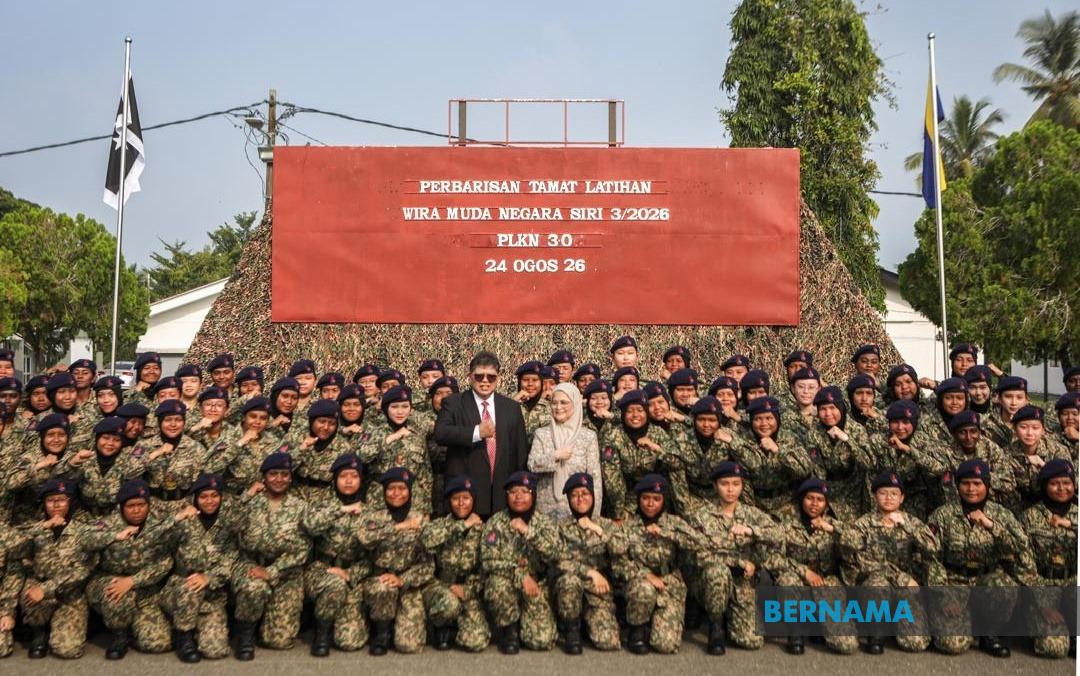
Dewan Rakyat Speaker Tan Sri Dr Johari Abdul has urged the nation's young people to cultivate three interconnected qualities as they prepare for leadership roles in society. Speaking at the closure of the Wira Muda Negara Training Series 3/2026 under the National Service Training Programme (PLKN) 3.0 at the National Service Training Branch (CLKN) 504 Territorial Army Camp in Bukit Keteri near Padang Besar, Johari outlined a vision of youth development that extends beyond traditional hierarchies and professional boundaries.
The Speaker's emphasis on aspirational thinking reflects growing recognition among Malaysian policymakers that emerging generations require more than technical competence to navigate an increasingly complex world. Johari stressed that young citizens should first identify the overarching objectives they wish to accomplish throughout their lives, establishing a clear sense of personal direction. This foundational step, he suggested, serves as an anchor point from which all subsequent decisions and actions can be evaluated.
Beyond mere aspiration, however, Johari highlighted the critical importance of personal fortitude. Young Malaysians must develop the inner strength to transform their visions into tangible reality, he argued, emphasising that ideation alone remains insufficient without the willingness to confront challenges and embrace change. This dimension of his message addresses a persistent concern among educators and administrators that many young people lack the resilience necessary to persist through obstacles.
The third pillar of Johari's framework centres on continuous learning and skill acquisition. He maintained that individuals who equip themselves with diverse knowledge and expertise are better positioned to make informed decisions and maintain ethical moorings throughout their careers. This emphasis on grounding ambition in substantive knowledge reflects broader anxieties about youth development in Southeast Asia, where rapid technological and social change can sometimes outpace educational adaptation.
Johari's conception of leadership deliberately transcends conventional definitions tied to political office or military rank. Rather, he articulated a view in which leadership qualities represent universally applicable attributes that individuals in any profession or walk of life should consciously cultivate. This democratisation of the leadership concept acknowledges that contemporary challenges—from environmental management to technological innovation to social cohesion—require leadership instincts distributed throughout society rather than concentrated among formal power holders.
The practical context for Johari's remarks was particularly significant. The closure ceremony marked the successful completion of training for 795 youths across three separate National Service Training locations nationwide. At the 504 AW Camp in Bukit Keteri, female trainee An'nur Najiha Muhammad Shahidan, 18, from Ipoh, Perak, received the Wira Muda Ulung Award, recognising exceptional performance throughout her service experience. Her recognition exemplified the tangible outcomes that structured youth development programmes can produce.
The training cohort was distributed across multiple geographical locations, reflecting the PLKN 3.0 programme's national scope. In addition to the 106 female trainees completing their programmes at the 504 AW Camp in Perlis, 442 male trainees finished at the 505 AW Camp in Pahang, while 247 female trainees concluded their service at the 515 AW Camp in Kuala Lumpur. This dispersed approach enables regional communities to retain connection with their young people while they undergo formative experiences.
For Malaysian observers, Johari's remarks arrive at a moment when youth engagement and development rank prominently on the national agenda. The PLKN 3.0 programme itself represents a substantial government investment in structured experiences designed to instil discipline, national consciousness, and practical skills among young citizens. By articulating a clear philosophical framework centring on dreams, courage and knowledge, Johari has provided a conceptual foundation that programme administrators and youth educators can reference as they design curricula and mentoring approaches.
The emphasis on knowledge as a grounding element for ambition carries particular resonance in Malaysia's context. As the nation navigates digital transformation and positions itself within competitive regional and global economies, the capacity for young people to combine innovative thinking with rigorous intellectual preparation becomes increasingly vital. Johari's message implicitly warns against the risks of unchecked idealism unmoored from substantive expertise.
Moreover, the focus on courage as a distinct element speaks to psychological and emotional dimensions of development that conventional educational frameworks sometimes underemphasise. In societies where respect for hierarchy and risk aversion can run deep, explicitly encouraging youths to embrace calculated risks and challenge existing assumptions represents a subtle but significant shift in official messaging about desirable characteristics.
The recognition of An'nur Najiha Muhammad Shahidan also signals important developments in how Malaysia conceptualises female leadership and youth potential. Her achievement at a military training facility underscores evolving institutional attitudes toward women's participation in traditionally male-dominated spaces and their capacity for demonstrating excellence in demanding environments.
Johari's three-part framework—aspiration, resilience and knowledge—offers young Malaysians a portable, adaptable model applicable across diverse contexts and professional trajectories. Whether individuals pursue careers in business, civil service, education, healthcare, or entrepreneurship, the fundamental challenge remains translating ambitious visions into concrete achievements through courage and continuous learning. In articulating these principles at a national service training closure ceremony, Malaysia's legislative leader has provided young programme participants with a coherent philosophical compass as they transition from structured institutional experiences toward independent adult lives and careers.

