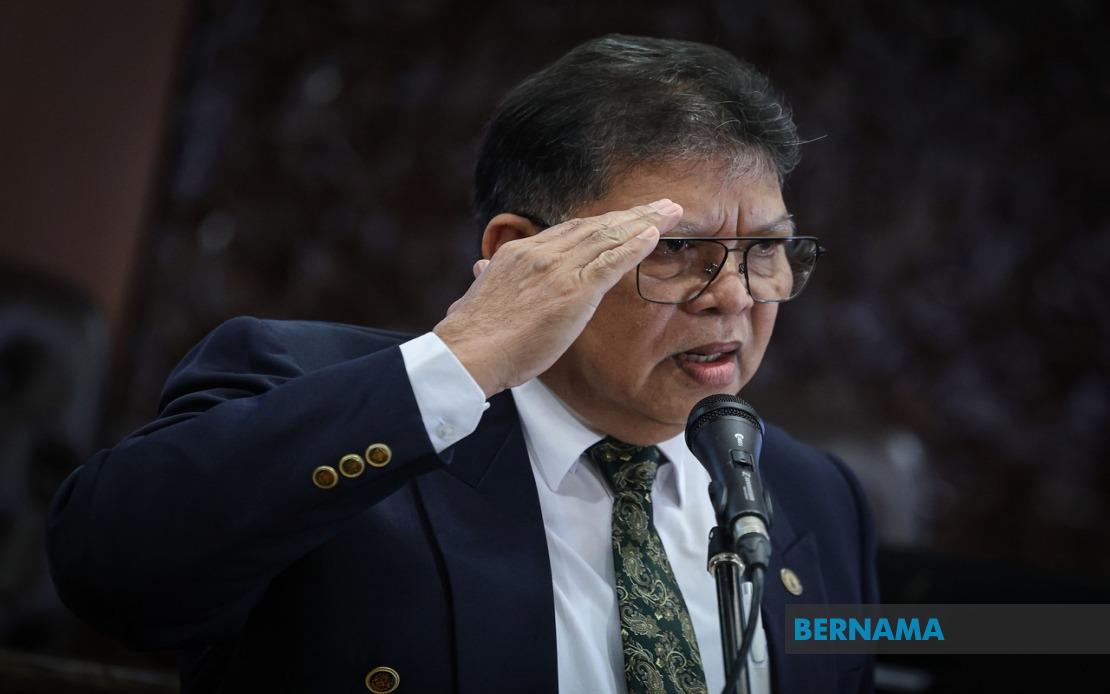
Dewan Rakyat Speaker Tan Sri Johari Abdul has championed the adoption of proportional representation as a mechanism to foster more inclusive political leadership that authentically reflects Malaysia's diverse ethnic and cultural landscape. Speaking at the Harmony Symposium held at the Parliament building in Kuala Lumpur on June 26, Johari articulated a vision of institutional reform designed to prepare the nation for profound demographic shifts expected over the coming decades, while simultaneously guaranteeing that minority communities maintain meaningful participation within the legislative chamber.
At the heart of Johari's argument lies a demographic reality that poses critical questions for Malaysia's democratic future. Population projections indicate that Bumiputera Malays will account for 77 per cent of the nation's population by 2050, a threshold that creates substantial challenges for electoral systems premised on geographical constituencies. Under Malaysia's current first-past-the-post electoral framework, declining minority populations in specific constituencies risk becoming marginalised in parliamentary representation, a prospect that concerns Johari deeply. He articulated this anxiety with directness: if minority groups lack constituencies where they constitute the majority, the likelihood of their representatives securing parliamentary seats diminishes proportionally, potentially silencing their voices at the policy-making table.
The speaker's concern extends beyond abstract parliamentary mathematics into the practical implications of political exclusion. He emphasised that the suppression of minority voices carries consequences that ripple through communities and grassroots society. Should minority perspectives become systematically absent from parliamentary deliberations, the grievances, concerns, and developmental needs of these communities risk remaining unaddressed within the legislative process. This institutional silence could generate social friction and undermine the inclusive national project that Malaysia has historically attempted to cultivate, particularly given the nation's remarkable ethnic composition of approximately 77 distinct groups.
Proportional representation systems fundamentally restructure how electoral votes translate into parliamentary seats, typically allocating representation based on the overall vote share each party receives rather than winner-take-all outcomes in individual constituencies. Such arrangements commonly produce outcomes more reflective of the total electorate's political preferences and can facilitate the parliamentary presence of parties or candidates representing minority interests, even in regions where they lack numerical dominance. For Malaysia's context, Johari suggests this mechanism could provide structural protection for minority representation, ensuring that declining demographic shares do not necessarily correlate with diminishing political voice.
Johari's intervention reflects a broader concern about Malaysia's trajectory beyond the immediate present. He deliberately repositioned the conversation away from contemporary grievances towards forward-looking challenges spanning five to 100 years. Rather than confining discussions to yesterday's conflicts or today's disputes, he advocated for a future-oriented framework that anticipates the nation's long-term cohesion challenges. This temporal reorientation represents a significant rhetorical move in Malaysian politics, where historical disputes frequently dominate national discussions. His question—"how do we move forward?"—encapsulates this strategic pivot towards preventive institutional design rather than reactive crisis management.
The symposium itself emerged as a structured initiative to translate harmony discourse from academic or civil society spaces into the epicentre of democratic decision-making. Syahredzan Johan, chair of the Malaysia Cross-Party Parliamentary Group on Racial and Religious Harmony (KRPPM-KKA) and Member of Parliament for Bangi, organised the convening to generate substantive policy recommendations and operational mechanisms that Parliament and government ministries could genuinely implement. This institutional anchoring distinguishes the symposium from rhetorical exercises, positioning it as a practical pathway for translating abstract principles of inclusivity into concrete legislative and administrative reforms.
The Malaysia Cross-Party Parliamentary Group's mandate reflects an ambitious scope: building a more inclusive Malaysia through systematic policy and legal overhaul while constructing cooperative bridges spanning Parliament, the executive, civil society organisations, and educational institutions. Rather than treating racial and religious harmony as peripheral concerns or ceremonial observances, the group integrates them within Malaysia's core democratic and institutional architecture. This comprehensive approach acknowledges that genuine inclusivity requires coordinated action across multiple governmental and non-governmental domains, rather than isolated measures within any single portfolio.
Proportional representation remains contentious within Malaysian politics, touching sensitive questions about Bumiputera privilege, the constitutional position of Islam and Malay-Muslim interests, and the distribution of political power among communities. Any serious proposal to restructure the electoral system encounters entrenched institutional interests and constitutional complexities. However, Johari's elevation of this topic through the Speaker's platform signals that demographic realities increasingly compel Malaysian policymakers to contemplate institutional adaptations. The uncomfortable arithmetic of the 77 per cent projection cannot be indefinitely avoided, even by those benefiting from current arrangements.
The demographic argument carries particular weight because it reframes minority protection not as a concession to contemporary sensitivities but as a rational response to inexorable demographic trends. If Bumiputera populations genuinely expand to three-quarters of Malaysia's inhabitants within three decades, then the current system's assumptions about constituency composition become mathematically obsolete. Proportional representation proponents argue that adapting electoral architecture preemptively addresses this obsolescence, whereas maintaining status quo structures risks creating acute political crises when demographic realities sharply diverge from institutional design premises.
For Malaysia's regional standing and international reputation, the embrace of mechanisms protecting minority participation carries strategic implications. Southeast Asia contains numerous multi-ethnic democracies navigating comparable tensions between majoritarian electoral outcomes and minority rights protection. Malaysia's institutional experiments with inclusivity bear scrutiny from regional peers confronting identical dilemmas, particularly Indonesia, which encompasses extraordinary ethnic diversity within democratic frameworks. Demonstrating viable mechanisms for reconciling demographic majorities with minority protection contributes to regional democratic discourse and potentially influences institutional design discussions across Southeast Asia.
Implementing proportional representation systems requires constitutional amendments and comprehensive electoral law overhauls, processes demanding extraordinary parliamentary majorities and potentially requiring sunset provisions within the Federal Constitution itself. The procedural complexity means that Johari's proposal, however prescient regarding demographic trends, faces substantial institutional barriers. Nevertheless, the speaker's articulation of the underlying problem—minority representation becoming structurally vulnerable to demographic arithmetic—establishes an urgent foundation for deeper institutional discussions, even if full proportional representation remains politically unfeasible in the immediate term.
Intermediate solutions might include mixed electoral systems combining constituency-based seats with proportional allocation mechanisms, adjusted constituency boundaries accounting for demographic projections, or enhanced minority representation thresholds within parliamentary structures. These approaches could address Johari's core concern regarding minority voice preservation without requiring complete electoral system transformation. Whether Malaysia's political establishment proves willing to contemplate even incremental electoral reforms remains uncertain, but the Speaker's intervention indicates that demographic realities are forcing previously marginal discussions into mainstream political conversation.

