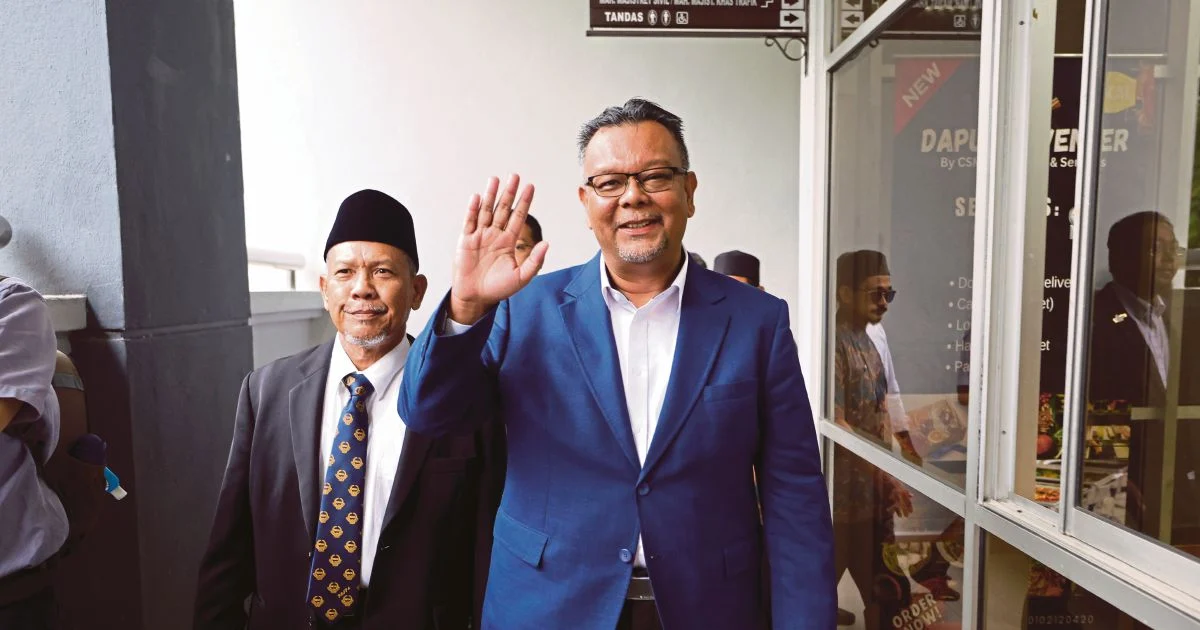
The Jitra assemblyman Dr Haim Hilman Abdullah has formally contested allegations that he made inflammatory statements designed to trigger widespread public concern when he appeared before the magistrate's court in Seremban this week. His decision to register a not guilty plea sets the stage for a legal proceeding that will likely examine the nature and context of the statements in question, marking another chapter in a year that has seen increased scrutiny of political speech across the country.
The charge Dr Hilman faces falls under provisions designed to protect public order and social stability by preventing individuals from making claims or statements that could reasonably be expected to alarm or disturb the general population. Such legislation has become a point of tension in Malaysian politics, with civil society groups and political analysts frequently debating where the boundary lies between protected political expression and speech that genuinely poses a threat to public peace.
The Seremban magistrate's court filing represents an important moment for the Jitra representative, whose parliamentary responsibilities encompass roughly 60,000 constituents in the northern state of Kedah. As a state assemblyman, Dr Hilman has previously been vocal on matters affecting his constituency, and his legal challenge now places his public statements under formal judicial examination.
Malaysian courts have handled numerous cases involving similar charges in recent years, reflecting broader questions about the acceptable scope of political discourse in a multi-ethnic, multi-religious democracy. The outcomes of these cases often hinge on whether judges determine that a reasonable person would have genuinely felt alarmed by the statements, or whether the alarm was merely speculative or remote.
For the legal proceedings ahead, the onus will rest on prosecutors to demonstrate that Dr Hilman's statements crossed the threshold from ordinary political commentary or criticism into territory where public alarm was a likely or probable consequence. This distinction remains subtle and frequently contested, with defence lawyers often arguing that isolated statements taken out of context do not meet the legal standard required for conviction.
The case arrives amid a broader period of political activity in Malaysia, where politicians from various parties are increasingly subject to legal investigation on multiple fronts. Some observers view such prosecutions as necessary safeguards against inflammatory rhetoric that could destabilise communities, while others argue that the laws are wielded selectively against opposition figures or those who challenge establishment positions.
Dr Hilman's not guilty plea signals his intention to contest the allegations fully through the courts rather than reach any early settlement or admission. This approach will require the judicial system to carefully examine the specific statements at issue, the circumstances in which they were made, and the likely reaction of reasonable members of the public who encountered them.
For constituents in Jitra, the legal proceedings may raise questions about the extent to which their elected representative can freely speak on matters of public interest without facing legal jeopardy. Political accountability and legal accountability operate on different principles, and cases like this illustrate the tension between holding politicians responsible for their words and protecting the legitimate space for political expression and debate.
The magistrate's court will need to weigh evidence from both the prosecution and the defence before determining whether the threshold for conviction has been met. Such trials typically examine the text of the statements themselves, the channels through which they were disseminated, and expert or factual testimony about the likely impact on public sentiment.
As the legal process unfolds, observers across Malaysia and the region will be watching to see how courts balance the imperative to maintain public order against the principle that vigorous political debate, including criticism and controversial statements, forms an essential feature of democratic governance. The outcome may have implications not only for Dr Hilman but for the broader understanding of where statutory restrictions on speech apply in the Malaysian political landscape.
The case also reflects how legal systems interact with political communication in Southeast Asia more broadly, where several nations grapple with balancing free expression against concerns about social cohesion. Malaysia's approach, through laws addressing sedition, public alarm, and defamation alongside constitutional protections for speech, represents one model among several adopted across the region.

