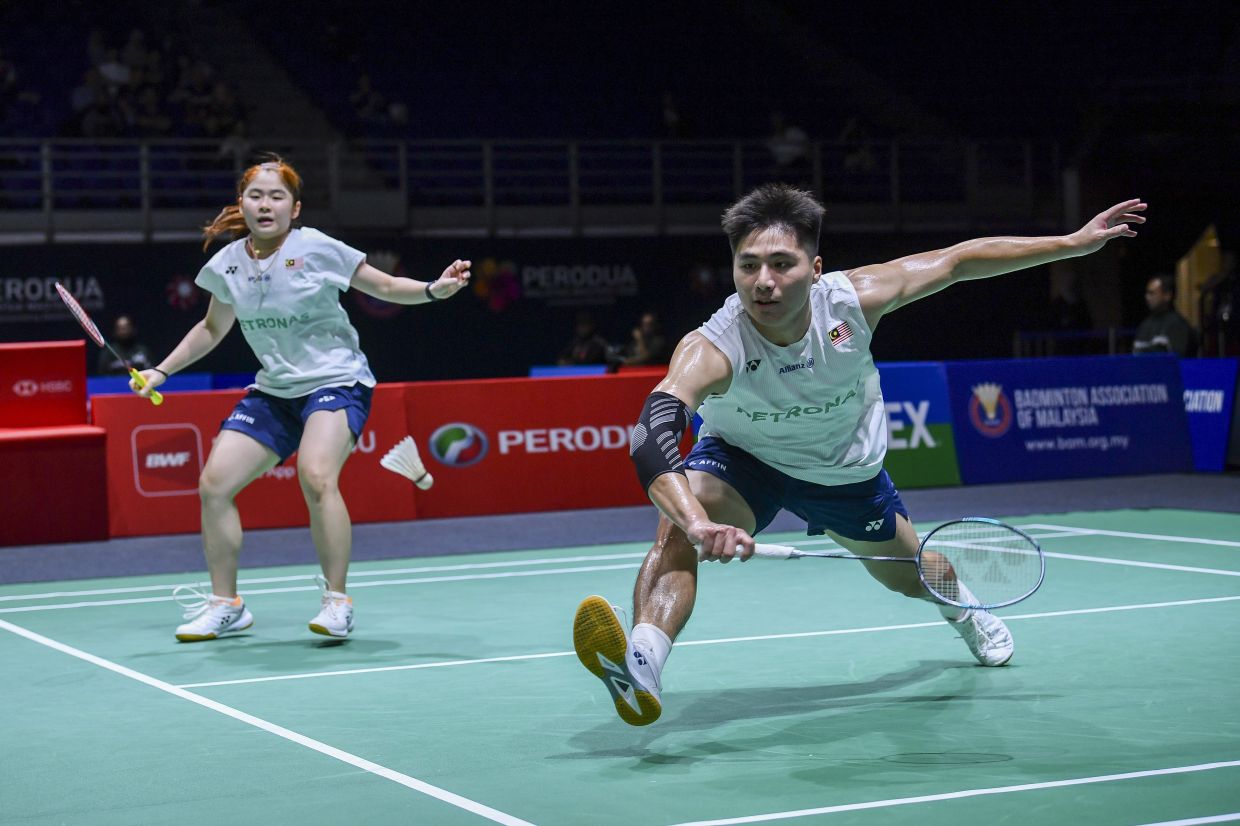
Jimmy Wong is redoubling his efforts to fulfil an Olympic ambition after re-establishing himself within Malaysia's national badminton system. The 23-year-old mixed doubles player, who returned to the Badminton Association of Malaysia in April following a spell away, believes the pathway back into the high-performance environment positions him favourably to pursue qualification for the 2028 Los Angeles Olympic Games alongside his partner Cheng Su Yin.
Wong's return to the national fold represents a significant juncture in his career trajectory. Having stepped outside the structured BAM system previously, his reintegration signals a renewed commitment to elite-level competition and the gruelling preparation cycles required for Olympic qualification. The decision reflects both personal motivation and the recognition that centralised coaching infrastructure and support networks are essential ingredients for athletes aiming at the sport's pinnacle. His willingness to recommit to the national framework demonstrates maturity in understanding the competitive landscape that separates serious medal contenders from peripheral participants.
The partnership between Wong and Su Yin, though relatively recent in formation, has already generated encouraging indicators. Their shocking upset of world number one Feng Yanzhe-Huang Dongping during the opening round of the Singapore Open last month provided a tangible demonstration of their capability to compete against and occasionally overcome the sport's elite pairings. That breakthrough performance, even though their campaign subsequently concluded in the second round, proved instructive—showing that the pairing possesses sufficient technical competency and tactical acumen to trouble the very best combinations on any given day.
Central to Wong's optimism is his access to Nova Widianto, the mixed doubles coach imported to oversee the national programme. Widianto brings impeccable credentials to the role, having achieved Olympic silver-medal success and formerly ranking as a world champion in his playing days. For a young player like Wong, working under such an accomplished practitioner offers invaluable apprenticeship opportunities. The coach's extensive experience navigating high-pressure situations, reading opponents, and executing complex tactical adjustments provides Wong with a master-class in championship-level badminton that transcends conventional technical instruction.
The immediate strategic objective Wong and Su Yin have established is reaching the top 32 in world rankings before the calendar year concludes. Currently positioned at 118th, this represents an ambitious but not unattainable target requiring consistent performances across tournament circuits. Breaking into the top 32 threshold carries practical significance beyond mere ranking bragging rights—it unlocks access to the international badminton tour's most prestigious and lucrative competitions, particularly the Super 750 and Super 1000 series events. These tournaments serve as crucial qualification pathways for major championships and provide substantially deeper player pools against which to develop competitive edge.
Wong has articulated a measured psychological approach to his Olympic aspirations, deliberately avoiding the trap of setting cascading targets that accumulate pressure on court. This intellectual discipline reveals maturity beyond his 23 years. The distinction between ambition and anxiety is subtle but critical in sports psychology; athletes who conflate the two often find performance deteriorates under self-imposed expectations. Wong's acknowledgment that he wishes to focus on delivering optimal performances in each individual match, rather than fixating on distant outcomes, suggests he has absorbed valuable lessons about mental resilience and present-moment focus.
The partnership dynamics between Wong and Su Yin appear fundamentally sound, characterised by effective communication and mutual understanding of tactical approaches. Such interpersonal compatibility forms the bedrock upon which successful mixed doubles teams are constructed, as the discipline demands instantaneous decision-making, constant spatial awareness, and unspoken coordination between players. While Wong concedes that technical areas remain for refinement—inevitable given the relatively early stage of their partnership—the foundation appears robust. The couple have now contested four tournaments together, providing sufficient sample data to identify both strengths to leverage and weaknesses requiring systematic attention.
From a Malaysian badminton perspective, Wong's trajectory carries broader significance for national sporting aspirations. The country's mixed doubles programme has historically produced world-class performers, and continued development of competitive pairs is essential to maintaining Malaysia's traditional eminence in the discipline. Wong and Su Yin represent the contemporary generation tasked with sustaining that legacy, and their progress through 2024 and into 2025 will offer important indicators about the health and direction of the national programme's mixed doubles pipeline. Success by these young players would vindicate the investment in securing experienced foreign coaching expertise like Widianto's.
The 2028 Olympics timeline provides a realistic planning horizon for Olympic qualification. Unlike the compressed preparation periods athletes sometimes face, Wong and Su Yin benefit from nearly four full years to elevate their ranking position, accumulate qualifying points, and build the tournament experience necessary for a credible Olympic campaign. This extended runway permits gradual progression rather than precipitous jumps, reducing injury risk and allowing for measured skill development. For Malaysian badminton stakeholders, monitoring this pairing's advancement through the international rankings will become increasingly relevant as the qualification window approaches.

