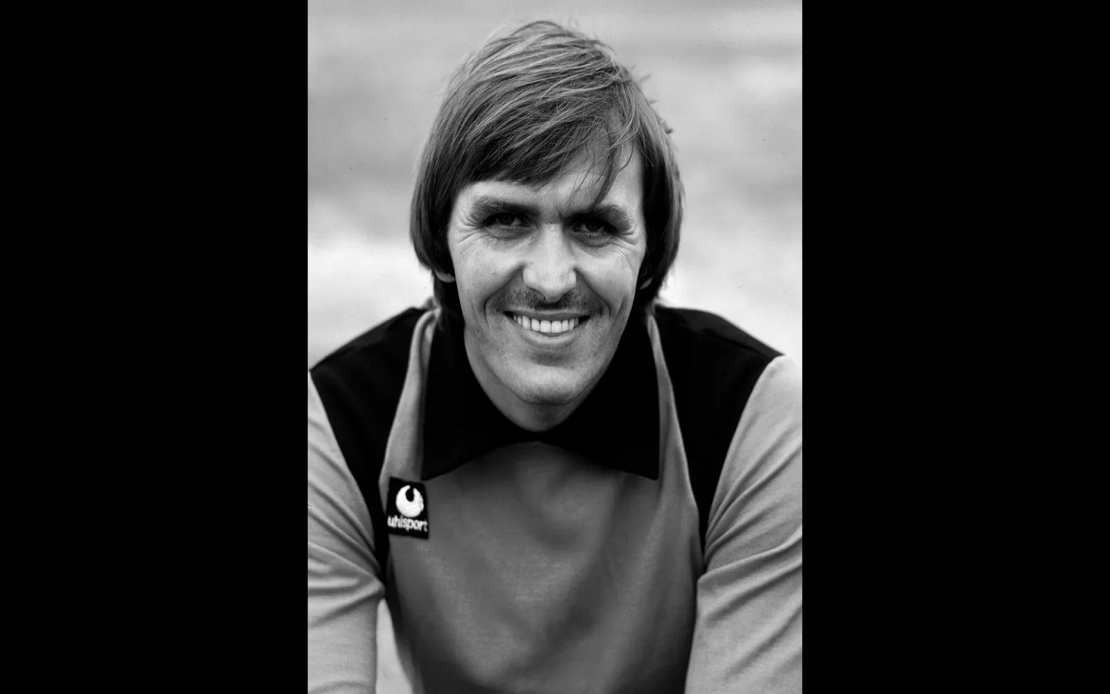
Jimmy Rimmer, the goalkeeper whose career at Aston Villa was defined by extraordinary misfortune despite achieving remarkable success, has died at the age of 78. The English shot-stopper was instrumental in Villa's 1981 First Division title triumph, playing in every match as the Birmingham club secured the domestic championship. Yet his legacy remains tinged with the cruel irony of missing the pitch in two of football's greatest moments, a pattern that would define how he is remembered in the sport.
Rimmer's most painful memory came the following season when Villa reached the 1982 European Cup final against Bayern Munich in Rotterdam. Having shepherded the team through an exceptional continental campaign, the goalkeeper suffered a neck injury just nine minutes into the showdown and was forced to leave the field. He watched helplessly from the sidelines as understudy Nigel Spink took over between the posts, and remarkably, Spink delivered a flawless performance to preserve a clean sheet. Peter Withe's second-half goal proved decisive, crowning Villa as European champions in what remains the club's sole triumph in the competition's storied history.
The twist of fate that haunted Rimmer had struck once before, more than a decade earlier. As a Manchester United player, he had been named among the substitutes when the Red Devils faced Benfica in the 1968 European Cup final at Wembley. United's victory that evening should have been his moment of European glory, yet again Rimmer found himself unable to contribute directly to the triumph. To win two European Cup medals without stepping onto the pitch in either final stands as one of football's most unusual distinctions, a statistic that underscores both the randomness of sport and the vagaries of goalkeeper selection in pivotal matches.
Aston Villa released a statement acknowledging Rimmer's passing with evident respect for his contributions. The club described him as among the finest goalkeepers of his generation, while also noting the peculiar misfortune that shadowed his major achievements. The poignancy of his story lay not in any shortcoming as a player but rather in circumstance: Rimmer had proven his worth through consistent, commanding performances that had earned him the trust of his managers and teammates, only to be denied the chance to showcase his abilities when it mattered most on Europe's grandest stage.
Rimmer's trajectory through English football reflected the competitive landscape of the 1970s, when top clubs were stacked with world-class talent at every position. He began his professional career at Manchester United's Old Trafford, the home of English football's most storied institution, but found his path blocked by Alex Stepney, a goalkeeper of genuine pedigree who dominated the position during that era. Unable to secure regular opportunities at United, Rimmer moved to Arsenal in 1974, where he continued to prove his credentials as a capable, reliable performer capable of maintaining high standards across a full campaign.
The move to Aston Villa in 1977 proved transformative, positioning Rimmer as the club's primary goalkeeper during a period of remarkable ascendancy under manager Ron Saunders. During the 1980-81 season, Rimmer's consistency and shot-stopping ability anchored Villa's defence as they accumulated the points necessary to claim the First Division title. His ever-present record that season testified to his durability and the confidence placed in him by the coaching staff. Few goalkeepers maintain such consistency across an entire top-flight campaign, and Rimmer's achievement deserved recognition as a cornerstone of Villa's domestic success.
The emergence of Nigel Spink following the European Cup final proved a turning point. Spink's heroic display in Rotterdam established him as a viable successor, and over the subsequent seasons, Spink gradually displaced Rimmer as the club's first-choice goalkeeper. The transition between goalkeepers is rarely straightforward, and Rimmer's diminished role at Villa Park became increasingly difficult to sustain. In 1983, just two years after the European Cup triumph, Rimmer was transferred to Swansea, concluding a remarkable spell in which he had made more than 200 competitive appearances for the Midlands club.
Rimmer's international career proved equally brief, earning a single cap for England at senior level. For a goalkeeper of his quality and experience, a one-cap England appearance underscored the extraordinary depth of talent available to the national team during that period, as well as the intensely competitive nature of selection for the Three Lions. His solitary appearance, like so much of his career, seemed to epitomise the narrow margins that separated sustained opportunity from the margins of professional football.
The broader context of Rimmer's career speaks to the contingency that governs sporting achievement. In an alternate timeline where injury did not strike in Rotterdam, Rimmer might have authored a different narrative, one in which he is celebrated as the keeper who won the European Cup. Instead, his story became one of the game's great what-ifs, a reminder that excellence alone does not guarantee the recognition that comes from performing on football's largest stage. His contributions to Aston Villa's greatest achievements remain undeniable, yet history tends to obscure the roles of those who departed before the final whistle sounded. For Malaysian and Southeast Asian football enthusiasts who follow the English game's rich heritage, Rimmer's passing represents the end of another chapter in the saga of villa's golden years.

