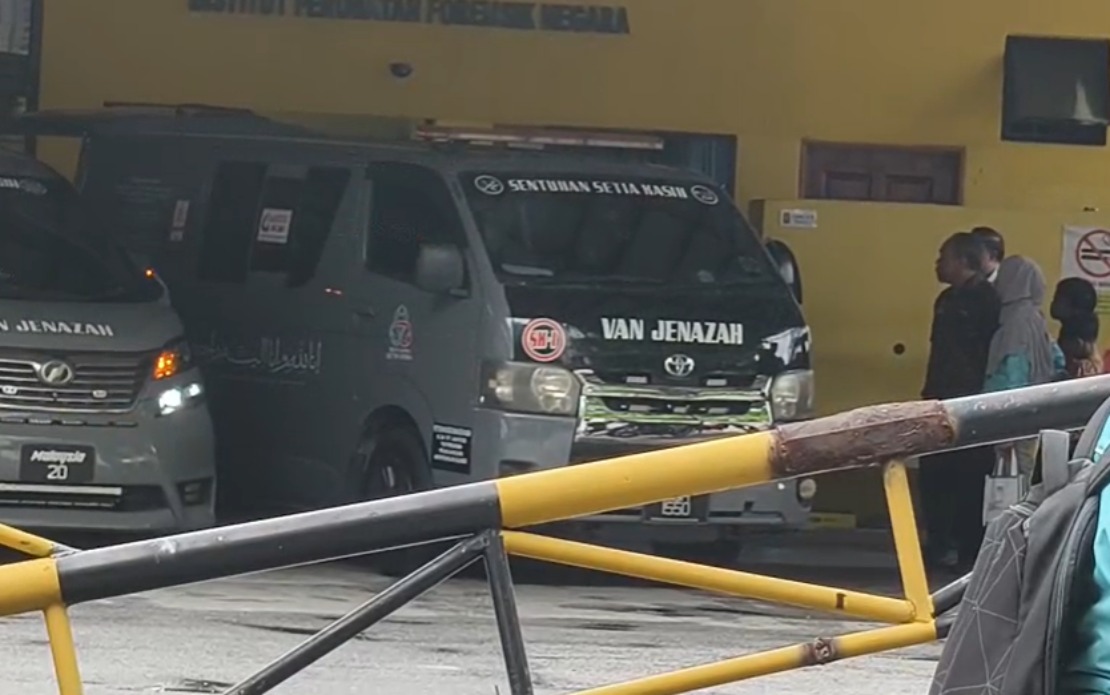
The remains of three family members who died in a collision involving a Malaysian Immigration Department (JIM) lorry have been released from the National Institute of Forensic Medicine (IPFN) at Kuala Lumpur Hospital for funeral arrangements. The post-mortem examination was completed by late afternoon on August 19, with the three bodies transferred to the next of kin at approximately 5:45 pm. The deceased have been identified as Shaik Mohd Firdaus Shaikh Yahya, aged 53, along with his two daughters Siti Nor Sazlin, 25, and Siti Darwisyah Auni, 12.
The family's final journey will see their remains taken to Jamiul Ehsan Mosque on Jalan Pahang in Kuala Lumpur, where Islamic funeral rites including ritual bathing, shrouding, and prayer services will be conducted before transportation to their final resting place. Following these ceremonies, the bodies will be conveyed to Kampung Air Hitam Labu Muslim Cemetery in Kampar, Perak, for burial, indicating the family's connections to the state. The transfer of remains in three separate hearses from the forensic institute marks the conclusion of the immediate investigative phase, allowing grieving relatives to proceed with customary funeral observances.
The tragedy unfolded in the early hours of August 19 when a JIM Black Maria vehicle collided with civilian traffic on Jalan Sultan Ismail in central Kuala Lumpur. The incident claimed three lives instantly, while a fourth family member sustained serious injuries requiring hospital treatment. The Black Maria lorry, operating empty and en route to conduct enforcement operations in Chow Kit targeting undocumented migrants, was equipped with functioning beacon lights and siren at the time of the collision. According to witness accounts and preliminary investigations, the enforcement vehicle entered the Maju Junction intersection while the traffic signal displayed red, directly striking a Proton Saga sedan that was proceeding legitimately through the intersection on a green light.
The force of the initial collision between the heavy JIM lorry and the passenger car proved catastrophic. The impact caused the lorry to veer out of control, skidding across the intersection before striking four pedestrians in its path. The vehicle's trajectory also resulted in contact with an Inokom Matrix multi-purpose vehicle, compounding the scale of the accident. The sequence of events highlights how enforcement operations, though necessary for immigration control, can pose significant risks when conducted during night hours with vehicles operating at speed through busy urban intersections.
This incident raises critical questions about road safety protocols for government enforcement agencies operating specialized vehicles. The Malaysian road safety landscape has long been marked by concerns regarding heavy vehicle operations, particularly in urban environments where civilian traffic and pedestrians are concentrated. The presence of functioning warning systems—beacon lights and siren—on the JIM lorry indicates the vehicle was flagged as an emergency or priority vehicle, yet this did not prevent the intersection violation that precipitated the collision. Many Southeast Asian nations, including Malaysia, continue to grapple with balancing enforcement operational efficiency against public safety imperatives.
The police have initiated formal investigations under Section 41(1) of the Road Transport Act 1987, which addresses vehicle-related traffic offences. This legal framework encompasses investigations into circumstances surrounding motor vehicle collisions, with particular emphasis on establishing causation and determining liability. The investigation will likely examine factors including vehicle maintenance records, driver fatigue, traffic signal functionality, visibility conditions, and adherence to operational protocols for emergency vehicle deployment. The findings may have implications for how JIM and similar enforcement agencies conduct night-time operations through congested urban areas.
Beyond the immediate legal proceedings, this tragedy underscores broader considerations for Malaysian urban traffic management and government vehicle operations. Enforcement agencies balance the necessity of conducting immigration raids and crime prevention activities against the inherent risks such operations pose to public safety. The incident occurred during hours when visibility is limited and traffic patterns differ significantly from daytime operations, potentially affecting reaction times and decision-making capacity. Such considerations may prompt policy reviews within the Immigration Department regarding operational timing, route planning, and vehicle movement protocols during enforcement activities.
For the bereaved family, the release of remains represents a transition from the investigative phase to the grieving process and funeral observances. The loss of a father and two young daughters in a single incident constitutes a profound family tragedy with lasting emotional and social consequences. The broader Perak community will observe the family's final rites, reflecting Malaysia's strong tradition of collective support during periods of loss. The circumstances of the deaths—involving a government vehicle—may also attract attention from civil society groups and road safety advocates seeking systemic improvements to prevent similar tragedies.
As the investigation proceeds, Malaysian authorities will scrutinize operational procedures for enforcement vehicle deployment to determine whether enhanced safety protocols could prevent recurrence. The matter touches on fundamental questions of how government agencies balance operational objectives with public safety responsibilities. Preliminary findings and subsequent recommendations may influence how JIM and comparable departments conduct future enforcement operations, particularly during night hours in urban settings. The incident serves as a sobering reminder of how routine enforcement activities, despite their importance for governance and public order, can result in devastating consequences when safety protocols are compromised or circumstances align unfavorably.
The tragedy also highlights the vulnerability of pedestrians and civilian motorists in urban environments where heavy vehicles operate under time-sensitive mandates. Malaysian road safety statistics consistently reflect that intersection collisions involving heavy vehicles produce disproportionately severe outcomes due to the mass differential and force involved. The investigation outcomes may contribute to broader discussions within Malaysia's transport and safety regulatory bodies regarding intersection safety, traffic signal compliance monitoring for all vehicle classes, and enhanced training requirements for operators of specialized government vehicles navigating urban thoroughfares.

