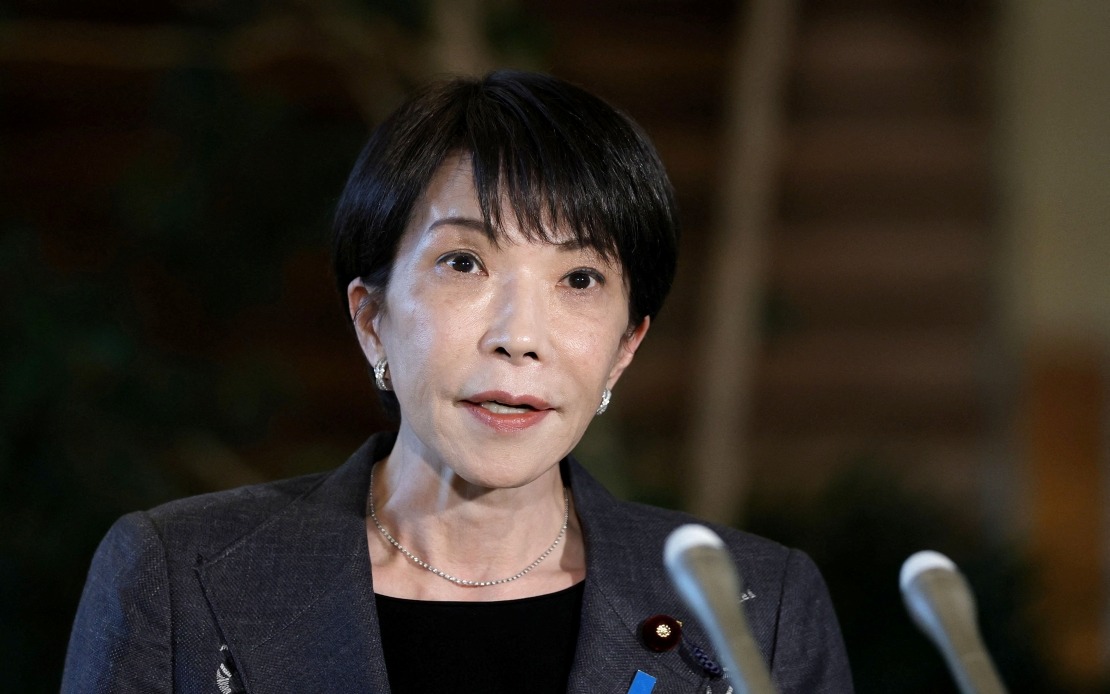
Japanese Prime Minister Sanae Takaichi marked the 81st anniversary of the end of World War II on Saturday by sending a ritual offering to the Yasukuni shrine in Tokyo, though she notably refrained from making a personal visit to the controversial site. The move reflected a delicate balancing act by Japan's conservative leadership between honouring historical memory at home and managing diplomatic sensitivities with neighbouring countries in the region. Defence Minister Shinjiro Koizumi visited the shrine in person, becoming the first sitting defence chief to do so on the war anniversary since Minoru Kihara made the journey on August 15, 2024.
The shrine has long served as a focal point of regional tension due to its enshrinement of 14 wartime leaders as deities in 1978, most of whom were convicted as Class-A war criminals by Allied tribunals. Among those honoured are General Hideki Tojo, a former wartime prime minister who was executed in 1948 for crimes against peace. Japan's occupations and colonial rule in East Asia—including the invasion and occupation of large portions of China and the colonisation of the Korean Peninsula from 1910 to 1945—created deep historical wounds that continue to shape diplomatic relations decades later.
Takaichi's decision to send an offering rather than visit personally represented a calculated shift in approach since assuming the prime ministerial office last October. Prior to her appointment, she had regularly visited the shrine during seasonal festivals and specifically on the August 15 war anniversary. Her abstention from a direct visit, despite her well-known conservative credentials and close ties to nationalist causes, signals an attempt to project greater diplomatic caution at a time of heightened regional tension. The offering was paid for from her personal funds in her capacity as president of the ruling Liberal Democratic Party, according to senior party officials, a distinction that may allow her to maintain her ideological credentials while distancing the official government from the gesture.
The participation of other senior government figures underscored the internal support within the LDP for acknowledging the shrine. Cabinet Secretary Minoru Kihara, who now holds the third-highest position in government, visited the shrine, along with state minister Hitoshi Kikawada. Party executives including Secretary General Shunichi Suzuki, General Council head Haruko Arimura, and Election Strategy Committee head Yasutoshi Nishimura also made pilgrimages to the site, demonstrating the depth of nationalist sentiment within the ruling coalition.
The Yasukuni visits carry outsized diplomatic weight across East Asia. China and South Korea have consistently lodged formal protests when Japanese officials visit, viewing such pilgrimages as attempts to rehabilitate Japan's wartime record and whitewash historical atrocities. Both nations experienced devastating consequences under Japanese imperial expansion and view efforts to honour wartime leaders as affronts to their own war dead and national pride. For Malaysian policymakers and regional observers, these recurring diplomatic incidents reflect deeper questions about how nations grapple with contested historical narratives and the challenges of reconciliation in a region marked by unresolved historical grievances.
Takaichi's premiership comes at a time of significant strategic reorientation for Japan. The country has spent the decades since 1945 anchoring itself to a war-renouncing Constitution and committing to pacifist principles, yet it now faces what officials have characterised as an increasingly severe security environment. Japan has been systematically boosting defence spending and military capabilities in response to rising tensions in the Taiwan Strait, North Korean provocations, and broader regional power shifts. This contradiction between constitutional pacifism and expanding militarism creates a domestic political pressure that makes Yasukuni visits both symbolically important and diplomatically fraught.
The shrine's significance extends beyond ceremonial traditions. It represents a broader debate within Japan about how the nation understands its own history and identity. Conservative politicians view visits as assertions of national pride and refusals to be defined solely by wartime defeat, while critics—both domestic and international—argue that honouring convicted war criminals perpetuates historical revisionism. This ideological fault line cuts through Japanese politics and has become increasingly prominent as regional competition intensifies and Japan recalibrates its defence posture.
For Southeast Asia, Japan's internal political dynamics around historical memory matter considerably. Many ASEAN nations, including Malaysia, maintain complex relationships with Japan that blend economic cooperation, security partnerships, and lingering historical consciousness. The way Japan addresses its wartime past influences regional confidence in Japanese intentions and shapes the broader architecture of security relationships throughout Asia-Pacific. Repeated diplomatic crises over Yasukuni shrine visits risk undermining the trust-building necessary for effective regional cooperation on issues ranging from trade to maritime security.
Koizumi's visit as the first sitting defence minister to do so since 2024 also carries military-strategic implications. Defence officials visiting such symbolically significant sites can be interpreted as signals about a nation's resolve or changing strategic priorities. In Japan's case, as it strengthens alliances with the United States and coordinates more closely with like-minded democracies, such visits become part of a broader messaging campaign about Japanese identity and values. However, this messaging resonates very differently in Beijing and Seoul, where it reads as troubling evidence of nationalist mobilisation during a period of military expansion.
The balance Takaichi attempts to strike—personal devotion to the shrine through financial offerings combined with official restraint through personal non-attendance—may indicate a broader recalibration within the LDP about how to maintain domestic conservative support while minimising international diplomatic damage. This pragmatic approach contrasts with earlier prime ministerial visits that provoked immediate and severe diplomatic fallout. Whether such a middle path can sustain both the nationalist base of the LDP and regional stability remains uncertain, particularly as Japan faces mounting security challenges that may eventually force more explicit choices between these competing pressures.

