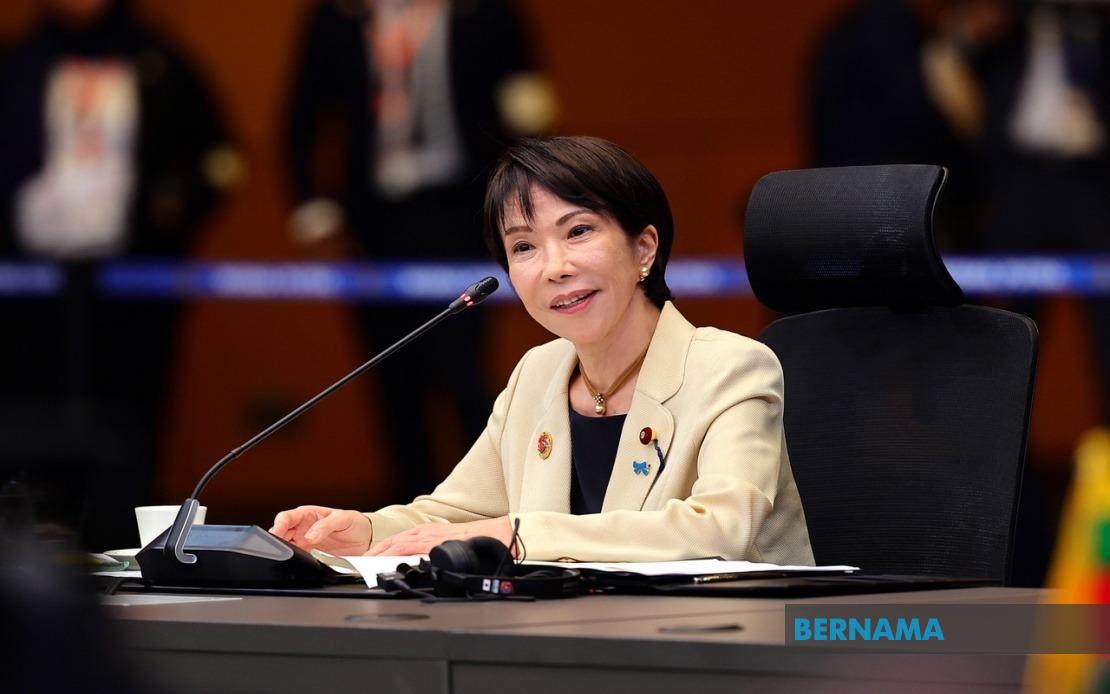
Japanese Prime Minister Sanae Takaichi has moved to shore up international support for unfettered maritime traffic through the Strait of Hormuz, placing a telephone call to Oman's Sultan Haitham bin Tariq al-Said on Monday to discuss the critical issue. The conversation underscores Tokyo's deep concern about ensuring stable passage through one of the world's most consequential shipping corridors at a time when broader negotiations between the United States and Iran show little sign of progress.
Takaichi's diplomatic overture reflects Japan's acute vulnerability to disruptions in the Hormuz region. As an energy-dependent island nation heavily reliant on Middle Eastern oil and liquefied natural gas imports, Japan faces substantial economic risks whenever tensions in the Gulf escalate or maritime security deteriorates. The Strait of Hormuz, through which roughly one-fifth of global petroleum traffic passes annually, has become an increasingly flashpoint for geopolitical friction, making Japan's active diplomatic engagement a strategic necessity rather than merely a courtesy call.
Oman occupies a singular position in regional diplomacy, distinguishing itself through decades of non-alignment and pragmatic engagement with all parties in Middle Eastern disputes. The sultanate has traditionally served as a bridge-builder between competing interests, maintaining cordial relations with Iran while preserving strong ties to Gulf Cooperation Council members and Western powers. This balanced posture renders Oman an invaluable intermediary, and Tokyo's decision to coordinate directly with Sultan Haitham suggests Japan views the sultanate's influence as potentially decisive in shaping the trajectory of regional maritime policy.
According to reporting from Kyodo News, Oman has been conducting its own discussions with Iranian leadership, with particular focus on shipping routes and the mechanics of maintaining commerce through the contested waterway. These parallel conversations hint at behind-the-scenes diplomatic activity that extends well beyond the formal US-Iran nuclear negotiations that have reached an impasse. Oman's willingness to engage with Tehran on such matters positions it as a potential channel through which practical arrangements concerning maritime safety might be negotiated, even as larger political disagreements persist.
In response to Takaichi's appeal, Sultan Haitham reportedly indicated that Oman would carefully consider the perspectives of all nations relying on the Hormuz corridor before charting its course. This measured response, as conveyed by Takaichi to journalists gathered at her Tokyo office, suggests the Omani leadership recognizes the weight of expectations from multiple quarters. The sultan's pledge to consult stakeholders reflects Oman's understanding that any arrangements affecting Hormuz transit carry implications for global shipping, energy markets, and the economic interests of dozens of countries across Asia, Europe, and beyond.
For Southeast Asia more broadly, the stakes surrounding Hormuz's accessibility extend well beyond Japan's immediate concerns. Malaysia, Singapore, and other regional economies depend substantially on uninterrupted energy supplies and rely on predictable global shipping costs to maintain their competitive manufacturing and trading advantages. Any sustained disruption to Hormuz traffic would ripple through regional supply chains, inflate shipping premiums, and potentially trigger broader economic slowdowns that would dampen growth across the region.
The timing of Takaichi's initiative carries significance given the prolonged stalemate between Washington and Tehran over the nuclear agreement and related sanctions. With formal diplomatic channels between the United States and Iran producing minimal movement, intermediary nations like Oman have gained enhanced importance as potential conduits for confidence-building measures and practical arrangements that could reduce maritime tensions without necessarily resolving the underlying political disputes.
Japan's approach in this matter exemplifies how middle-power nations navigate great-power competitions by leveraging regional relationships and economic interdependencies. Tokyo cannot directly influence US-Iran relations, but it can engage with respected regional actors like Oman to advocate for policies that serve Japanese interests while framing such advocacy in terms of broader international stability and commerce.
The conversation between Takaichi and Sultan Haitham also signals that Tokyo is preparing contingency diplomatic strategies should the primary US-Iran negotiations continue to deteriorate. By building relationships with key regional players and emphasizing Japan's stake in maritime freedom, Tokyo is laying groundwork for potential future initiatives, whether those involve international coalitions supporting shipping security, regional confidence-building arrangements, or multilateral frameworks addressing Gulf stability.
Looking ahead, the effectiveness of such diplomatic outreach will depend heavily on whether major powers can find sufficient common ground to prevent further escalation. Japan's effort to encourage Oman's active role in promoting safe passage through Hormuz represents one piece of a larger international effort to maintain the rules-based maritime order that underpins global commerce. The outcome will have lasting consequences not only for energy security but also for the broader architecture of regional stability that countless nations, including Malaysia and its neighbours, depend upon for prosperity.

