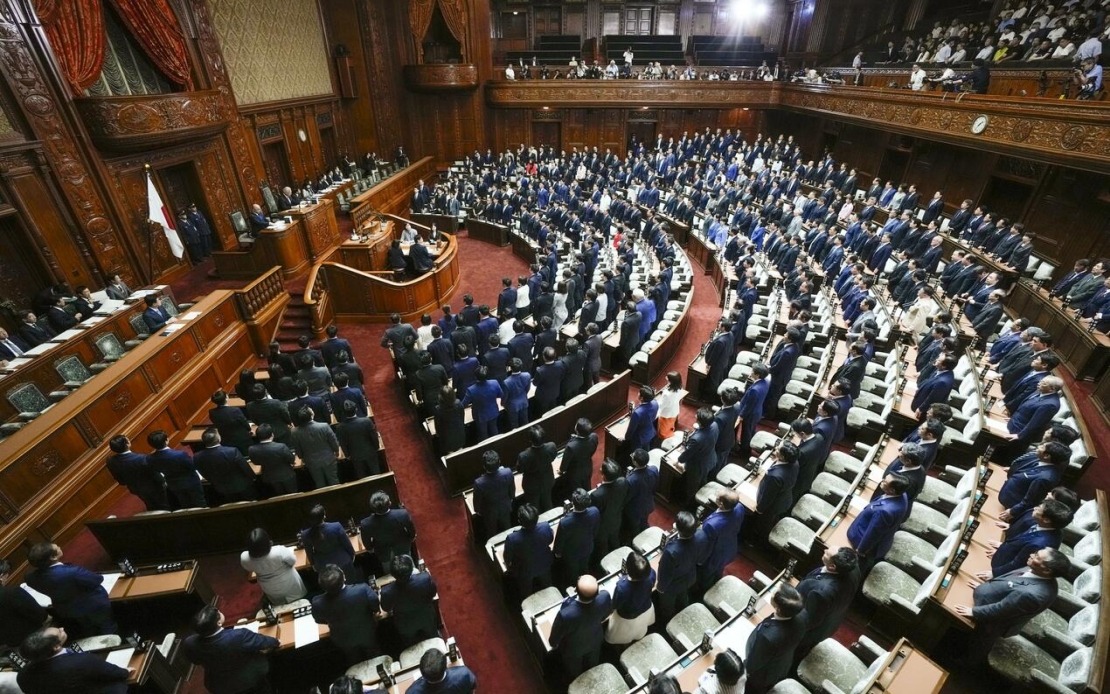
Japan has moved swiftly to modernise its imperial succession framework, with the House of Representatives passing a comprehensive amendment to the Imperial House Law on Friday following expedited parliamentary deliberations. The legislation represents the most substantial overhaul of the 1947 statute governing Japan's royal family and addresses mounting demographic pressures that have depleted the pool of eligible successors to the Chrysanthemum Throne. Prime Minister Sanae Takaichi's administration, partnered with the Japan Innovation Party, now pursues final approval through the House of Councillors before the current session concludes on July 17, positioning the reform for implementation before year's end.
The two central pillars of the proposed law target the structural vulnerabilities that have constrained imperial continuity for decades. First, the bill permits the adoption of male relatives aged 15 and above who trace their descent through exclusively male lineage to emperors from 11 former branch families—a category that has largely fallen outside imperial institutions since the post-war reorganisation. Second, and perhaps more symbolically significant for gender equality advocates, the measure grants female imperial family members the right to maintain their imperial status despite marrying commoners, a provision that directly contradicts centuries of patrilineal custom. While the legislation explicitly precludes adopted individuals from ascending the throne themselves, it crucially permits their male offspring to become eligible successors, thereby expanding the dynasty's genetic foundations without fundamentally rupturing established protocols.
The timing and substance of this parliamentary victory carry particular resonance for Southeast Asian observers monitoring Japan's institutional evolution. Imperial succession remains a matter of profound constitutional sensitivity in Japan, intertwining issues of national identity, gender equality, and administrative legitimacy. The compressed legislative schedule—wherein substantive debate commenced and concluded within a single day—reflects both the technical preparation undertaken by parliamentary leadership and the accumulated political pressure surrounding demographic realities that threaten the monarchy's practical viability. The bill itself emerged from consultations between lower and upper house leadership with all 13 parliamentary parties and groupings, representing an attempt to achieve cross-factional consensus on an inherently conservative institution navigating contemporary demands.
However, the legislation's scope remains circumscribed in ways that disappoint reform-minded constituencies within Japan. Notably absent from the final bill are provisions addressing female succession or maternal-line eligibility—concepts that have achieved measurable public support in domestic polling. This deliberate omission reflects the ruling coalition's assessment that such radical departures from patrilineal tradition would encounter insurmountable constitutional and institutional resistance. Instead, the adopted-son pathway represents a compromise that preserves gendered hierarchy while offering practical solutions to succession scarcity. The distinction carries meaningful implications: admitting female emperors would fundamentally redefine imperial legitimacy across East Asia, whereas adoption from former branch families, while innovative, operates within traditionally patriarchal frameworks.
Context surrounding parliamentary paralysis during late June and early July illuminates the political environment within which this imperial reform advanced. Opposition parties had effectively stalled Diet proceedings by refusing engagement with two parallel administration bills: one concerning reduction of lower house parliamentary seats and another establishing a secondary capital infrastructure to supplement Tokyo's administrative burden. These blockades stemmed not merely from substantive policy disagreements but from broader allegations involving Prime Minister Takaichi, who faced media reports documenting allegedly defamatory online video campaigns orchestrated by her political supporters against rival factions. The standoff demonstrated how institutional gridlock can prevent even technically uncontroversial measures from advancing when deeper partisan antagonisms create broader parliamentary dysfunction.
The resolution of this deadlock through Tuesday's concessions by the ruling coalition fundamentally altered the legislative landscape and enabled the imperial bill's passage. By agreeing to shelve the lower house seat-reduction proposal during the current parliamentary term and committing to televised policy debate sessions between the Prime Minister and opposition leaders, the administration secured sufficient atmospheric improvement to restart substantive deliberations. Scheduled for Wednesday afternoon, these debate sessions represent a return to normal parliamentary protocols suspended since May. The imperial succession reform thus benefited indirectly from broader compromises addressing democratic governance standards, suggesting interconnected linkages between specific policy initiatives and systemic parliamentary health.
For regional observers, Japan's imperial succession challenge mirrors demographic pressures affecting other East Asian monarchies and institutional frameworks dependent upon narrow inheritance rules. South Korea, facing comparable population decline, maintains stringent male-line succession requirements for its historical royal house, despite modern political evolution. Taiwan's constitutional status regarding imperial institutions remains contested, while Southeast Asian constitutional monarchies navigate their own balances between ceremonial tradition and contemporary democratic expectations. Japan's incremental approach—adopting from branch families while preserving patrilineal primacy—demonstrates how institutional conservatives address existential succession crises through minimalist amendments rather than transformative restructuring.
The incorporation of provisions beyond the bipartisan speakers' proposal reveals fractures within the ruling coalition's consensus-building process. Specifically, the legislation's permitting of adopted members' male descendants to become emperor expanded eligibility criteria in ways not originally contemplated by the cross-party consultation framework. This discrepancy has drawn critical commentary from opposition quarters, who contend that the administration exceeded its negotiated mandate. Such tensions illustrate how parliamentary reforms nominally addressing technical succession questions simultaneously navigate substantive constitutional questions regarding imperial authority's proper limits and transmission mechanisms.
The legislative coalition between the ruling Liberal Democratic Party and its junior coalition partner, the Japan Innovation Party, provides essential arithmetic for advancing controversial constitutional reforms. With parliamentary supermajorities in the lower chamber, these parties possess capacity to override upper house obstruction if the House of Councillors resists imperial law revision. However, demonstrating broader consensus through this dual-chamber passage strengthens the reform's legitimacy and reduces prospects for sustained legal challenges. The July 17 session deadline creates time pressure motivating expedited upper house deliberations, though imperial succession questions typically command sufficient patriotic resonance to facilitate multi-factional approval.
Malaysian readers observing Japan's parliamentary procedures should note the distinctive balance between monarchical reverence and democratic accountability evident in this process. Japan maintains robust parliamentary institutions capable of legislating modifications to imperial prerogatives despite profound cultural attachment to the monarchy. The transparency of public deliberations, media coverage scrutinising both procedural fairness and substantive policy merit, and opposition capacity to demand accountability demonstrate democratic vitality operating around, rather than beneath or above, the imperial institution. As Southeast Asian societies continue calibrating relationships between traditional authority structures and contemporary governance expectations, Japan's incremental approach offers instructive precedents regarding institutional adaptation.
The imperial succession bill's advancement reflects deeper patterns within contemporary Japanese politics wherein demographic realities inexorably shape institutional futures. The nation's persistently declining fertility rate and aging population create not merely economic challenges but constitutional pressures affecting institutions predicated upon male-line continuity. Whether the adopted-son pathway ultimately proves sufficient for maintaining imperial institutions across coming generations remains uncertain, particularly if female succession ideas gain further political traction. For now, Japan has navigated immediate succession vulnerabilities while consciously deferring more transformative debates regarding imperial governance to future political actors and generations.

