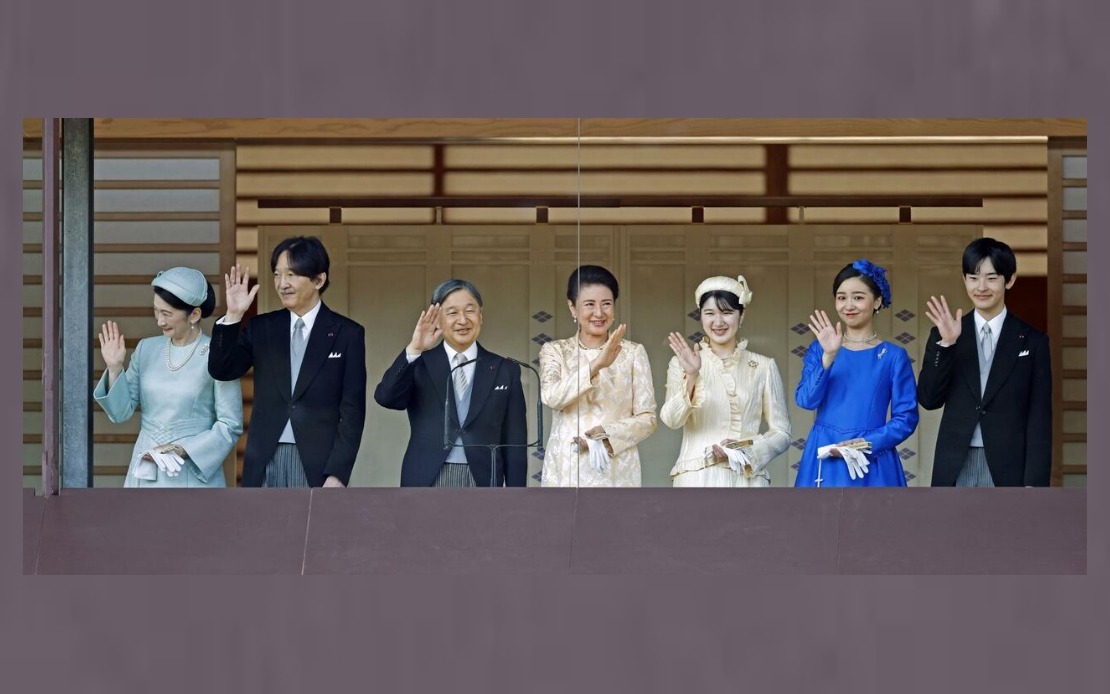
Japan's parliament has given final approval to substantial revisions of the Imperial House Law, marking the first major overhaul of the 1947 statute designed to stabilise the world's oldest hereditary monarchy amid demographic pressures within the royal household. The legislative changes represent a careful balancing act by Prime Minister Sanae Takaichi's administration—Japan's first female premier—between accommodating modern realities and preserving centuries-old succession conventions that have defined imperial continuity.
The revised law introduces two principal modifications to address the shrinking imperial family. It permits the adoption of unmarried males aged 15 and above from 11 former branch families that trace their ancestry through exclusively male lineages to past emperors. Simultaneously, the reforms allow imperial women to retain their royal status and titles even after marrying outside the imperial household—a significant departure from centuries of practice that automatically stripped women of imperial rank upon such marriages. These provisions offer practical mechanisms for expanding the diminished imperial pool without fundamentally altering succession protocols.
The historical context renders these changes particularly significant. When the current Imperial House Law took effect in 1947 during Japan's post-war occupation, 51 members from 11 former branch families were formally removed from imperial status. The law explicitly enshrined that the throne "shall be succeeded to by a male offspring in the male line belonging to the Imperial Lineage," a patrilineal framework that remains substantively unchanged despite the latest revisions. The 1947 statute itself reflected broader post-war reforms to imperial governance, yet conservatively maintained succession principles stretching back centuries.
The timing of these reforms reflects an acute institutional crisis. Japan currently has only three male heirs to Emperor Naruhito, a precarious situation that has prompted years of policy debate. Without interventions to expand the legitimate succession pool, the imperial line faces potential interruption—a scenario traditionally considered unthinkable in Japanese constitutional and cultural thought. The adoption provisions attempt to resolve this constraint by reintegrating male descendants of former branch families, whose male-line continuity theoretically qualifies them for succession under existing law.
Yet the legislative process itself has drawn criticism from opposition parties, who contend that parliamentary scrutiny was inadequate given the constitutional magnitude of discussions about imperial succession. Cross-party negotiations spanning several months culminated in a vaguely worded parliamentary "consensus" endorsed by 13 parties and groups, but this compromise deliberately avoided directly addressing whether female emperors should be permitted—arguably the central policy question. Opposition legislators have argued that such a foundational constitutional matter deserves more rigorous debate rather than back-room consensus that defers fundamental questions.
The Liberal Democratic Party and its coalition partner, the Japan Innovation Party, have faced accusations of prioritising the preservation of patrilineal succession over substantive democratic deliberation. Both parties worked to ensure that the revised law contained no explicit provisions for female or maternal-line succession, though the government maintains that the adopted male descendants of branch families could eventually ascend the throne under current legal language. This narrow interpretation of succession eligibility, critics contend, reflects ideological attachment to male-line primacy rather than pragmatic assessment of imperial continuity needs.
Public opinion presents a stark contrast to parliamentary conservatism on this question. A Kyodo News poll conducted in May revealed that 83 percent of respondents supported permitting female emperors, while only 13.1 percent opposed the concept. This substantial majority preference highlights a generational and cultural shift among ordinary Japanese citizens toward accepting female imperial leadership, even as formal institutions and political elites remain resistant to such changes. The gap between public sentiment and legislative outcomes reflects persistent tension in Japanese politics between traditional institutions and democratic values.
For observers across Southeast Asia and the wider region, Japan's approach to imperial reform offers instructive lessons about managing hereditary institutions within modern constitutional frameworks. Japan has chosen incremental, supplementary measures rather than fundamental restructuring—expanding the succession pool through adoption rather than revising succession principles themselves. This strategy differs markedly from various constitutional monarchies in the region and Europe that have explicitly reformed succession laws to include female succession in equal terms with males. Japan's more conservative posture reflects unique cultural and institutional factors specific to the imperial system's historical importance.
The practical implications of these reforms remain uncertain. The adoption provisions only become relevant if male descendants of former branch families voluntarily join the imperial household—a decision that requires overcoming complex personal, financial, and social considerations. Few former branch family members may find imperial status attractive given its constraints and obligations. Similarly, the provisions allowing imperial women to retain status do not automatically translate into greater participation in imperial governance or succession possibilities. The reforms thus represent a tentative first step toward addressing succession pressures rather than a comprehensive long-term solution.
Institutional observers note that the Japanese imperial succession question will likely resurface within a decade or two if demographic trends continue unchanged. The three current male heirs represent a fragile generational bottleneck that adoption of branch family males, even if pursued, may only partially alleviate. Should succession crises materialise despite these reforms, renewed public pressure for more fundamental legal changes—potentially including female succession—would likely intensify. For now, however, Japan's conservative coalition has secured parliamentary approval for modest adjustments that maintain established succession principles while creating supplementary pathways for imperial family expansion.
Sanae Takaichi's government has framed the revisions as responsible stewardship of a national institution facing genuine demographic challenges. Yet the maintenance of strict male-line succession despite overwhelming public support for alternatives suggests that constitutional reform in Japan remains hostage to institutional conservatism and political compromise rather than democratic preference or rational institutional design. The revised Imperial House Law thus represents less a solution to succession challenges than a temporary reprieve that preserves options for future, potentially more comprehensive, reform.

