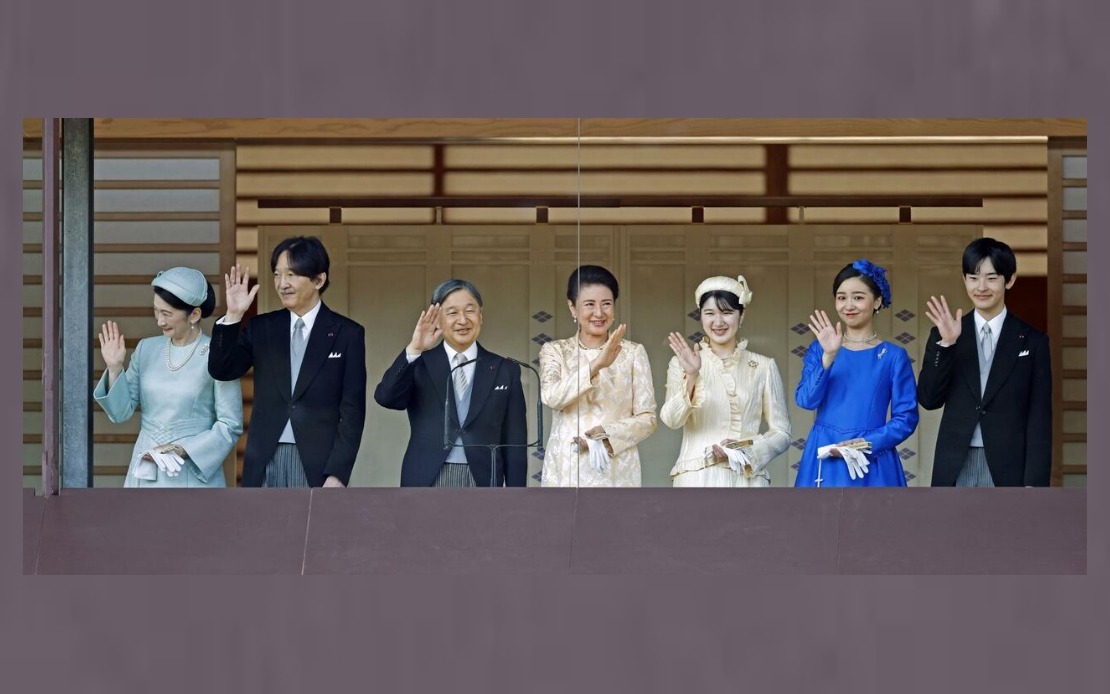
Japan has entered uncharted constitutional waters with the enactment of its first major revision to the Imperial House Law since 1947, a sweeping legislative change that promises to reverse the alarming decline in imperial family members while simultaneously creating anxiety among those tasked with supporting the world's oldest hereditary monarchy. The transformation, which parliament approved on Friday, directly addresses a pressing concern for Prime Minister Sanae Takaichi's conservative government: the imperial household now stands at just 16 members, a number that has prompted urgent action to ensure the institution's viability for future generations. Yet the reform has exposed deep fault lines between official policy objectives and broader public sentiment about how Japan should shape its imperial future.
At the heart of the revision lies a paradox that troubles many palace insiders. The legislation permits men aged 15 and older from eleven former imperial branch families—lineages that relinquished royal status during the postwar constitutional reforms of 1947—to be adopted back into the imperial family, a mechanism intended to inject fresh blood into a genealogically thinning institution. Officials at the Imperial Household Agency have publicly embraced the measure's potential, with one senior administrator acknowledging that "there is now a path toward securing a stable number of imperial members." Yet this same official articulated the bureaucratic reality awaiting any adopted male who enters the imperial fold: the government "would have no choice but to support them so they steadily carry out their official duties and earn the affection of the people." The language betrays an underlying recognition that integrating outsiders into the imperial system represents a profound departure from centuries of tradition.
Skepticism runs particularly deep among those who might theoretically benefit from the new provision. Asahiro Kuni, an 81-year-old member of the Kuninomiya branch family who renounced imperial status in 1947, offered a blunt assessment when asked about the adoption pathway: "I wonder if anyone would actually step forward to be adopted. It doesn't seem very realistic." His candour underscores a critical gap between legislative intent and practical implementation. The psychological and social barriers facing a middle-aged or elderly man contemplating entry into an institution steeped in centuries of sacred duty and public ceremonial expectation remain formidable, regardless of what the statute technically permits. This reality suggests that the law may offer symbolic assurance to Japanese anxious about imperial continuity without necessarily solving the underlying demographic crisis.
Equally troubling to palace staff is the question of cultural continuity and institutional knowledge. A second Imperial Household Agency official raised concerns about whether adoptees would genuinely comprehend what Emperor Naruhito and his predecessors have embodied: the symbolic role of the monarchy in contemporary Japan. The concern reflects a deeper anxiety about whether someone joining the imperial family in adulthood could internalize the nuances of imperial duty—the diplomatic visits, the disaster-zone appearances, the carefully calibrated public presence that has defined the reigning emperor's approach. Emperor Naruhito and Empress Masako, herself a former diplomat who navigated her own complex transition into royal life, exemplify how challenging such integration proves even when blood ties exist.
Yet the revision's most controversial dimension involves female imperial succession, an issue that has silently fractured Japan's conservative establishment. While the law permits princesses like Princess Aiko—Emperor Naruhito's only daughter—to retain their royal status if they marry commoners, it pointedly preserves the centuries-old male-only succession rule that bars women from ascending the throne. This compromise has satisfied neither reformers nor traditionalists. Palace aides have flagged the psychological toll on unmarried female imperial members, of whom five currently exist, including Princess Aiko and Princess Kako. The decision facing any of these women represents what one senior agency official termed "quite difficult" and "rather harsh"—they must weigh their personal aspirations against the institutional pressures to remain within the imperial structure. Moreover, the arrangement creates an awkward domestic scenario: if a princess retains royal status while her spouse and children remain commoners, the household itself becomes fractured across different legal statuses, a situation one aide acknowledged would seem "strange."
The aide went further, articulating the suspicion held by reform advocates: "I sense the government intends to rule out female emperors or emperors from the matrilineal line." This perception reflects the fundamental tension embedded in the legislation. The government has pursued a narrowly conservative strategy, implementing just enough change to stabilize the imperial institution demographically while fiercely protecting the patrilineal succession that Japanese law has prescribed for generations. For those who believe Japan's imperial future should accommodate female emperors—a position supported by consistent opinion polling—the new law represents a missed opportunity and a deliberate choice to sideline public preferences.
Public opinion on the reforms reveals the fractured state of Japanese consensus on imperial matters. When Shinichi Kokubun, a 76-year-old who met Emperor Naruhito, Empress Masako, and Princess Aiko during an imperial visit to tsunami-ravaged Fukushima Prefecture in April, considered the prospect of adopted imperial members, he expressed conditional acceptance: "It depends on how those adopted would behave. If they can stand by the people just as the emperor does, I don't think there will be any problem." His pragmatism mirrors the cautious support expressed by some segments of the electorate who view the adoption mechanism as a reasonable compromise. However, younger Japanese have leveled sharper critiques, particularly regarding the process itself rather than merely the outcomes.
Miyu Nakao, 22, from Hiroshima articulated a generational frustration with how the imperial overhaul transpired: "The government has made a decision on the imperial system all by itself." Her complaint highlights a democratic deficit that has attended this constitutional moment. A 20-year-old college student in Osaka reinforced the point, noting that "not many people around me, including myself, are familiar with what the Imperial House Law is," before offering a broader indictment: "I don't think that there have been sufficient discussions or public outreach" from the government. These voices suggest that Japanese citizens' primary grievance may not be the substance of the reforms themselves but rather the opaque manner in which such momentous decisions have been rendered.
The timing of this imperial legislation carries broader significance for regional observers, particularly in Southeast Asia, where Japan's soft power and institutional stability influence perceptions of the country's political reliability. A Japanese imperial system perceived as creaking under demographic strain or distorted by top-down constitutional engineering without adequate public deliberation sends subtle signals about governance competence and social cohesion. For Malaysian and other regional readers, the Japanese case study illuminates how even the world's oldest institutions must navigate the tension between tradition and pragmatic adaptation—a challenge not unique to Japan.
Looking forward, the success or failure of these imperial reforms will depend less on what the statute permits and more on the choices made by potential adoptees, unmarried princesses, and the imperial household staff tasked with shepherding the institution through this transformation. The law has solved one problem—it provides a technical pathway to bolster imperial numbers—while potentially creating others, including questions about legitimacy, public participation in constitutional change, and whether a patchwork approach truly addresses the underlying vulnerability of a hereditary system in an era of democratic expectations. Japan's imperial institution, having survived war, occupation, and social upheaval, now faces perhaps its subtlest test: whether carefully engineered legislative compromise can substitute for organic, broad-based public support.

