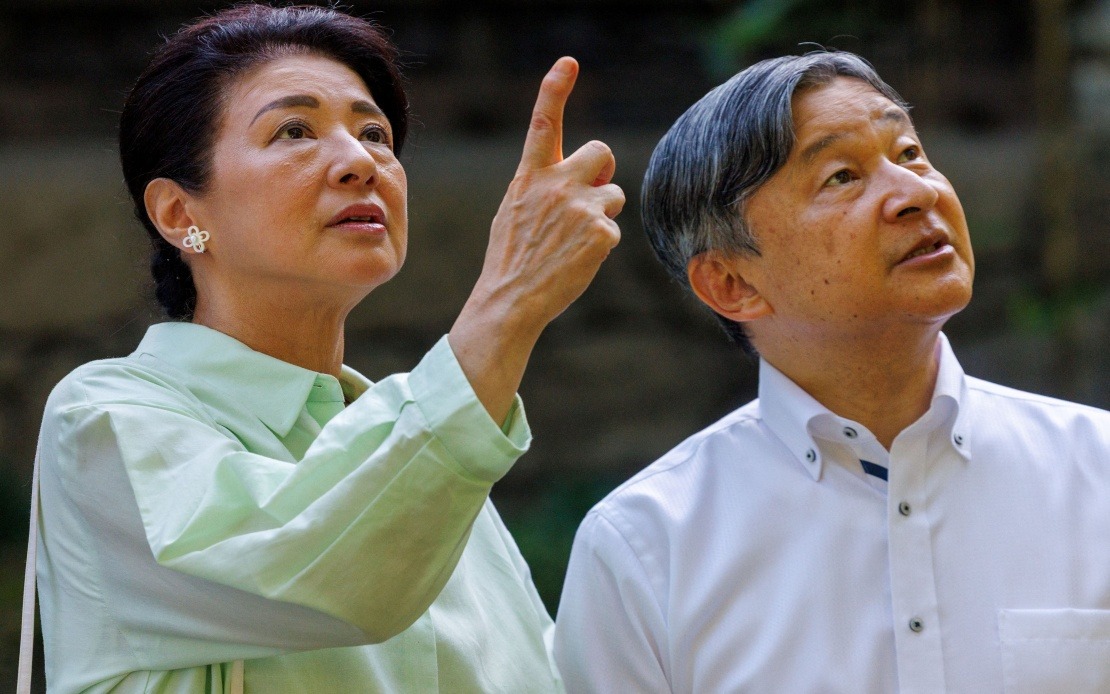
Japan's government moved decisively this week to shore up the imperial institution, with the Cabinet approving legislation designed to sustain the monarchy despite demographic pressures that have whittled away the pool of eligible successors. The bill, which the ruling coalition of Prime Minister Sanae Takaichi's Liberal Democratic Party and the Japan Innovation Party aims to pass before the parliamentary session concludes on July 17, represents a carefully calibrated response to one of the constitutional monarchy's most pressing challenges: a dwindling royal family unable to guarantee continuity under existing inheritance rules.
The proposed revisions target two critical vulnerabilities in Japan's current succession framework. First, they would permit the imperial family to adopt male descendants aged 15 or older who trace their lineage through the paternal line to emperors from eleven former branch families that were stripped of royal status in 1947. Second, the legislation would grant female members of the imperial house the right to maintain their imperial status even after marrying outside the royal circle—a provision that stands to expand the institutional family's practical scope, though not its formal succession eligibility.
These measures reflect a distinctly conservative approach to imperial reform. While the adoption mechanism creates a technical pathway to replenish the male-line succession by drawing on collateral branches, the legislation explicitly forbids adopted individuals from ever ascending the Chrysanthemum Throne themselves. Their male descendants, however, would become eligible heirs—a compromise that preserves the patrilineal principle while using adoption as a demographic valve. This architecture suggests Japan's political establishment remains wedded to maintaining unbroken male descent as the constitutional foundation of imperial legitimacy.
The current succession crisis is starkly evident in the numbers. Emperor Naruhito, now 66, has only three identifiable heirs: his younger brother Crown Prince Fumihito, 60; his nephew Prince Hisahito, 19; and his uncle Prince Hitachi, 90. The relative youth of Prince Hisahito provides temporary reassurance, but the absence of additional male heirs beyond these three creates genuine anxiety about the institution's long-term viability. This demographic squeeze has been building for decades, with the imperial family shrinking from over 50 members in 1947 to a fraction of that today.
The eleven branch families eligible for the adoption provisions trace their descent to a common ancestor from approximately six centuries ago. When Japan's imperial system was restructured under post-war occupation, these collateral lines were deliberately separated from the main house, leaving only the three family branches of Emperor Hirohito's brothers to retain royal status. Reconnecting these severed lineages through adoption offers a ready-made solution to succession scarcity without requiring the ideologically fraught shift to female succession that many imperial scholars and constitutional experts have advocated.
Yet the bill's design exposes a significant gap between official caution and public sentiment. A Kyodo News poll conducted in May found that 83 percent of Japanese respondents support the principle of a female emperor—a striking majority that underscores how far public opinion has evolved on questions of gender and institutional tradition. The government's decision to sidestep this issue entirely, treating it as premature despite overwhelming public backing, suggests that conservative political forces remain unwilling to contemplate the more fundamental constitutional reform that female succession would entail.
The legislative deliberations themselves reflect this tension. The bill emerged from cross-party meetings where representatives of thirteen parliamentary parties and groups aired their positions before producing a consensus framework. That process failed to incorporate meaningful discussion of female succession or matrilineal eligibility, indicating that the consensus was built on narrower common ground than the scope of public debate might suggest. This disconnect between elite consensus and popular preference creates vulnerability to opposition challenges during Diet proceedings.
For Southeast Asian observers, Japan's imperial succession dilemma offers an instructive case study in how modern constitutional monarchies navigate tradition, demographics, and democratic legitimacy. The region itself hosts several functioning monarchies grappling with similar questions about institutional adaptation and public expectations. Japan's choice to pursue incremental reform while resisting structural change reflects a particular political calculus: that preserving symbolic continuity through patrilineal descent matters more than optimizing institutional flexibility for long-term stability.
The timing of this legislative push also carries strategic significance. Prime Minister Takaichi's administration faces a compressed window before the current parliamentary session concludes, creating pressure for expedited passage. The Liberal Democratic Party's dominance in both chambers should provide sufficient votes for approval, though opposition parties may mount procedural objections that complicate the path to enactment. The Japan Innovation Party's partnership as junior coalition member ensures broad conservative backing.
International media coverage has occasionally framed Japan's imperial succession debates as quaint traditionalism clashing with modern sensibilities. In reality, the stakes are considerably higher: the imperial institution remains a potent symbol of Japanese national continuity and cultural identity, and any perceived erosion of its constitutional foundations could trigger broader anxieties about institutional stability. The government's approach—expanding the male line through adoption rather than fundamentally reconsidering succession criteria—reflects a judgment that symbolic preservation trumps institutional optimization.
The path forward remains uncertain despite government confidence in legislative passage. If the bill becomes law as drafted, Japan will have purchased time through adoption provisions while deferring the deeper question of whether the imperial system can indefinitely sustain patrilineal succession in an era when even overwhelming majorities of Japanese citizens support female emperors. That unresolved tension may create pressure for renewed reform debates within a decade or less, particularly if Prince Hisahito himself faces succession anxieties in the future.
For Malaysia and other Southeast Asian nations with their own monarchical institutions, Japan's experience suggests that balancing institutional tradition with contemporary expectations requires not just legislative maneuvering but sustained engagement with evolving public values. Japan's current approach—technical reform without fundamental recalibration—may prove either sufficient as a long-term solution or merely a postponement of deeper constitutional reckoning, depending on how imperial demographics and public opinion develop in coming years.

